
Eisenkot cancels Netanyahu unity talks as Israeli government battle intensifies
Israel's new parliament is moving against Benjamin Netanyahu, but Gadi Eisenkot still needs a governing coalition as reports of possible military action against Iran sharpen their confrontation.
By Hushread Stories, from 47 outlets · First published 12 Nov 2026 · Chapter 4 of 4
Earlier: Eisenkot cancels Likud talks as Israel's new parliament challenges Netanyahu
In brief
- Gadi Eisenkot has the mandate to form Israel's next government, but has not yet assembled a coalition.
- Israel's new parliament was sworn in on November 10 after an election cost Benjamin Netanyahu his parliamentary majority.
- Eisenkot's Yashar party cancelled a planned meeting with Likud after Netanyahu's speech at the parliamentary opening.
- Opposition lawmakers are seeking control of parliament and proposing an official inquiry into the October 7 attacks.
- Eisenkot warned Netanyahu against dangerous military operations during the transition, amid reports of preparations for a possible Iran attack.
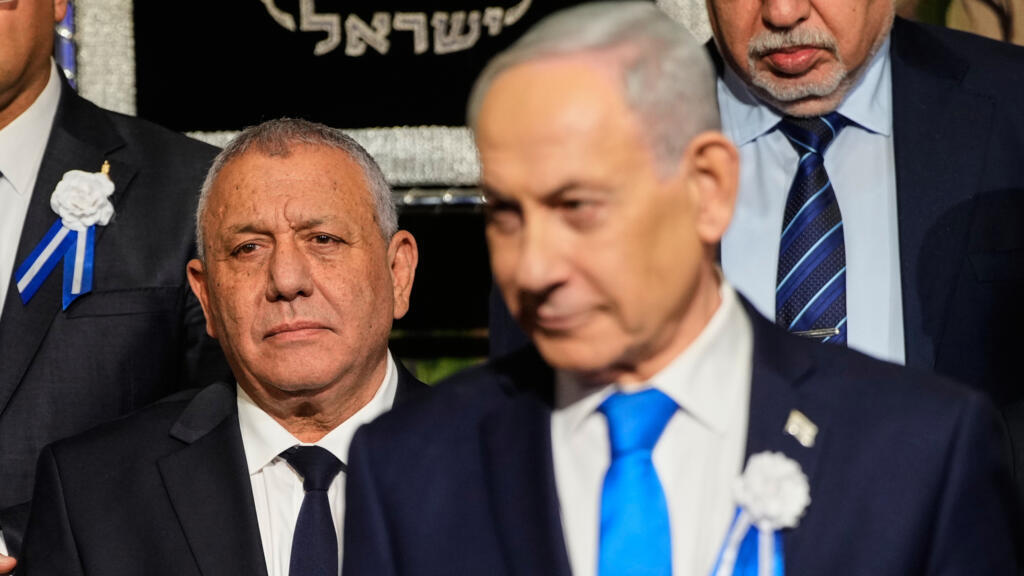
Timeline · 7 moments
Reports say cabinet orders increased Iran attack preparations
Anadolu Ajansı ↗Eisenkot warns Netanyahu over use of security forces
NDTV News - World-news News ↗Eisenkot bloc introduces bills targeting Netanyahu's policies
France 24 - Middle East ↗Opposition agrees to nominate Kahana as Knesset speaker
Infobae ↗Eisenkot cancels Likud meeting after Netanyahu's Knesset speech
Agencia EFE - www.efe.com - English edition ↗New parliament convenes as Herzog calls for compromise
DIE ZEIT | Nachrichten, News, Hintergründe und Debatten ↗Herzog announces Eisenkot will get government formation opportunity
Scroll.in ↗How it started
Israel's election left Benjamin Netanyahu without his parliamentary majority, but did not give his principal rivals a clear route to government. The new parliament took office on November 10 with that deadlock unresolved, according to CNN Brasil.
President Isaac Herzog announced on November 8 that Gadi Eisenkot would receive the opportunity to form a government, Scroll.in reported. That gave Eisenkot the initiative in coalition talks, not a settled majority capable of replacing Netanyahu.
The distinction matters. Netanyahu's critics dominate the new Knesset, but Eisenkot has yet to bring them together in a governing coalition, according to Deutsche Welle.
How it unfolded
On November 10, the newly elected parliament met for the first time, two weeks after the election. With the balance of power unresolved, President Herzog called for compromise, DIE ZEIT reported.
Eisenkot pledged to form a national emergency government as quickly as possible, according to La Nacion. Netanyahu also renewed his call for a national unity government while warning about threats from Iran, News18 reported.
The prospect of talks suffered an immediate setback. Eisenkot's Yashar party cancelled a meeting with Netanyahu's Likud party on November 10, citing Netanyahu's speech at the Knesset opening, according to Agencia EFE. India Today reported that Eisenkot called caretaker Prime Minister Benjamin Netanyahu unfit to remain in office and accused him of delivering a divisive speech.
The parliamentary contest moved ahead even without a coalition agreement. The opposition bloc agreed to nominate Matan Kahana, a former minister and Yashar leader, as the next Knesset speaker, Infobae reported on November 11. Eisenkot's bloc also introduced bills targeting Netanyahu and his policies, including an official inquiry into the October 7 attacks, according to France 24.
On November 11, the confrontation widened to security decisions. Eisenkot urged Netanyahu to exercise prudence, warning in a letter that using security forces without a direct and immediate threat could have disastrous consequences, NDTV reported. Separately, Anadolu Ajansı, citing Israeli media, reported that the security cabinet had instructed the military to increase preparations for a possible attack on Iran.
Where it stands
Eisenkot has a mandate to negotiate and allies seeking to set parliament's agenda, but no completed governing coalition. Netanyahu remains in office and is fighting back against rivals seeking to reverse his legacy, according to The Washington Post. Parliamentary strength has not yet translated into a change of government.
By November 12, the dispute also concerned the limits of military decision-making during the transition. Gulf News reported Eisenkot's warning against potentially dangerous operations before a new government takes office. The reports describe preparations for a possible Iran attack, not an attack that has taken place.
What to watch
The immediate political tests are whether Eisenkot can secure coalition partners and whether the opposition can install its proposed Knesset speaker. The nomination of Kahana, reported by Infobae, is a concrete step toward shifting parliamentary control, but is not itself a government agreement.
The other unresolved issue is how Netanyahu's government handles security decisions while coalition talks continue. Gulf News reported Eisenkot's warning specifically in the context of the transition, making any further military preparations or decisions a separate source of tension alongside the struggle for a majority.
More in Politics
All →
House Republicans Choose Jim Jordan as Leader After Midterm Defeat
Jordan defeated Steve Scalise to lead the incoming House Republican minority, replacing Mike Johnson as the party confronts sweeping election losses and prepares for the next Congress.
38 sources · over 3 days
Scott Colom Wins Mississippi Senate Seat, Defeating Incumbent Cindy Hyde-Smith
The Democrat's narrow victory over Republican Sen. Cindy Hyde-Smith delivers a major Mississippi upset and makes him the state's first Black senator elected since Reconstruction.
48 sources · over 4 days
Hegseth's Group Reprimanded at Tomb of Unknown Soldier on Veterans Day
A guard's demand for silence put Defense Secretary Pete Hegseth's group under scrutiny after laughter and noise at the Tomb of the Unknown Soldier on Veterans Day.
37 sources · over 2 days