
France Student Protests Expand Into Nationwide Rallies Over Living Costs
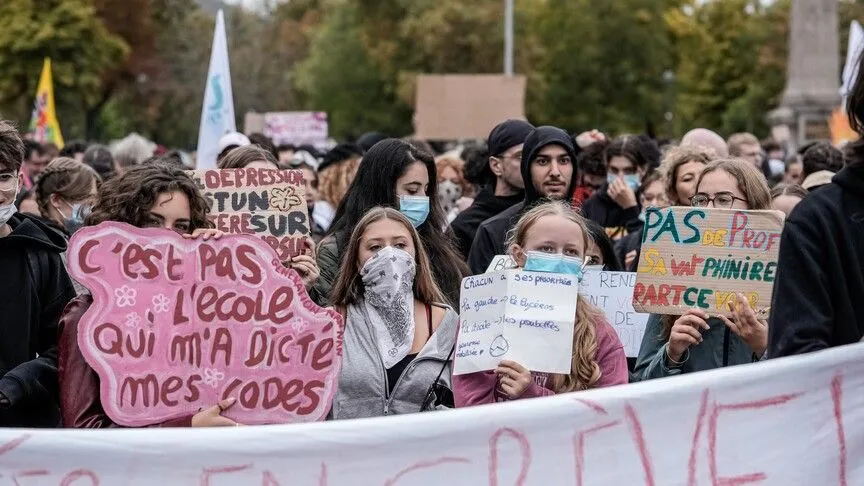
Students, unions and Yellow Vest activists are joining nationwide demonstrations as anger over school conditions broadens, with police firing tear gas in Paris and Marseille.
By Hushread Stories, written with AI from 48 outlets · First published 17 Oct 2026
In brief
- Students began protesting in September over teacher shortages, deteriorating school buildings and demands for better education funding.
- About 160,000 people marched across France on October 13, including roughly 41,000 in Paris, according to government figures.
- The movement has drawn support from university students, teachers, trade unions, Greta Thunberg and actor Omar Sy.
- October 17 demonstrations brought wider grievances over living costs, with clashes and tear gas in Paris and Marseille.
- The scale of participation and any further violence will help show whether the broader alliance can sustain momentum.
Timeline · 8 moments
Police fire tear gas in Paris and Marseille
The Independent ↗Students join unions and Yellow Vests in nationwide mobilisation
Deutsche Welle ↗Paris restricts undeclared gatherings around key government sites
Le Monde ↗Government lifts ban on police use of stun grenades
Anadolu Ajansı ↗Omar Sy supports students and criticises authorities' response
Euronews ↗Greta Thunberg joins teenagers protesting north of Paris
The Independent ↗Some high schools remain closed as protests continue
France24 ↗Support rallies draw about 160,000 people across France
産経ニュース ↗How it started
The protests began at schools in mid-September and spread around demands for better education conditions, according to Al Jazeera. Students want more funding and staff, BirGün reported.
The complaints are specific: teacher shortages, dilapidated buildings and long school days, according to The Conversation. Activists also describe overcrowded classrooms, CBS Top Stories reported. Those concerns have since become part of a wider protest over living costs and inequality.
How it unfolded
On October 13, university students, teachers and major trade unions joined demonstrations supporting the school protests. 産経ニュース reported an interior ministry estimate of about 160,000 marchers nationwide, including roughly 41,000 in Paris. Some people in the capital looted shops and set vehicles alight, and several participants were injured amid clashes with police.
By October 14, some high schools remained closed, according to France24. That day, The Independent reported that Greta Thunberg had joined hundreds of teenagers demonstrating outside a school north of Paris.
On October 15, actor Omar Sy added his support and criticised the authorities' response, Euronews reported. The same day, Anadolu Ajansı reported allegations that police in Saint-Denis beat school staff who opposed a student's detention.
The scale of detentions also drew attention. Il Post reported 7,950 people detained in coverage published October 14. Reports differ on when the movement began: that account dates its start to late September, while BirGün gives September 17.
On October 16, authorities tightened preparations for the next day's mobilisation. Anadolu Ajansı reported that the government lifted a ban on police use of stun grenades. Le Monde reported restrictions on undeclared gatherings in several parts of Paris, including areas around the Elysée and Matignon, from 7 a.m. to 10 p.m.
On October 17, the demonstrations broadened into a nationwide mobilisation involving students, trade unionists and Yellow Vest activists over high prices and inequality, according to Deutsche Welle. Police fired tear gas in Paris and Marseille, The Independent reported.
Where it stands
The school movement is now part of a broader day of protest, rather than the only focus. Demonstrations began across France on October 17 over rising prices and strains on social protections, according to South China Morning Post. Il Post reported that hundreds of demonstrations were expected nationwide.
Arrest figures remain unsettled in the developing coverage. The Independent reported more than 40 arrests in Paris, while La Repubblica put detentions in the capital at around 100. France24 reported dozens detained at the start of the nationwide protests. These are not a final national tally.
What to watch
The immediate questions are how many people join the October 17 mobilisation and whether clashes spread. Authorities have warned of possible violence, according to Deutsche Welle, while the available coverage does not yet establish a final turnout or detention count.
Student organisers are also looking for a lasting connection with workers. Franceinfo reported that youth unions see the day's mobilisation as an opportunity to expand their movement. Whether that alliance holds will matter for the students' demands for better-funded schools.
More in World
All →
Jeffrey Donaldson sentenced to 15 years for child sex offences
The former DUP leader's sentence follows convictions for 18 offences against two children, while his effort to appeal leaves a further legal question unresolved.
14 sources · over 4 days
Trump Suspends New Russia Sanctions as Ukraine Seeks European Backing
The waiver follows a US deal to buy Russian diesel, easing pressure on Moscow as Ukraine seeks more European funding and relations with Washington deteriorate.
85 sources · over 7 days
Illinois Hindu Temple Attack Plot Prompts Calls for Federal Hate Crime Investigation
US lawmakers are seeking a federal hate crime investigation after authorities arrested a teenager accused of planning a mass shooting at a Hindu temple near Chicago.
17 sources · over 2 days