
French Supermarket Refrigeration Cyberattacks Spoil Food and Expose Wider Security Gaps
Hundreds of French food stores have lost refrigerated stock, while further attacks and thousands of exposed devices raise questions about protecting connected equipment and food supplies.
By Hushread Stories, written with AI from 61 outlets · First published 14 Oct 2026 · Chapter 2 of 2
Earlier: Cyberattack Heats French Supermarket Fridges, Spoiling Food at About 700 Shops
In brief
- Hackers remotely manipulated supermarket refrigeration systems across France, pushing some temperatures as high as 50 degrees Celsius.
- Retailers discarded fresh and frozen food, with reported losses running into millions of euros across hundreds of stores.
- Further attacks targeted shops using Dixell equipment after the initial attacks involving Danfoss refrigeration controllers.
- Investigators have not identified the attackers, and no group has publicly claimed responsibility for the attacks.
- Experts warn thousands of exposed devices remain online, making protection of connected refrigeration systems an immediate priority.
Timeline · 6 moments
Experts warn thousands of exposed devices remain online
Euronews ↗Reported toll reaches about 700 food retail establishments
CNN Brasil ↗Investigators pursue hackers as no group claims responsibility
France24 ↗Further overnight attacks target shops using Dixell equipment
Le Monde ↗Stores discard refrigerated and frozen food after attacks
DIE ZEIT | Nachrichten, News, Hintergründe und Debatten ↗Attackers seize supermarket refrigeration controls during the night
The Hacker News ↗How it started
The attackers went after equipment that keeps food safe. On the night of October 11, hackers took remote control of refrigerators and freezers at hundreds of French supermarkets, according to The Hacker News.
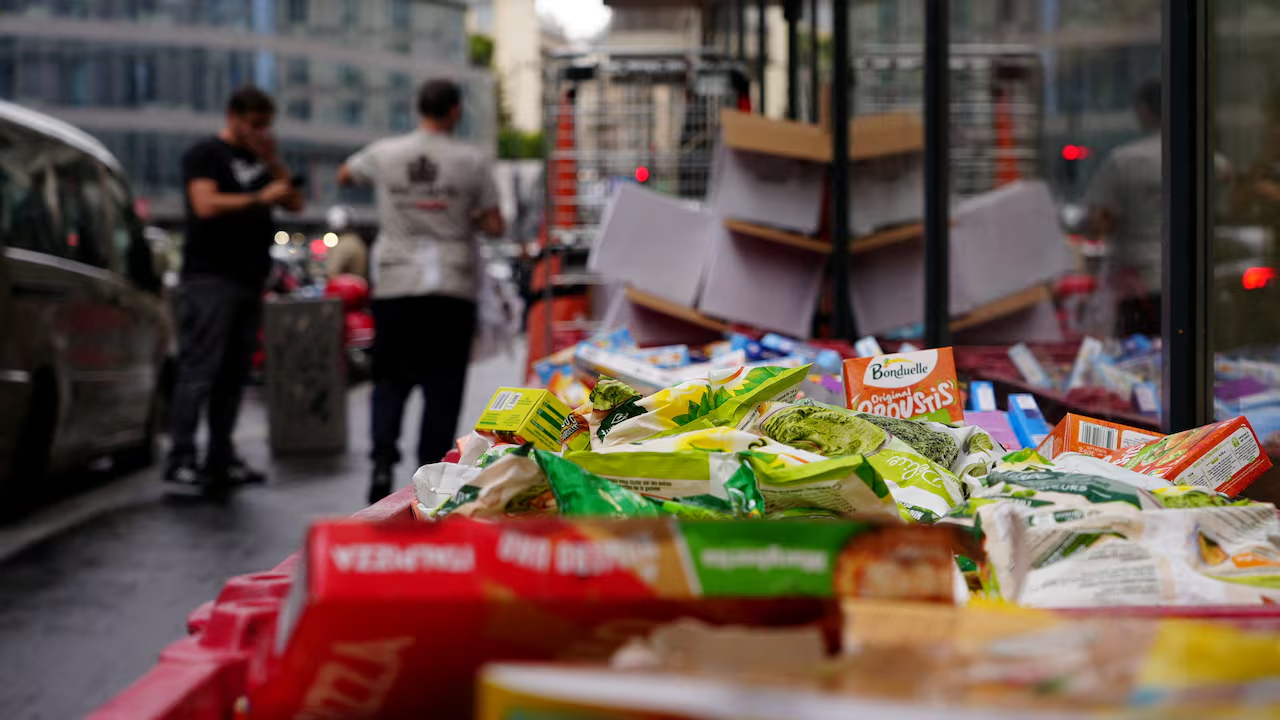
By changing refrigeration settings, they pushed temperatures in some units as high as 50 degrees Celsius, Japan Times reported. Fresh and frozen stock could no longer be considered safe to sell, forcing retailers to throw it away, according to News18.
How it unfolded
The first attacks began overnight on October 11 and continued into October 12. Franceinfo reported that hackers seized control of thermostats in several hundred supermarkets and changed temperatures remotely. The Hacker News identified Danfoss controllers as equipment used in the attacks.
On October 12, stores were confronting the loss of refrigerated and frozen food. Reporting published the following day by The Local put the value of discarded stock at millions of euros. CNBC International also reported fires linked to overheating refrigeration equipment.
A further wave targeted shops using Dixell equipment during the night of October 12 into October 13, according to Le Monde. That widened the reported attacks beyond the Danfoss systems initially identified.
By October 13, investigators were trying to establish who was responsible. France24 reported that no group had publicly claimed the attacks, while an expert attributed the vulnerability to a lack of basic cybersecurity measures.
On October 14, Franceinfo reported that the disrupted refrigeration installations were accessible through the internet. Euronews warned that thousands of similarly exposed devices remained online.
Where it stands
The total number of affected stores is not settled in the coverage. NYT World News reported at least 380 supermarkets on October 13, while Al Jazeera put the figure above 500. By October 14, CNN Brasil reported about 700 food retail establishments. Those figures establish the broad scale, but not a single confirmed total.
The clearest immediate consequence is food waste and lost stock worth millions of euros, as reported by BBC Brasil. The coverage does not provide a final loss estimate or a complete account of how many stores have restored normal refrigeration.
The attackers remain unidentified, according to NYT World News, and Euronews reported on October 14 that no group had claimed responsibility. The wider food security concern is that internet access to poorly protected equipment can produce physical damage and destroy perishable supplies.
What to watch
The immediate question is whether retailers can secure exposed equipment before further attacks. The warning from Euronews that thousands of devices remain accessible makes that a continuing risk, rather than simply a question of repairing affected stores.
Investigators still need to establish responsibility and the full scope of the attacks. Reports of a separate disruption at Dutch grocer Albert Heijn should not be treated as proof of a connection: Euronews described it as a separate incident.
More in Environment
All →
Trump announces plans for massive resource exploration project in Greenland
The announcement puts Greenland's oil, gas and minerals at the centre of a new American initiative, four weeks after a deal to strengthen the US military presence.
26 sources · today
Hurricane Isaias death toll rises to six as Gulf Coast recovery continues
Florida Gov. Ron DeSantis announced the state's death toll had risen to six as recovery from the storm continued.
63 sources · over 8 days
Nepal Flash Floods Sweep Away Homes and Bridges, Affecting More Than 200
A likely massive rock avalanche blocked the Budhi Gandaki River, while authorities rescued 321 people and more than 100 foreign trekkers were stranded.
24 sources · over 4 days