
Iran claims LPG tanker strike and threatens shipping beyond Hormuz
Iran's widening threats against commercial vessels are testing a recovery in Middle East oil shipments, while Washington adds sanctions and tanker attacks push prices higher.
By Hushread Stories, written with AI from 47 outlets · First published 9 Oct 2026 · Chapter 6 of 6
Earlier: Iran Threatens More Hormuz Attacks as Shipping Falls and Sanctions Widen
In brief
- Iran's Revolutionary Guards said they struck an LPG carrier using what they called an illegal route through Hormuz.
- The Guards warned that vessels violating their designated shipping routes could face punishment anywhere in the region.
- Only seven commodity vessels crossed the strait on October 6, the lowest daily figure since July 23.
- The United States imposed sanctions on 17 tankers linked to Iran's shadow fleet as attacks continued.
- Whether recovering oil exports can withstand further attacks remains uncertain, with shipping threats now extending beyond the strait.
Timeline · 7 moments
Trump rules out Iran strikes before the midterms
Bloomberg ↗Guards threaten to pursue vessels throughout the region
Euronews ↗IRGC says LPG carrier struck and caught fire
Mehr News (English) ↗US Treasury sanctions 17 tankers linked to Iran
CNBC ↗Fujairah attack points to campaign beyond the strait
Euronews ↗Tanker off Qatar reports projectile hits and casualties
Arab News ↗Hormuz commodity crossings fall to seven vessels
The Hindu ↗How it started
The latest escalation centres on Iran's efforts to enforce its own shipping rules in and around the Strait of Hormuz. IRNA English reported that the Islamic Revolution Guards Corps (IRGC) Navy warned vessels against defying its guidelines or entering a restricted zone south of the strait.
That pressure has interrupted a recovery in shipping. According to Financial Times World, transit through the waterway approached 90% of prewar levels in September before falling sharply. The current attacks are testing whether that recovery can hold.
How it unfolded
On October 7, a tanker off Qatar's north coast reported being hit by multiple projectiles. Arab News, citing the UKMTO maritime agency, reported casualties but did not specify how many.
By October 8, the attacks appeared to be spreading geographically. Euronews reported that two commercial vessels had been hit within 24 hours, one off Qatar and another off Fujairah in the Gulf of Oman. The Qatar attack was the first in that area in six months, according to its report.
Shipping data showed a sharp slowdown. The Hindu reported on October 8 that just seven commodity vessels had passed through Hormuz on October 6, the lowest daily total since July 23, according to analytics firm Kpler. Mehr News (English) reported Brent crude futures at $101.53 a barrel early on October 8.
Washington also increased economic pressure on October 8. According to CNBC, the US Treasury sanctioned 17 tankers linked to Iran's shadow fleet as part of the Trump administration's military and economic campaign against Iran.
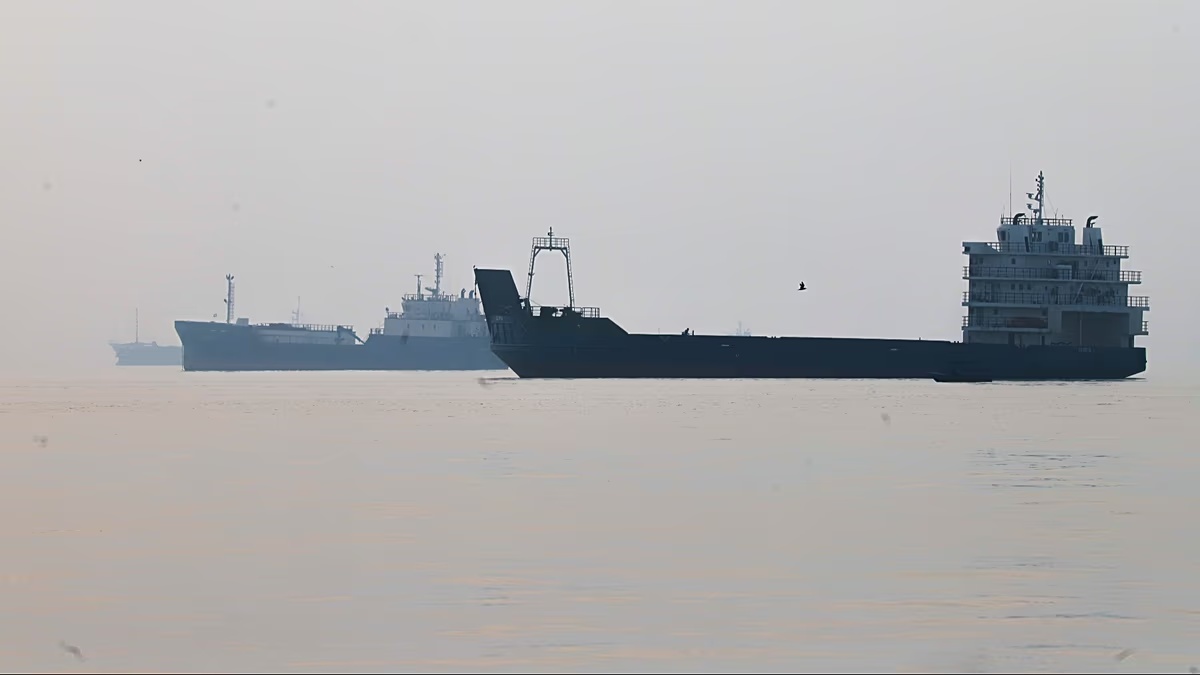
On October 9, the IRGC Navy said a large LPG carrier had been hit and caught fire south of the strait, Mehr News (English) reported. NDTV Top Stories reported that the Guards described the vessel as attempting to use an "illegal route".
The warning accompanying that claim extended beyond Hormuz. Euronews reported that the Guards threatened to pursue and punish vessels violating their designated routes anywhere in the region. Maritime agencies also reported two further strikes on commercial ships, according to the outlet.
Where it stands
Iran's claims of control do not mean all shipping has stopped. CNN reported on October 9 that the strait was no longer paralysed, while CNBC described tanker attacks reaching a wartime high and threatening the rebound in Middle East crude exports. Traffic is continuing, but under renewed pressure.
The reporting also reflects a change in the outlook for US military action. On October 8, NBC News reported that President Donald Trump was weighing renewed large-scale operations in Iran in the coming weeks. An October 9 Bloomberg headline said Trump had ruled out strikes before the midterms. That narrower timing does not settle what might happen afterward.
The LPG carrier strike remains an Iranian claim in the supplied coverage. Reports from Iranian outlets describe a fire, but the coverage does not establish the vessel's damage or casualty toll.
What to watch
The immediate test is whether Iran follows through on its threat to pursue ships beyond Hormuz. Attacks off Qatar and Fujairah already show that the danger is not confined to the strait, according to Euronews.
Shipping volumes will provide another concrete measure. CNBC reported that the surge in attacks is testing whether recovering crude exports can be sustained. Further transit data will help distinguish a temporary slowdown from a broader reversal.
More in World
All →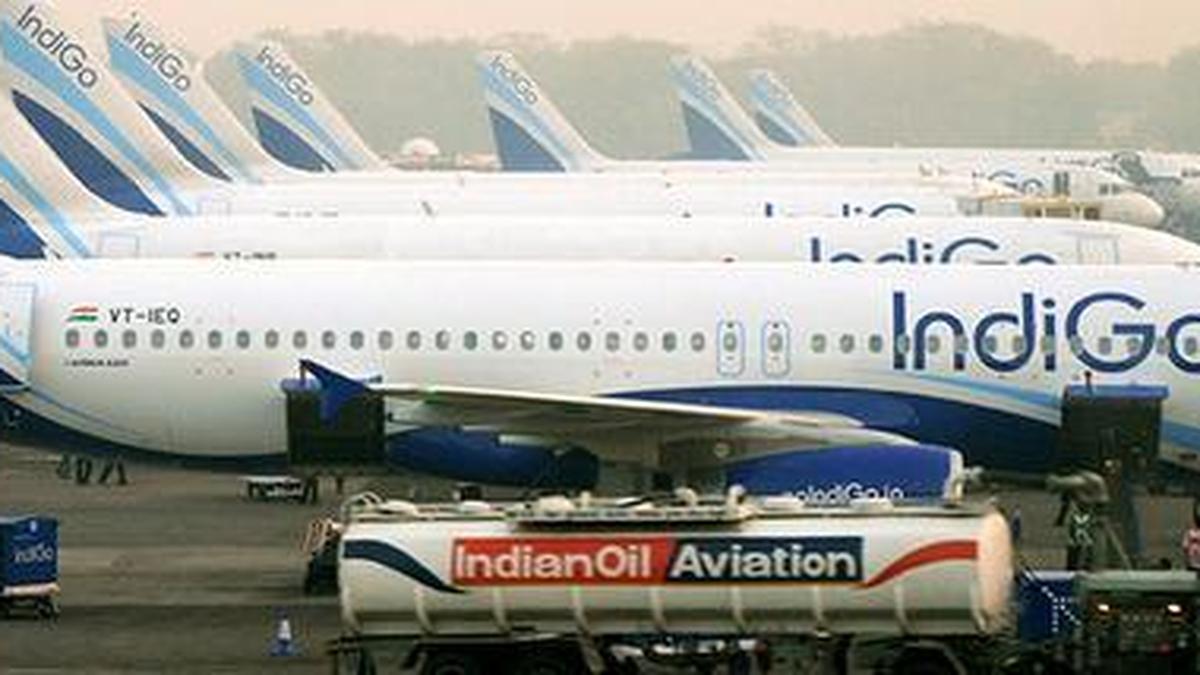
Houthi Attacks Kill Three at Riyadh Airport, Disrupt Flights
Saudi authorities say three people, including an airline pilot, were killed in attacks on Riyadh's airport as airlines suspended flights and India advised nationals to stay alert.
30 sources · over 2 days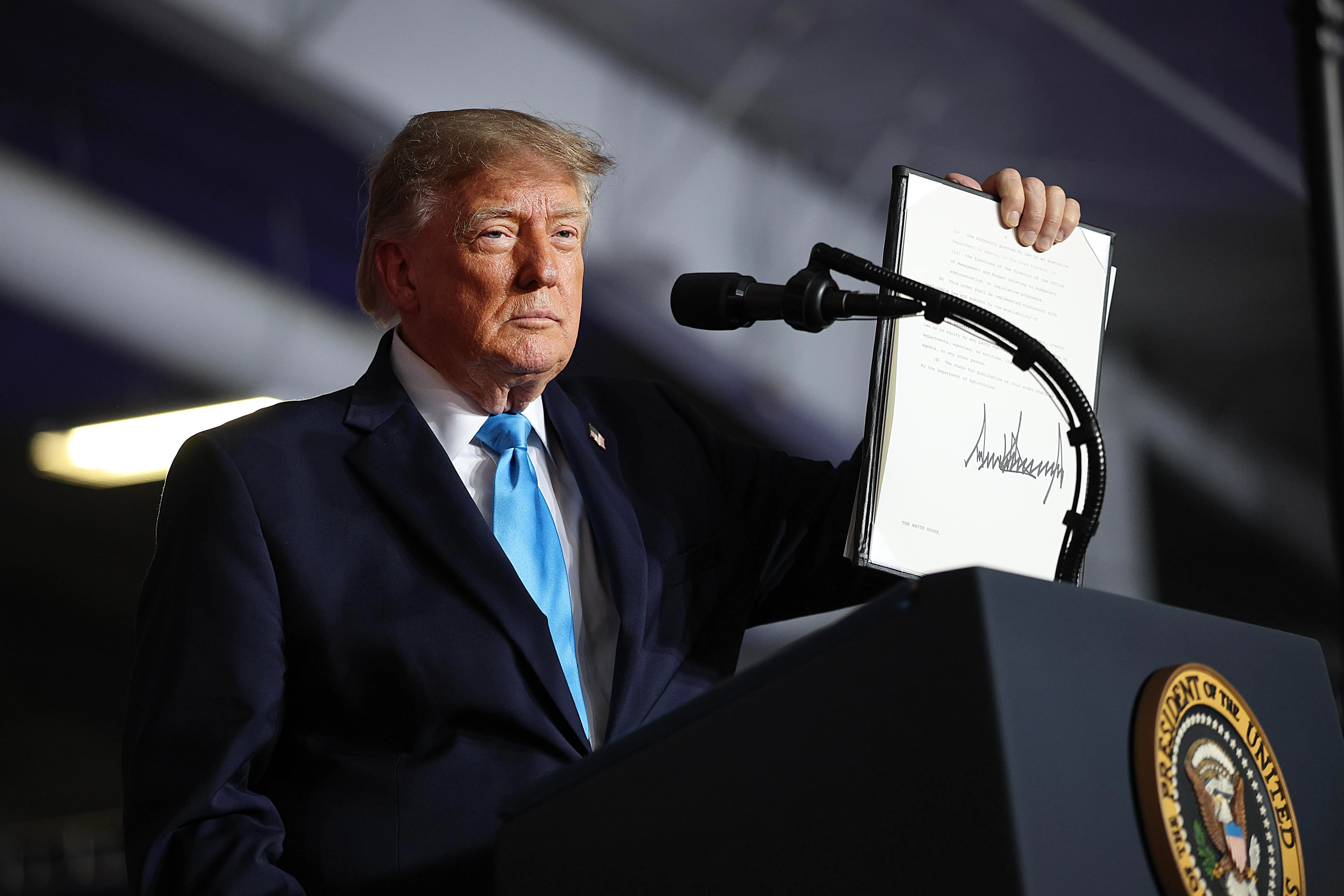
Trump expands dyed diesel access, then announces Russian supply deal
Diesel prices remain elevated despite a temporary fuel waiver, while Trump's newly announced agreement with Russia adds a supply pledge weeks before the US midterm elections.
19 sources · over 4 days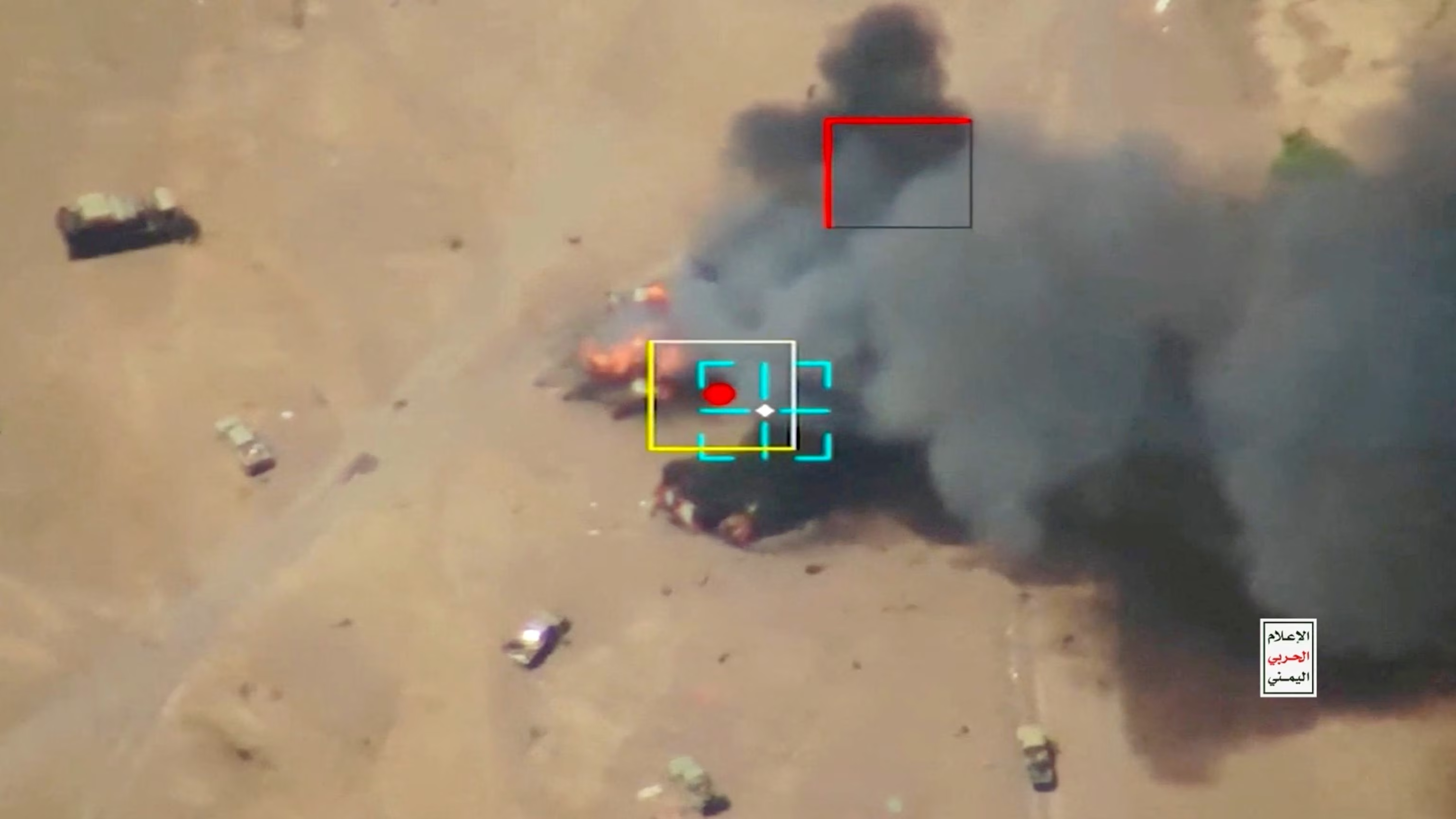
Trump Says No Iran Strikes Before Midterms After Military Readiness Reports
Trump's statement narrows the immediate prospect of renewed fighting, after reports that the Pentagon ordered preparations for major operations in Iran without setting a launch date.
41 sources · over 2 days