
Iran Threatens Tanker Convoy and Gulf Strikes as US Blockade Tightens Hormuz Standoff
A US naval blockade of Iranian ports and Iran's closure of the Strait of Hormuz are feeding each other, with mined tankers, downed drones and a stalled Qatari peace push.
By Hushread Stories, from 36 outlets · First published 26 Nov 2026 · Chapter 3 of 3
Earlier: Iran Vows to Break US Naval Blockade as Tankers Burn in Hormuz
In brief
- The US has reimposed a naval blockade on Iran's ports, and Tehran says it will use all available means to end it.
- Iranian media say 14 tankers are being readied for a convoy, and Trump has said any ship trying to break the blockade will end up at the bottom of the sea.
- Iran's military and the IRGC reported several tankers and an LNG carrier hitting naval mines in the Strait of Hormuz between Monday and Wednesday.
- Iran's army says it shot down a US MQ-9 and a Lucas drone over the strait on Tuesday night.
- Iran says no talks or reopening of Hormuz until its seven conditions are met, while Qatar's prime minister presses Rubio and Vance to restart negotiations.
Timeline · 9 moments
IRGC says LNG carrier hit mine and exploded
Mehr News (English) ↗Iran says it downed US MQ-9 and Lucas drones
Tasnim News (English) ↗Hormuz authority blacklists tugboats
Bloomberg ↗Qatar presses US officials to restart talks
Euronews ↗Bulk carrier hit by projectile off UAE
World News Headlines, Latest International News, World Breaking News - Times of India News ↗IRGC says escorted tankers hit mines
The Hill ↗Iran readies 14 tankers for showdown
Times of India Top Stories ↗Trump dares Iran to run 14-tanker convoy
ZeroHedge News ↗Iran vows all available means against US blockade
Al Jazeera ↗How it started
The immediate trigger is a US naval blockade of Iran's oil exports. Middle East Eye described it as imposed in retaliation for Iran's own push to block the Strait of Hormuz, and Arab News called it a reimposed blockade, which means an earlier version had already come and gone.
This is not a fresh quarrel. Al-Monitor described a nine-month conflict that is dragging on with little prospect of a diplomatic breakthrough, and Iran says it will keep the strait shut until its conditions are met.
What changed this week is that both sides began putting hardware on the water, and Iran began talking openly about forcing the blockade rather than waiting it out.
How it unfolded
On Monday 23 November, Iran's foreign ministry said it would use all available means to counter the blockade. Euronews reported that spokesman Esmaeil Baghaei called it an act of crime, a day after Trump said Iranian ships trying to break it would go to the bottom of the sea. ZeroHedge framed Trump's remark as a dare to Iran to send a 14-tanker convoy through.
The convoy idea gathered weight quickly. The Times of India reported that Iran was mobilising 14 tankers for a showdown, with state media invoking a historic figure as a symbol. The National said Iran's economic crisis was pushing regime-linked voices to favour a military-escorted convoy that could trigger a wider confrontation.
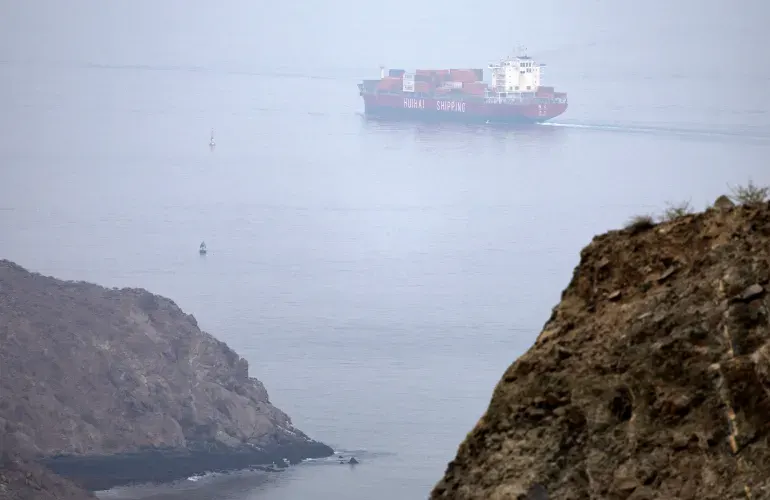
The maritime incidents mounted on Tuesday. The Hill reported the IRGC saying three escorted oil tankers were hit by underwater mines, though Euronews noted the Joint Maritime Information Centre said that was unconfirmed. Tasnim carried the Iranian Navy's claim that two more tankers had struck mines in a prohibited area east of the strait. Middle East Eye reported the IRGC saying it targeted a container ship, and the Times of India reported a bulk carrier hit by a projectile off the UAE coast, according to UKMTO.
Iran also tightened its paperwork. Bloomberg reported that the Iranian body seeking to control Hormuz traffic added tugboats to its non-compliance list, a sign of pressure on the ecosystem that supports tanker traffic.
On Tuesday night and into Wednesday, Tasnim reported Iran's Air Defense Force shooting down a US Lucas drone and an MQ-9 in separate operations over the strait. Mehr reported the IRGC saying an LNG carrier struck a mine and exploded after switching off its positioning system. Iran International said Tehran also threatened new military capabilities and demanded compensation from Gulf states it accused of facilitating US actions.
Where it stands
Neither side is backing down publicly. CBS reported Trump acknowledging Iran's increasing attacks but saying they have done no damage, while Mohsen Rezaei, secretary of the Supreme National Security Council, told Mehr that Iran is resolved to break the blockade.
Much of the mine and drone reporting comes from Iranian outlets and officials, and independent confirmation has been thin. The one outside check in the coverage, from the Joint Maritime Information Centre, called the IRGC's mine claim unconfirmed.
On diplomacy, The Independent reported Iran insisting there will be no talks until its seven conditions are met. Euronews reported Qatar's prime minister pressing Rubio and Vance to restart talks. NDTV reported Iran saying Hormuz could reopen within two days, but only if Washington agrees to its demands, which include lifting the blockade.
What to watch
The first question is whether the tanker convoy actually sails, and what US forces do if it does. Trump's threat and Iran's preparations leave little room for a quiet outcome.
The second is whether Qatar's effort gets either side to the table, given that Iran ties both talks and reopening Hormuz to its seven conditions. Araghchi has also argued a land blockade would be virtually impossible, a sign Tehran expects Washington to try to widen the squeeze.
More in World
All →
Saurav Das stopped from UK flight, takes passport dispute to Delhi High Court
The Cockroach Janta Party leader says he was blocked from flying to Oxford. The government cites a passport discrepancy and a look out circular, and the Delhi High Court is now involved.
14 sources · over 3 days
Two men charged with burglary and trespass over break-in at Prince William and Kate's Norfolk home
Mirgen Doku and Arilen Ndoci are due before Norwich Magistrates' Court after the incident at Anmer Hall on the Sandringham estate.
41 sources · over 3 days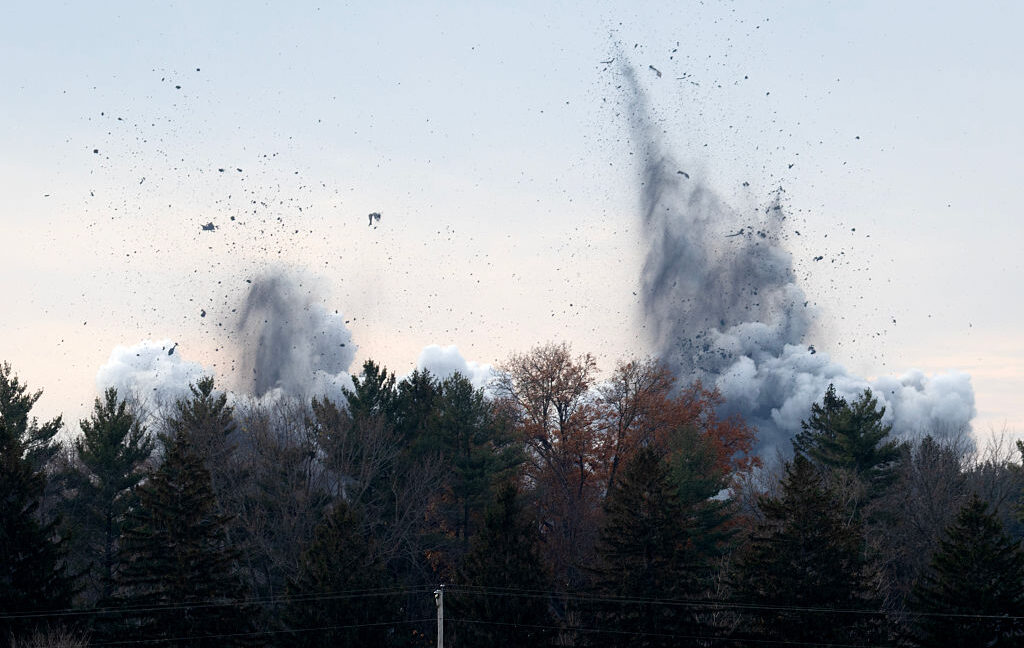
Army Detonates Five Tons of Degraded Lead Azide at Iowa Ammunition Plant
The Army destroyed the nation's entire lead azide stockpile in a controlled blast after a court cleared the way, and early EPA readings show no airborne lead, but questions persist.
58 sources · over 3 days