
Iran Vows to Break US Naval Blockade as Hormuz Standoff Deepens
Tehran says it will use all available means against a US naval blockade of its ports, while talks stall over seven Iranian conditions and tankers burn in the Strait of Hormuz.
By Hushread Stories, from 34 outlets · First published 25 Nov 2026 · Chapter 1 of 3
In brief
- Iran says it will use all available means to counter the reimposed US naval blockade of its ports.
- State media and regional outlets report Iran is preparing a convoy of 14 oil tankers to challenge the blockade.
- Trump said any Iranian ships trying to break the blockade would end up at the bottom of the sea.
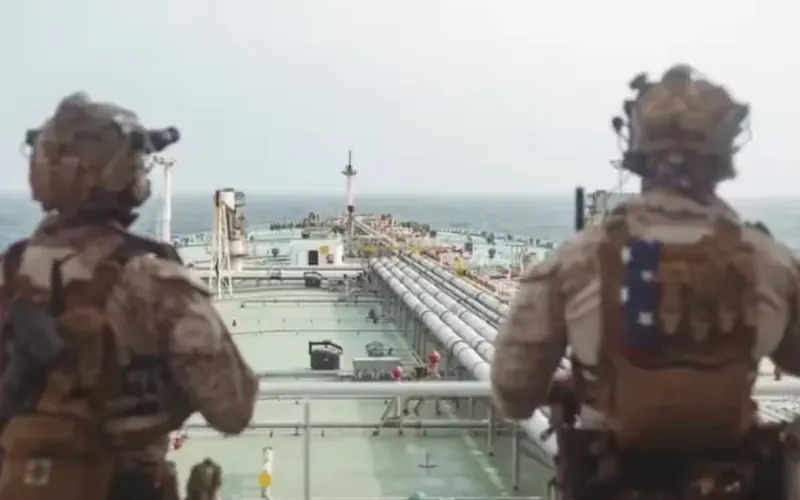
- Iran's army says it has tightened control over the Strait of Hormuz, and vessels must coordinate passage with its forces.
- Qatar is pressing Washington to restart talks, but Iran says no negotiations will occur until its seven conditions are met.
Timeline · 13 moments
Iran says it can withstand US blockade and fight inflation
Arab News ↗Iran army tightens control over Strait of Hormuz passage
IRNA English ↗IRGC chief warns next war may extend beyond West Asia
The Statesman ↗Army chief says Hormuz will become increasingly closed
Tehran Times ↗Qatar presses Rubio and Vance to restart talks
Euronews ↗Iranian Navy says two more tankers hit mines
Tasnim News (English) ↗Ghalibaf says no talks until seven conditions are met
Middle East Eye ↗Iran hits US bases and Gulf civilian sites after lull
Al Jazeera ↗Reports say Iran readies 14-tanker convoy to challenge blockade
Times of India Top Stories ↗Trump warns blockade runners will be sent to the bottom
Euronews ↗Update 25 Nov 2026, 2:50 pm UTC
Coverage from November 25 shows the standoff continuing without a breakthrough. Arab News reported First Vice President Mohammad Reza Aref saying Tehran is not worried about the US naval blockade because more cargo is moving through other borders, while the government works to curb price rises. IRNA English and Mehr News both reported the Iranian Army has tightened control over the Strait of Hormuz, with vessels required to coordinate passage. IranWire reported IRGC commander warnings that future wars may spread beyond the region. The core dispute over Iran's seven conditions remains unresolved.
How it started
The current crisis sits inside a conflict that Al-Monitor described on November 24 as nine months old, with little prospect of a diplomatic breakthrough. Iran refers to it as a US-Israeli war against the country, a phrase used by IRNA.
The immediate trigger for this chapter is the blockade. Middle East Eye reported that the US naval blockade was imposed in retaliation for Iran's own push to block the Strait of Hormuz. Arab News called it a reimposed blockade aimed at Iran's oil exports.
The result is a tit-for-tat over one of the world's key shipping lanes, with Iran restricting passage and Washington cutting off Iranian ports.
How it unfolded
On November 22, Iran put on a show of force. Al Jazeera reported that military officials toured an underground facility dubbed a "missile city" and unveiled a launcher that can fire two liquid-fuelled missiles at once. NDTV said state television showed Revolutionary Guards chief Ahmad Vahidi and aerospace forces head Majid Mousavi at the base. Times Now and News18 framed it as a message to Donald Trump while Washington weighed fresh strikes. The same day, Gulf News quoted Ghalibaf saying the state of "neither war nor peace" cannot continue.
On November 23, the focus moved to the blockade. Euronews reported that foreign ministry spokesman Esmaeil Baghaei called it an "act of crime", a day after Trump said Iranian ships trying to break it would go "to the bottom of the sea". Reuters and Al Jazeera carried Tehran's pledge to use all its tools in response. NDTV added that Iran said Hormuz could open within two days, but only if Washington accepted its demands, including lifting the blockade.
The tanker plan drew attention too. The Times of India reported Iran was mobilising 14 tankers, with state media invoking a historic figure as a symbol, and ZeroHedge said Trump dared Iran to send the convoy through. CBS reported Trump acknowledged Iran's increasing attacks but said they had "done no damage". Al Jazeera reported Iran hit US bases and civilian sites in the Gulf after a lull. Foreign Minister Abbas Araghchi said a land blockade would be virtually impossible, according to Mehr and Iran International.
On November 24, the hardline messaging continued. Middle East Eye reported Ghalibaf saying there would be no actions or negotiations until the seven conditions are met. The Independent carried the same position. Tehran Times quoted the army chief saying Hormuz will become increasingly closed. Mehr reported Supreme National Security Council secretary Mohsen Rezaei saying Iran is resolved to break the blockade.
Incidents at sea were reported as well. Tasnim said the Iranian Navy announced two more tankers caught fire after hitting naval mines in a prohibited area east of the strait. Euronews reported the IRGC claimed three tankers hit mines while under US escort, a claim the Joint Maritime Information Centre said was unconfirmed. The same report said Qatar's prime minister pressed Rubio and Vance to restart talks.
Where it stands
As of November 25, neither side has moved on the core dispute. Iran insists its seven conditions come first, and the Strait of Hormuz remains closed by Tehran's order. The Statesman reported the IRGC chief warning that the next war against Iran may extend beyond West Asia, and said the US tightened economic sanctions.
Iranian officials are projecting confidence. Middle East Eye cited Tasnim reporting that First Vice President Mohammad Reza Aref said Tehran is not concerned about the blockade. The National offered a different reading, arguing Iran's economic crisis is piling pressure on Tehran to break it, with regime-linked voices urging a military-escorted convoy that could trigger a wider confrontation.
Accounts of the tanker incidents conflict. Iranian outlets say vessels violated maritime rules or hit mines, while the maritime information centre cited by Euronews could not confirm the IRGC's claim.
What to watch
The main question is whether the tanker convoy actually sails. Trump's warning and Iran's pledge to use all means set up a possible direct clash between Iranian ships and US forces, though the coverage describes the convoy as under discussion rather than launched.
The other is whether Qatar's mediation gains traction. Iran says it will not talk until its conditions are met, while Trump has said he wants a deal, and the coverage does not show how those positions would be reconciled.
More in World
All →
Saurav Das stopped from UK flight, takes passport dispute to Delhi High Court
The Cockroach Janta Party leader says he was blocked from flying to Oxford. The government cites a passport discrepancy and a look out circular, and the Delhi High Court is now involved.
14 sources · over 3 days
Two men charged with burglary and trespass over break-in at Prince William and Kate's Norfolk home
Mirgen Doku and Arilen Ndoci are due before Norwich Magistrates' Court after the incident at Anmer Hall on the Sandringham estate.
41 sources · over 3 days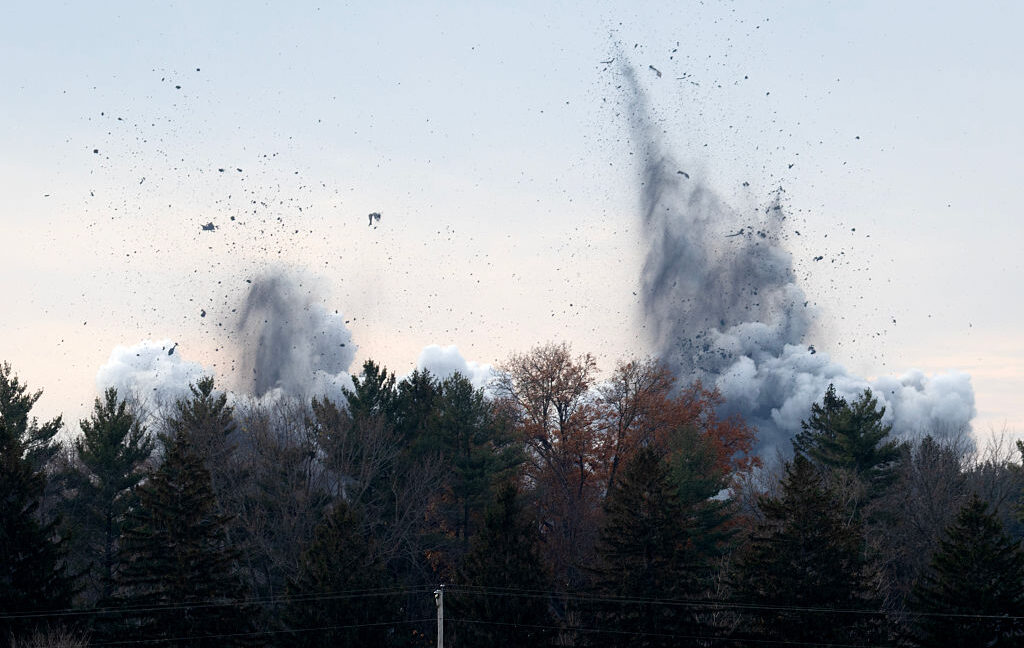
Army Detonates Five Tons of Degraded Lead Azide at Iowa Ammunition Plant
The Army destroyed the nation's entire lead azide stockpile in a controlled blast after a court cleared the way, and early EPA readings show no airborne lead, but questions persist.
58 sources · over 3 days