
Japan Denies Espionage After Russia Detains Journalist on Sakhalin Island
The detention of Yuki Imai has prompted a Japanese diplomatic protest, while reports of a possible prisoner swap add an unconfirmed dimension to the dispute.
By Hushread Stories, written with AI from 23 outlets · First published 18 Oct 2026 · Chapter 2 of 2
Earlier: Japan Summons Russian Ambassador After Journalist Detained on Espionage Allegations
In brief
- Russia detained Hokkaido Shimbun journalist Yuki Imai on Sakhalin Island, accusing him of gathering military information.
- Russian authorities transferred the reporter to Moscow, where a court ordered about two months in custody.
- Japan summoned Russia's ambassador on October 14, seeking information and an opportunity to contact the detained journalist.
- Japan denied espionage after Moscow accused Imai of collecting information about Russian defence capabilities for Tokyo.
- Reports suggest a possible prisoner swap motive, but the supplied coverage establishes no agreement or confirmed negotiations.
Timeline · 6 moments
Report raises possible prisoner swap motive for detention
Japan Times ↗Japan denies espionage following Russia's arrest of journalist
Le Monde ↗Court orders reporter held for two months
Mint ↗Japan summons Russian ambassador seeking information and contact
Infobae ↗Russian state television shows footage of handcuffed man
World News CNA ↗FSB announces Japanese reporter's detention on Sakhalin Island
Infobae ↗How it started
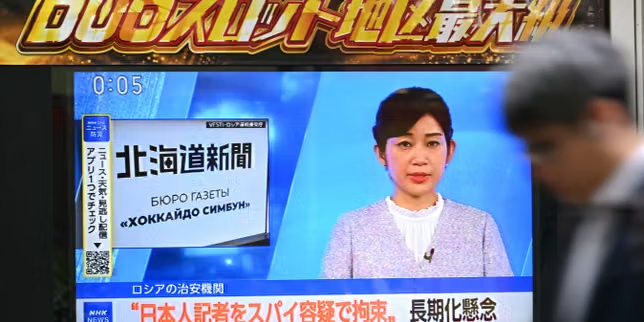
Russia's Federal Security Service, the FSB, announced on October 13 that it had detained a Japanese journalist on Sakhalin Island in Russia's far east. The reporter, Yuki Imai of the Hokkaido Shimbun, was subsequently transferred to Moscow, according to Al Jazeera.
The allegation concerns military information. The BBC reported that Imai was accused of collecting information on Russia's defence capabilities for Tokyo. According to Euronews, Russian security services said the information concerned military readiness, mobilised troops and volunteers for the war in Ukraine. These are Russian allegations, not established findings.
How it unfolded
On October 13, The New York Times reported that Imai had been reporting on military recruitment in Russia's far east. Le Monde later described his arrest as a violent detention in a hotel room on Sakhalin.
Footage also became part of the public account. CNA reported on October 13 that Russian state television showed a man lying on a floor while three masked men in black uniform handcuffed him.
On October 14, Japan summoned Russia's ambassador in Tokyo, Nikolai Nozdrev, to seek information and an opportunity to contact the journalist, according to Infobae. The New York Times described the summons as Japan's protest against the detention.
Reports published that day also set out the custody decision. Mint, citing an FSB statement, reported that a court had ordered two months in custody. DIE WELT described the period as just under two months.
On October 15, Le Monde and Franceinfo reported Japan's denial of espionage following the arrest. That placed Tokyo's rejection directly against Moscow's claim that Imai had conducted espionage on Russian territory.
Where it stands
The latest custody decision described in the coverage leaves Imai detained in Moscow while the espionage accusation remains disputed. The supplied reports do not establish a conviction or give a subsequent court outcome.
On October 17 and 18, The Japan Times reported suggestions that Russia might seek a prisoner swap. Some linked Imai's detention to Japan's handover to Germany this month of a Russian hacker detained in Japan in May. The report presents that connection as a possibility, not a confirmed Russian demand.
What to watch
The immediate issues are whether Japan obtains the contact it requested with Imai and what happens next in the Russian proceedings. The supplied coverage does not say whether contact has been granted or identify a date for the next hearing.
Any concrete exchange proposal would also be a significant development. For now, The Japan Times reporting raises a possible motive without establishing that negotiations are taking place.
More in World
All →
Ukraine Starlink Restrictions Spark Dispute Over White House Role and Restoration
Restrictions on Ukraine's satellite access disrupted military operations, exposing its dependence on US technology as conflicting accounts emerge over who ordered the limits and whether service is fully restored.
75 sources · over 5 days
Houthi Strikes Hit Aden as Saudi Forces Target Taiz Siege
Missile attacks on Yemen's government seat and continued drone interceptions in Saudi Arabia accompany a widening ground battle, with Saudi forces now trying to break the siege of Taiz.
41 sources · over 7 days
CJP Leaders Detained in Delhi: Dipke Granted Bail, Bora Released
Abhijeet Dipke was granted conditional bail and released after signing a peace bond, while Neha Bora had been released earlier.
23 sources · over 5 days