
Jon Ossoff Wins Second Senate Term in Georgia, Defeating Mike Collins
Ossoff's victory preserves a key Democratic Senate seat in a state Donald Trump carried in 2024, while drawing early attention to his potential national ambitions.
By Hushread Stories, from 28 outlets · First published 6 Nov 2026 · Chapter 3 of 3
Earlier: Jon Ossoff Wins Second Senate Term in Georgia, Defeating Mike Collins
In brief
- Democratic Senator Jon Ossoff won a second term in Georgia, defeating Republican Representative Mike Collins.
- Ossoff began the cycle as the only Senate Democrat seeking reelection in a state Trump carried in 2024.
- The contest had been expected to be competitive, but election coverage described an easy victory for Ossoff.
- His campaign's attacks on corruption attracted national attention and helped fuel speculation about a presidential bid.
- Prediction market interest has boosted talk of Ossoff in 2028, but the supplied coverage establishes no candidacy.
Timeline · 5 moments
Polymarket ranking puts Ossoff ahead of presidential rivals
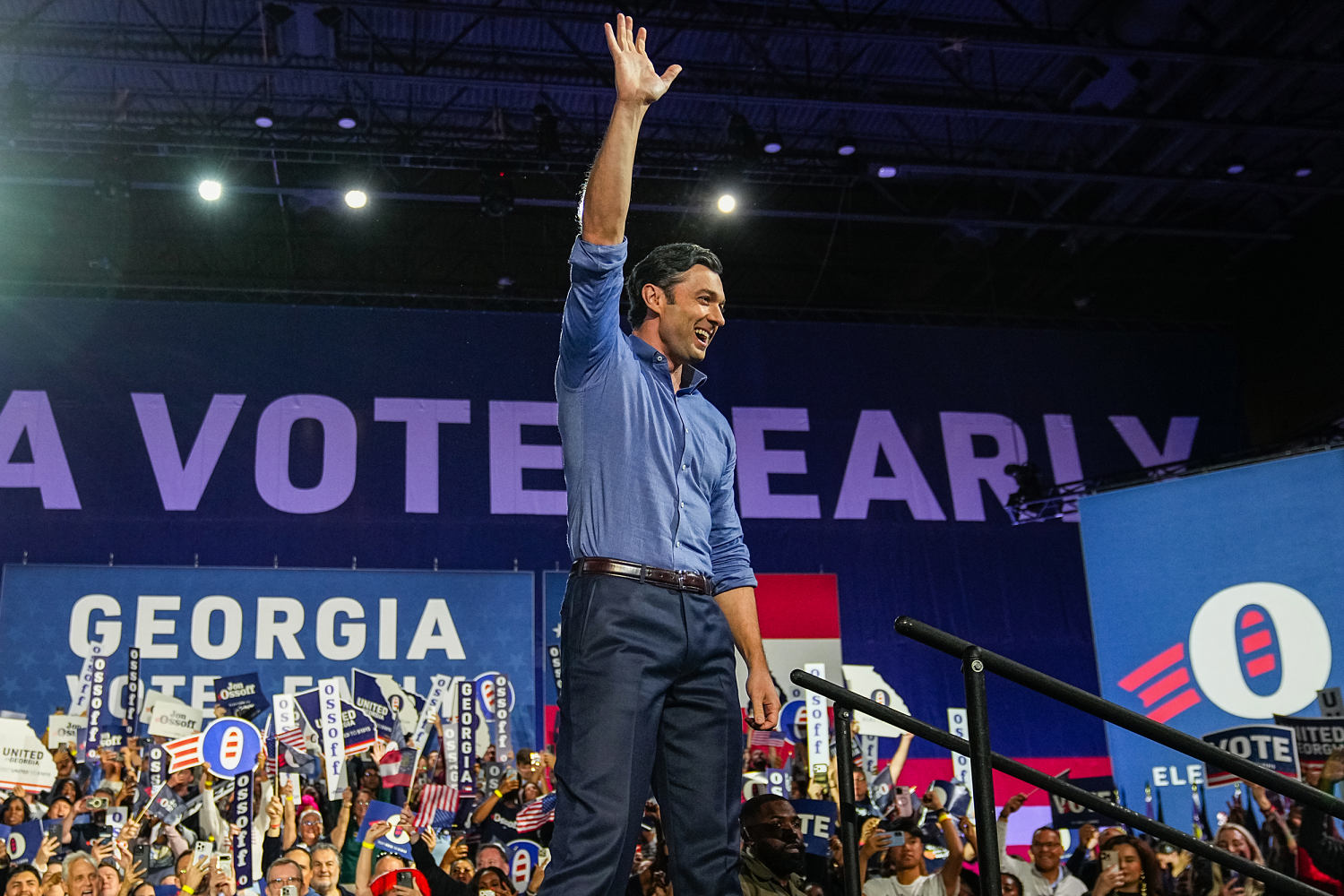
The Independent ↗Ossoff delivers victory speech after Georgia reelection win
CBS Top Stories ↗Campaign speech draws national attention and early 2028 chatter
The Hollywood Reporter ↗Ossoff projected to defeat Collins and retain Senate seat
NBC News ↗Georgia votes as Ossoff seeks a second Senate term
The Hill ↗How it started
Georgia initially looked like one of Republicans' best opportunities to take a Democratic Senate seat. Jon Ossoff, 39, began the cycle as the only Senate Democrat running for reelection in a state Donald Trump carried in 2024, according to NDTV News - World-news News.
Ossoff was seeking a second six-year term after defeating then-Sen. David Perdue in a narrow January 2021 runoff, The Hill reported. His Republican challenger this time was Representative Mike Collins.
The stakes extended beyond Georgia. Democrats needed a net gain of four seats to regain the Senate, according to Forbes. Holding Ossoff's seat would protect their starting position rather than add to that total.
How it unfolded
On November 3, Georgians voted in a state hosting both a Senate contest and a governor's race. A year earlier, the Senate election had been considered one of the cycle's marquee showdowns, NPR Politics reported.
By November 4, the result looked much less competitive than those expectations suggested. NBC News projected Ossoff's victory over Collins, describing a nationally watched campaign that had sometimes featured heated personal attacks. The Hill also reported a winning projection from Decision Desk HQ.
The campaign brought Ossoff attention well beyond his state. On November 4, The Hollywood Reporter described how his "Epstein class" stump speech had become a national political talking point. The Nation framed his commanding victory as a lesson in channeling voters' anger about corruption and corporations. Those are interpretations of the campaign, not a measured account of why individual voters chose him.
Ossoff delivered his victory speech on November 4, according to CBS Top Stories. That same day, The Independent reported that he had moved ahead of Alexandria Ocasio-Cortez and vice president JD Vance on Polymarket's presidential market.
On November 5, Times now continued examining his potential as a 2028 Democratic nominee. The attention marked a rapid shift from defending a vulnerable Senate seat to being discussed as a possible national contender.
Where it stands
Ossoff has secured a second term and kept Georgia's seat in Democratic hands. France24 reported that the victory over Collins also pushed the Senate's youngest member further into national prominence. The supplied coverage does not establish a final vote margin.
The broader congressional picture is less consistent across the reports. The Hindu reported that Democrats won control of both chambers, while Forbes still framed its live coverage around the gains Democrats needed to retake the Senate. Ossoff's result is clear across the coverage, but those reports do not provide a consistent final accounting of congressional control.
What to watch
The immediate open question around Ossoff is whether presidential speculation becomes an actual campaign. Times now tied his rising profile to movement on Polymarket, but a prediction market ranking is not a nomination or an announced candidacy. The supplied coverage establishes neither a presidential launch nor a decision to run.
More in Politics
All →
Harmeet Dhillon resigns as Justice Department civil rights chief after midterms
Her departure follows Republican election losses and reported disputes with department leaders, though Dhillon says she decided to leave before voters went to the polls.
22 sources · over 2 days
Trump signs proclamation to preserve gilded Oval Office and Cabinet Room
The designation follows Republican election losses and aims to protect Trump's White House changes, but congressional ratification and the future of the gold decor remain unresolved.
22 sources · today
Democrats Win Texas Governor and Senate Races, Ending Decades of Defeats
Gina Hinojosa and James Talarico have broken Republican dominance in Texas, with fresh reporting pointing to education grievances and anger over immigration enforcement as factors.
51 sources · over 5 days