
Knesset Elects Eisenkot Ally Kahana Speaker, Weakening Netanyahu as Coalition Talks Begin
A 66-52 speaker vote has shifted control of Israel's parliament away from Netanyahu, while Eisenkot weighs a minority government, talks with Likud and a December deadline.
By Hushread Stories, from 45 outlets · First published 22 Nov 2026 · Chapter 6 of 6
Earlier: Opposition Wins Knesset Speaker Vote 66-52 as Eisenkot Seeks a Coalition
In brief
- Matan Kahana, an ally of Gadi Eisenkot, was elected Knesset speaker by 66 votes to 52 on November 17.
- Arab parties helped supply the votes, and Ahmad Tibi was elected deputy speaker.
- Neither Eisenkot's bloc nor Netanyahu's won a majority in the October election, leaving government formation unresolved.
- Eisenkot has until December 6 to form a government, with a possible 14-day extension, after talks with Likud resumed on November 22.
- Options still on the table include a minority government backed by Arab parties, a deal with Haredi parties, or a national unity government.
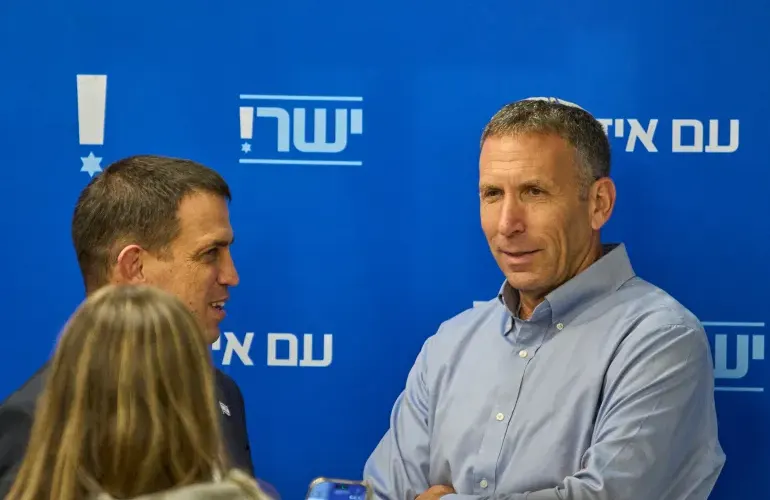
Timeline · 13 moments
Netanyahu and Eisenkot talks end without a deal
Middle East Eye ↗Eisenkot gets until December 6 to form government
Expresso ↗Netanyahu and Eisenkot parties resume coalition talks in Herzliya
Arab News ↗Likud responds with conditions
DIE WELT ↗Eisenkot invites Likud to coalition talks
© Ilia Yefimovich, AFP ↗Bennett backs Eisenkot, rules out serving under Netanyahu
India Today GK & Current Affairs ↗Eisenkot vows swift government formation
Arab News ↗Eisenkot floats minority government with Arab support
DIE ZEIT | Nachrichten, News, Hintergründe und Debatten ↗Opposition begins legislative push to undo Netanyahu legacy
South China Morning Post ↗Kahana profile: former fighter squadron commander and lawyer
Expresso ↗Update 22 Nov 2026, 9:48 pm UTC
Talks between Likud and Eisenkot's party resumed on November 22, as The Hindu reported, but Middle East Eye says they ended without a deal. Expresso reports Eisenkot now has until December 6 to form a government, with a possible 14-day extension. The core question is unchanged: no bloc has a majority, and the coalition picture remains open.
Update 22 Nov 2026, 3:47 pm UTC
Talks have moved on from a single invitation to a live negotiation. Gulf News and Arab News both reported that Likud and Eisenkot's Yashar party resumed discussions in Herzliya on Sunday, and The Cradle said Netanyahu, Smotrich and Ben Gvir were preparing for what it called marathon talks on a unity government. The core story still stands: the speaker's election and the stalled majority are unchanged, so the headline and dek remain accurate.
How it started
Israel voted in late October, and the result gave nobody a majority. Neither Gadi Eisenkot's bloc nor the camp of caretaker Prime Minister Benjamin Netanyahu reached the 61 seats needed, according to Le Monde.
The aftermath was bitter. Opposition figures and critics accused Netanyahu's camp of trying to influence the vote and of pursuing an attempted coup, which led to calls for investigation and an internal police probe into alleged misuse of police against Arab parties.
Eisenkot, whose centrist Yashar party leads the opposition, was tasked with forming a government and given until early December, Euronews reported.
How it unfolded
The first real test came on November 17, when the new Knesset chose its speaker. Matan Kahana, a member of Eisenkot's party, won 66 votes out of 120, ANSA reported, with support from Arab parties. ZeroHedge put the margin at 66-52.
The result was a clear setback for Netanyahu. UPI called it a major political setback, and Gulf News described it as a first step towards rolling back the legacy of the divisive veteran leader. DN noted that Netanyahu's allies had done everything to prevent it, and that Kahana replaced Ohana in the chair.
Netanyahu did not take it quietly. The Times of India reported that he fumed and referred to the new majority as 'terror supporters'. Ahmad Tibi was also elected deputy speaker.
The speaker's chair has practical weight. SBS News said Kahana can advance bills prioritised by the Eisenkot-led bloc, and by November 18 the South China Morning Post reported that opponents had begun a legislative offensive to roll back Netanyahu's legacy.
On November 20, Die Zeit reported that Eisenkot was considering a minority government with Arab support if he could not find a majority. Arab News said he vowed to form a government swiftly, amid internal divisions over whether to work with ultra-Orthodox or Arab-majority parties.
Then came a change of tack. On November 21, AFP reported that Eisenkot had invited Likud to a 'marathon series of talks', his party said. Der Spiegel noted this came a day after he floated a minority government. Die Welt reported that Likud set conditions shortly after the announcement.
Also on November 21, India Today reported that former prime minister Naftali Bennett backed Eisenkot for the top job and ruled out serving under Netanyahu.
Where it stands
Eisenkot's bloc controls the speaker's chair but not a governing majority. SBS News said he faces three main options to secure power, and Die Welt listed them as alliances with the ultra-Orthodox or the Arab parties, or a national unity government of the kind Netanyahu demands.
The talks with Likud were due to start on Sunday, November 22. Eisenkot's party described them, according to NDTV, as reflecting a commitment to forming the broadest possible government.
The bloc's unity is far from assured. Al Jazeera described the alliance as fragile, with deep ideological divisions to overcome.
What to watch
The deadline is the key date. Eisenkot has until early December, and the summary of the story points to December 6, to present a government.
Watch whether Likud's conditions leave any room for a deal, and whether negotiations with Haredi and Arab parties move from unresolved to settled. If they do not, a minority government resting on Arab support is the fallback Eisenkot has already raised.
More in Politics
All →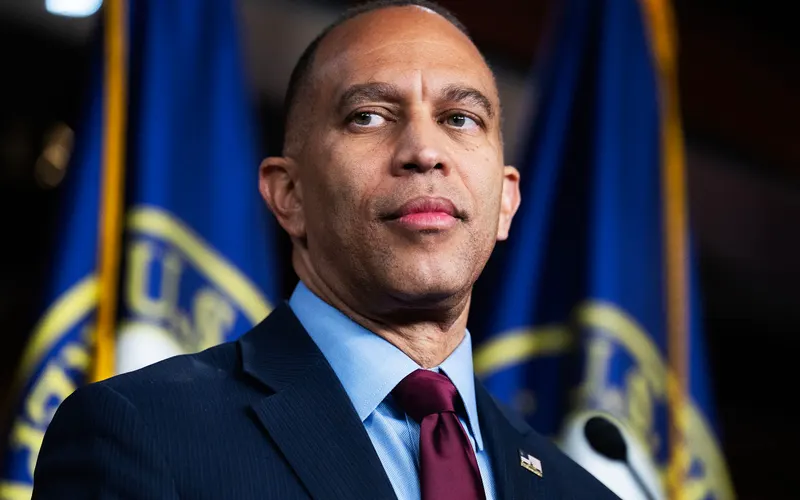
House Democrats Nominate Hakeem Jeffries for Speaker, 251 Votes to 11
Jeffries is set to become the first Black Speaker in U.S. history when the new Congress convenes in January.
44 sources · over 7 days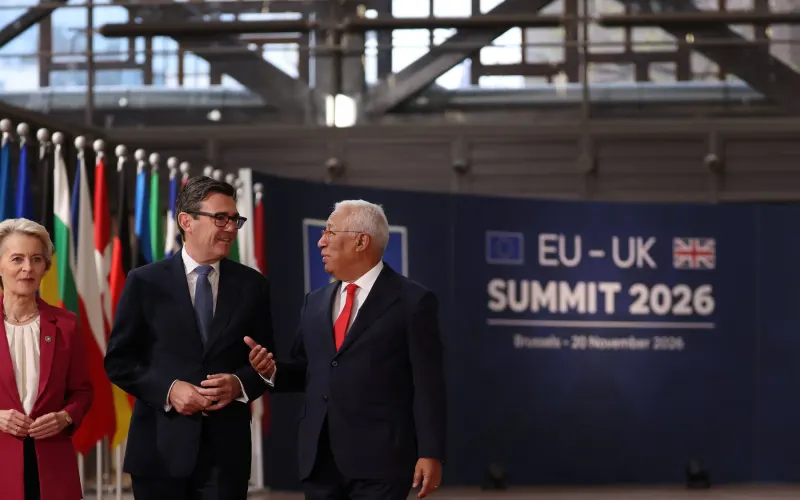
UK and EU sign Brussels reset deals on food, youth mobility and carbon trading
Andy Burnham's summit deals are the biggest step toward the EU since Brexit, but tuition fees remain unresolved and talk of rejoining has already split British politics.
51 sources · over 5 days
Trump orders federal contractors to coordinate with White House on congressional information requests
A new executive order makes roughly 100,000 federal contractors check with the White House before answering Congress, weeks before Democrats take over the chamber and promise broad investigations.
15 sources · over 2 days