
Opposition Wins Knesset Speaker Vote 66-52 as Eisenkot Seeks a Coalition
With a new speaker from his bloc, Gadi Eisenkot gains control of the parliamentary agenda while Netanyahu stays caretaker, and the race to assemble a majority before next month's deadline is now open.
By Hushread Stories, from 43 outlets · First published 22 Nov 2026 · Chapter 5 of 6
Earlier: Opposition Wins Knesset Speaker Vote, Handing Eisenkot Control of Israel's Legislative Agenda
In brief
- Matan Kahana, an ally of Gadi Eisenkot, was elected Knesset speaker on 17 November by a vote of 66 to 52.
- Arab parties backed Kahana, and Arab MP Ahmad Tibi was elected a deputy speaker, handing Netanyahu's camp a visible setback.
- Neither Eisenkot's bloc nor Netanyahu's won an outright majority in the late-October election, so government formation remains unresolved.
- Eisenkot has until next month to form a government and on 21 November invited Likud to a marathon series of coalition talks.
- Likud answered with conditions, including that Netanyahu stay sole prime minister and Otzma Yehudit be part of any coalition.
Timeline · 9 moments
Likud responds with conditions for any unity deal
DIE WELT ↗Eisenkot invites Likud to marathon coalition talks
© Ilia Yefimovich, AFP ↗Bennett backs Eisenkot and rules out serving under Netanyahu
India Today GK & Current Affairs ↗Eisenkot vows swift new government amid coalition divisions
Arab News ↗Eisenkot floats minority government with Arab support
DIE ZEIT | Nachrichten, News, Hintergründe und Debatten ↗New speaker's Knesset begins push to roll back Netanyahu policies
South China Morning Post ↗Netanyahu reacts angrily, calling backers 'terror supporters'
Times of India ↗Arab parties back Kahana in the speaker vote
Al Jazeera ↗Knesset elects Eisenkot ally Matan Kahana speaker, 66-52
ZeroHedge News ↗How it started
Israel voted at the end of October, and the result settled very little. According to Le Monde, the election produced no absolute majority for Gadi Eisenkot's camp or for that of outgoing prime minister Benjamin Netanyahu.
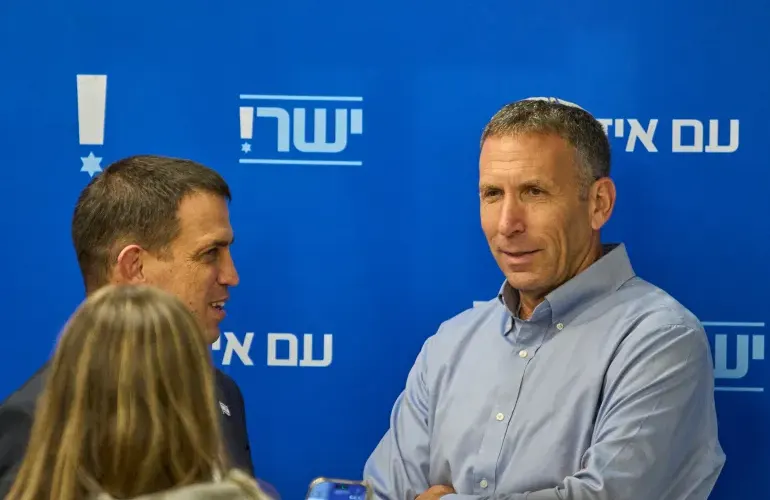
Netanyahu stayed on as caretaker. Eisenkot, who leads the centrist Yashar party, was tasked with forming the next government and was given until next month to do it.
That left the opening of the new parliament as the first real test of strength. Whoever controlled the speaker's chair would shape which bills reach the floor while the coalition fight played out.
How it unfolded
The test came on Tuesday 17 November. The Globe and Mail and UPI reported that the Knesset elected Matan Kahana, a member of Eisenkot's party, as its new speaker, with ZeroHedge and ANSA putting the tally at 66 votes to 52. Al Jazeera reported that Arab parties supported him.
The vote was not a quiet one. DN described a bitter fight over the post, noting that Netanyahu's allies did everything they could to prevent it. The Times of India reported that Netanyahu fumed at the result and branded the Eisenkot bloc's backers 'terror supporters'.
The outlets that profiled Kahana describe a 54-year-old lawyer who once commanded an F-16 squadron, according to Expresso, and who has held ministerial office before, per Fanpage. SBS reported that he can now advance bills prioritised by the Eisenkot-led bloc and the parties backing it.
The new majority moved quickly. The South China Morning Post reported that parliament met under the new speaker on Wednesday as opponents of the caretaker prime minister began a legislative push to roll back his legacy. Arab News and Dawn carried similar accounts.
On 20 November, Die Zeit and Deutschlandfunk reported that Eisenkot was weighing a minority government with Arab support if he could not find a majority. Arab News reported that he promised a swift new government amid internal divisions over whether to work with ultra-Orthodox or Arab-majority parties, or to form a unity government.
Then, on Saturday 21 November, AFP reported that Yashar had invited Likud to what it called a 'marathon series of talks'. Der Spiegel noted this came a day after the minority-government idea surfaced. Die Welt reported that Likud set conditions almost immediately.
Where it stands
Eisenkot now holds the speaker's chair but not a governing majority. His bloc has shown it can win a floor vote with Arab backing, yet the same dependence is what makes a stable coalition hard to build.
He is pursuing several routes at once. SBS says he faces three main options, which line up with the alternatives reported elsewhere: a deal with ultra-Orthodox parties, a deal with Arab-majority parties, or a national unity government of the kind Netanyahu has demanded.
The Likud talks are the unity route. According to NDTV, citing The Times of Israel, Likud is demanding that Netanyahu be sole prime minister and that Otzma Yehudit be part of the coalition. India Today reported that former prime minister Naftali Bennett has backed Eisenkot to lead the next government and ruled out serving under Netanyahu. Al Jazeera asks whether the opposition bloc can stay united, pointing to deep ideological divisions inside Eisenkot's alliance.
What to watch
The first question is whether the Likud talks go anywhere. Netanyahu's demand to remain prime minister sits badly with Eisenkot's aim of leading the government, and Bennett's refusal to serve under Netanyahu narrows the room for compromise.
The second is whether the opposition bloc holds together on the issues that divide it, especially its reliance on Arab parties, and whether the minority-government option comes back if the talks fail. The clock matters too, since Eisenkot's window to form a government closes next month.
More in Politics
All →
House Democrats Nominate Hakeem Jeffries for Speaker, 251 Votes to 11
Jeffries is set to become the first Black Speaker in U.S. history when the new Congress convenes in January.
44 sources · over 7 days
UK and EU sign Brussels reset deals on food, youth mobility and carbon trading
Andy Burnham's summit deals are the biggest step toward the EU since Brexit, but tuition fees remain unresolved and talk of rejoining has already split British politics.
51 sources · over 5 daysKnesset Elects Eisenkot Ally Kahana Speaker, Weakening Netanyahu as Coalition Talks Begin
A 66-52 speaker vote has shifted control of Israel's parliament away from Netanyahu, while Eisenkot weighs a minority government, talks with Likud and a December deadline.
45 sources · over 8 days