
Merz nominates Ilse Aigner as Germany's first female president candidate
The CDU has formally nominated the Bavarian politician, who could succeed Frank-Walter Steinmeier in March 2027.
By Hushread Stories, from 19 outlets · First published 9 Nov 2026
In brief
- Friedrich Merz has formally nominated Ilse Aigner as the CDU candidate for Germany's next federal president.
- Aigner is president of Bavaria's state parliament and a politician with the Christian Social Union.
- If elected in 2027 to succeed Frank-Walter Steinmeier, Aigner would become Germany's first woman president.
- Merz's nomination followed growing support for Aigner among CDU state leaders, with political figures also expressing support.
- Aigner has thanked supporters across party lines after her nomination, according to Deutschlandfunk.
Timeline · 11 moments
Aigner thanks supporters across party lines
Deutschlandfunk - Fortlaufende Nachrichten vom 24. August 2026 ↗CDU formally nominates Aigner for federal president
Anadolu Ajansı ↗Merz to present Aigner to CDU leadership bodies
Deutschlandfunk - Fortlaufende Nachrichten vom 24. August 2026 ↗Merz publicly proposes Aigner for federal president
ARD Tagesschau ↗Merz publicly announces plan to propose Aigner
ARD Tagesschau ↗Nouripour criticises Merz over handling of presidential selection
DER SPIEGEL - Schlagzeilen – Tops ↗Reports say CDU and CSU have settled on Aigner
DIE ZEIT | Nachrichten, News, Hintergründe und Debatten ↗Aigner calls for greater Green involvement in election
Deutschlandfunk - Fortlaufende Nachrichten vom 24. August 2026 ↗CDU state premiers publicly back Aigner for president
DER SPIEGEL - Schlagzeilen – Tops ↗CDU signals candidate decision for the following week
DIE ZEIT | Nachrichten, News, Hintergründe und Debatten ↗Update 9 Nov 2026, 8:11 pm UTC
Merz has moved beyond backing Aigner and formally nominated her as the CDU candidate for federal president, with support reported from the SPD and other political figures. The coverage presents her expected succession to Frank-Walter Steinmeier in March as a likely outcome, though the election has not yet taken place, according to Financial Times World and Deutschlandfunk.
Update 9 Nov 2026, 9:37 am UTC
Merz has now publicly proposed Ilse Aigner for the presidency, moving beyond the earlier reports of his backing. ARD Tagesschau reported that the two planned to appear before the press on November 9, while Deutschlandfunk reported that Merz would present her to CDU leadership bodies. Aigner is expected to stand for election in 2027, and would be Germany's first woman president if elected, according to di.se and DW Türkçe.
How it started
Chancellor Friedrich Merz initially made a commitment about the next German president without naming a candidate. On November 2, ARD Tagesschau reported that he wanted a woman to succeed President Frank-Walter Steinmeier and would propose a candidate from the political centre.
The succession is approaching because Steinmeier's second term is due to end in March 2027, according to Deutsche Welle. Electing a woman would be a first for Germany, but Merz's initial announcement left open who that woman would be.
How it unfolded
On November 3, CDU Secretary General Hoppermann said a decision on the presidential candidate would come the following week. Several women remained under consideration, DIE ZEIT reported.
By November 4, support was gathering around Ilse Aigner, the speaker of Bavaria's state parliament and a CSU politician. DER SPIEGEL reported public endorsements from several CDU state premiers. DIE ZEIT also reported favourable assessments from the SPD.
On November 5, Aigner called for the Greens to be more closely involved in the presidential election through the Federal Convention, according to Deutschlandfunk. Her appeal came as endorsements continued to accumulate.
On November 6, DIE ZEIT reported that the internal debate had ended and that the CDU and CSU wanted to nominate Aigner. DIE WELT went further, reporting that the Union and SPD wanted to propose her. The accounts therefore differed on how far agreement extended beyond the conservative parties.
The process also drew criticism. On November 7, DER SPIEGEL reported that Greens politician Omid Nouripour accused Merz of losing control of an important selection process while Aigner attracted broad support.
On November 8, Merz made his position public. ARD Tagesschau reported that he would propose Aigner on Monday, November 9, ending his public silence over the candidate's identity.
Where it stands
Aigner now has Merz's explicit backing, rather than only endorsements from other politicians and reports of an internal agreement. Deutsche Welle reported his announcement that he would nominate her for federal president.
That is not the same as winning the presidency. The latest coverage still describes an upcoming election and says Aigner would be Germany's first woman president if elected, according to The Times of India.
What to watch
The immediate step is the CDU leadership process. ARD Tagesschau reported that Merz planned to put Aigner forward on November 9; the supplied coverage does not confirm the outcome of that step.
Broader backing also remains important. Aigner's call to involve the Greens, reported by Deutschlandfunk, leaves an open question about how widely her candidacy will be supported beyond the parties already associated with it.
More in Politics
All →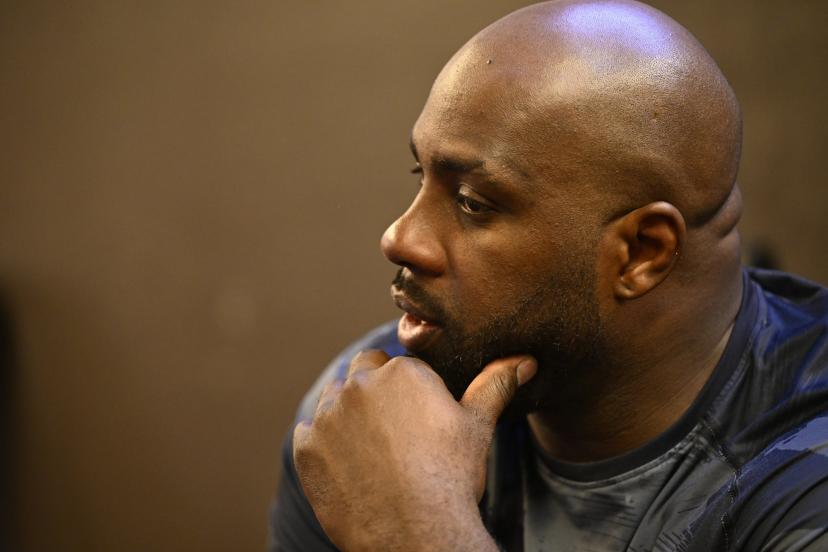
Teddy Riner announces candidacy for France's 2027 presidential election
The Olympic judo champion has entered the presidential race, saying he wants to unite the French while continuing his sporting career, with policy and campaign details still unclear.
20 sources · today
Gadi Eisenkot Gets Six Weeks to Build Israel's Next Government
Gadi Eisenkot has a mandate to form a coalition, but a seat shortfall and disputes over military conscription leave Benjamin Netanyahu with room to influence the outcome.
24 sources · over 2 days
Hegseth Defies Impeachment Threat as Trump Backs Him After Midterm Losses
A Republican lawmaker plans to force an impeachment vote as soon as next week, testing support for Defense Secretary Pete Hegseth after election losses blamed on the Iran war.
77 sources · over 6 days