
MI5 confirms Russian Brexit interference attempts after Burnham sparks political row
The intelligence chief's intervention supports Burnham's claim of Russian activity, but separates attempts to interfere from proof of an effect on the referendum result.
By Hushread Stories, written with AI from 29 outlets · First published 17 Oct 2026 · Chapter 3 of 3
Earlier: Andy Burnham confirms Russian Brexit interference and seeks closer EU ties
In brief
- Prime Minister Andy Burnham said Russia clearly interfered in the 2016 Brexit referendum, reopening a contentious political debate.
- His government subsequently clarified that the claim did not mean Moscow had succeeded in influencing the referendum result.
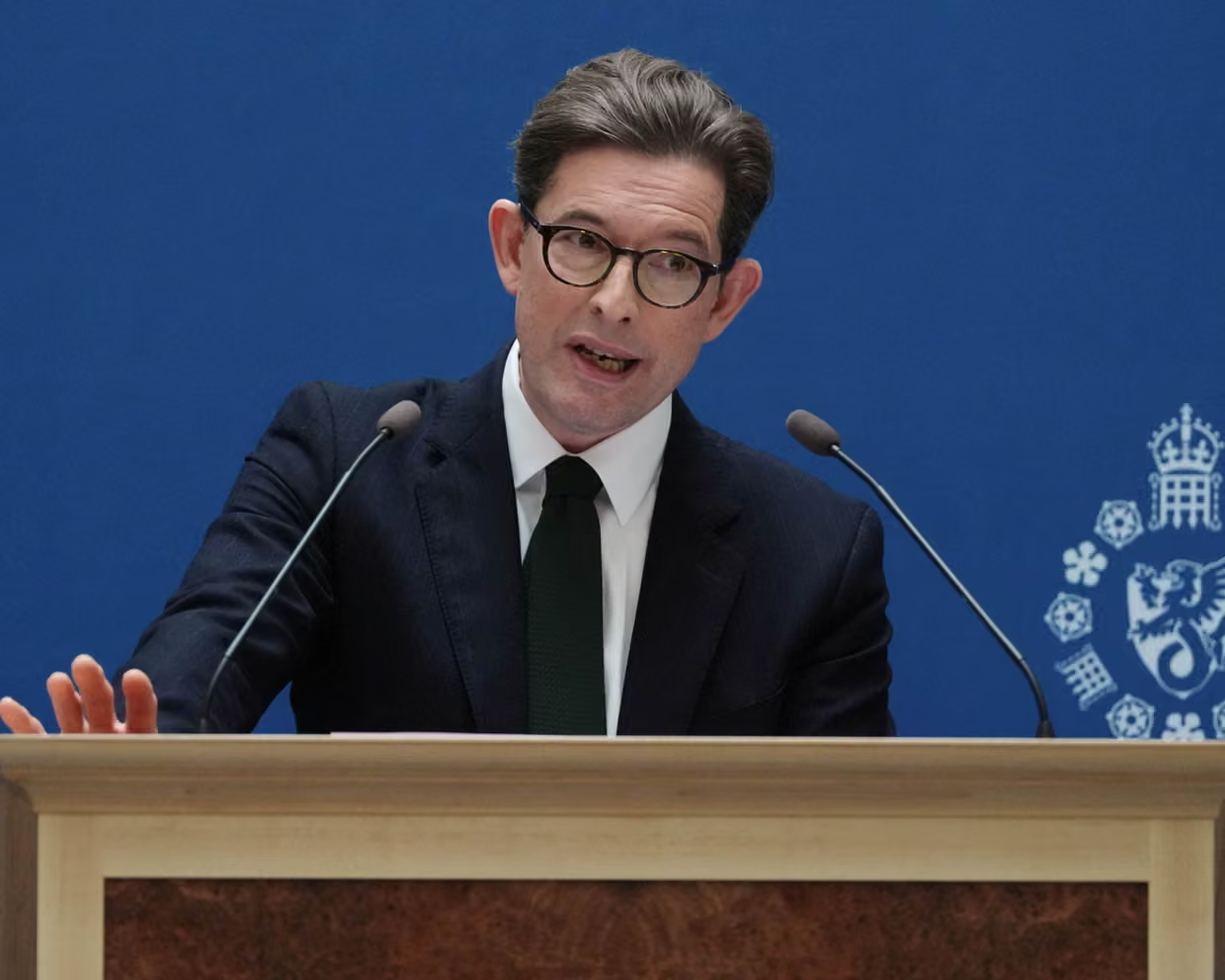
- MI5 chief Ken McCallum confirmed Russian interference attempts through social media and television, without establishing an effect on voting.
- Burnham has also pledged closer European Union ties and plans to seek new agreements at a November summit.
- A summit scheduled for November 20 will test whether his push for closer relations produces concrete agreements.
Timeline · 6 moments
Burnham and Badenoch clash at Prime Minister's Questions
Moneycontrol.com ↗Keir Giles calls for documentation behind interference claim
Adnkronos - ultimoratop ↗MI5 chief confirms attempts without establishing effect on result
Latest news, sport and opinion from the Guardian ↗November summit confirmed as Burnham seeks closer EU ties
The Local ↗Burnham's office says Moscow did not influence outcome
CNN Brasil ↗Burnham says Russia interfered and warns European voters
Reuters ↗How it started
Prime Minister Andy Burnham reopened the argument over Russian involvement in Brexit on October 11, saying it was clear Moscow had interfered in the 2016 referendum. He had sought answers about the Kremlin's involvement after entering Downing Street, according to the Guardian.
His remarks also carried a warning beyond Britain. Reuters reported that Burnham warned voters in France and Germany about Moscow-backed efforts to influence their politics.
The intervention came alongside his push for closer relations with the European Union. NDTV reported that Burnham took office in July and had said in September that Britain could consider rejoining the bloc in the future.
How it unfolded
On October 12, the government drew a distinction between interference and influence over the result. CNN Brasil reported that Burnham's office said Moscow had not succeeded in influencing the outcome. GB News presented his foreign minister's description of Russia as unsuccessful as a contradiction of the prime minister.
That day, Burnham also took his European policy to MPs. He said it would be a "dereliction of duty" not to seek a deeper partnership with the EU, according to Express & Star. The Local reported that officials confirmed a UK-EU summit for November 20.
On October 13, MI5 chief Ken McCallum confirmed that Russia had tried to interfere through social media and television reports. But he said that did not mean the Kremlin had affected the result, the Guardian reported. BBC News described his assessment as interference attempts having little impact.
Political criticism continued. On October 13, GB News published Jacob Rees-Mogg's argument that Burnham's claim insulted Brexit voters. On October 15, Moneycontrol.com reported a heated exchange between Burnham and Kemi Badenoch at Prime Minister's Questions.
Where it stands
The intelligence intervention supports the central claim that Russia tried to interfere, not the stronger claim that it determined the outcome. The Guardian and BBC News differ slightly in their summaries of McCallum's assessment, describing no established effect on the result and little impact respectively. Neither account establishes that Moscow changed the result.
Burnham's separate effort to change Britain's relationship with the EU remains active. Al Jazeera reported that he vowed to renegotiate the post-Brexit trade deal, with talks in Brussels next month. That is a commitment to negotiations, not an agreement to rejoin.
What to watch
The next concrete milestone is the November 20 UK-EU summit confirmed by The Local. The test will be which new agreements Burnham can secure, after describing the current relationship as not good enough.
The evidence behind the interference claim also remains a point of scrutiny. Adnkronos reported Keir Giles's call for tangible documentation. The supplied coverage identifies channels used for interference attempts, but does not provide evidence establishing that those attempts changed the referendum result.
More in World
All →
Trump waives Russia sanctions as new US law takes effect
The waiver holds back sanctions and tariffs intended to punish Moscow over Ukraine, giving Russia relief from measures Trump signed into law only last month.
10 sources · today
Albanian Student Protests Shake Rama Government After Four Days of Violence
Tirana is calm after four days of violent student protests, but demands for Prime Minister Edi Rama's resignation have spread beyond the capital as he rejects stepping down.
30 sources · over 4 days
Cornell Fraternity Party Ban Fails to Quell Anger Over Assault Response
Cornell's suspension of fraternity parties has not ended scrutiny of its response to alleged sexual violence, with faculty debating no confidence and the board appearing to support administrators.
35 sources · over 5 days