
Tech Stocks Recover Ground After AI Investment Fears Trigger Global Selloff
Markets are stabilising after US election results sparked fears of tighter AI rules, but the rebound has only partly repaired last week's losses.
By Hushread Stories, from 58 outlets · First published 9 Nov 2026 · Chapter 3 of 3
Earlier: US Tech Stock Rout Spreads Globally Before Modest Friday Rebound
In brief
- Democratic midterm victories raised investor concerns that tighter AI rules could slow data centre spending.
- The Nasdaq lost $2.5 trillion in value on Thursday as investors sold technology shares tied to AI growth.
- Selling spread into Asia and Europe on Friday, with South Korea temporarily halting trading as stocks plunged.
- US stocks rebounded Friday, and Asian shares steadied Monday after Taiwan authorities announced investor support measures.
- Asian technology stocks rallied Tuesday as chipmakers rebounded, oil prices fell and investors returned to the AI trade.
Timeline · 12 moments
Investors shifted toward defensive sectors amid AI concerns
Financial Times World ↗Asian technology shares rallied as oil prices fell
CNBC International ↗South Korean shares rose as investors bought chipmakers
Bloomberg ↗Declines pushed many indices into bear market territory
Financial Times ↗Bloomberg says AI bets and political uncertainty exposed market risks
Bloomberg ↗Tech shares recover as traders watch Nvidia probe
Euronews ↗Taiwan shares rally after authorities announce confidence measures
Bloomberg Technology ↗Asian investors brace as hedge funds cut exposure
Bloomberg Technology ↗US indexes rebound but finish the week lower
Investopedia ↗Investors seek bonds as selling spreads across markets
Global News ↗Update 10 Nov 2026, 7:23 am UTC
Asian technology shares rallied on Nov. 10 as investors returned to semiconductor stocks after Wall Street's rebound and a sharp drop in oil prices, Bloomberg and CNBC International reported. The latest coverage also points to investors shifting toward defensive sectors amid concerns about future technology earnings, the Financial Times reported.
Update 10 Nov 2026, 1:22 am UTC
US stocks extended their rebound on Monday as a decline in oil prices eased inflation concerns, with the S&P 500 posting its strongest day in seven months, Bloomberg reported. The Economic Times Business & Economy reported that the Dow rose 1,100 points and the S&P 500 gained more than 2%, while Nvidia shares fell.
Update 9 Nov 2026, 7:20 pm UTC
US stocks extended their rebound on Monday, with the Dow rising and the Nasdaq gaining more than 2% as chip shares recovered, according to Economic Times Business & Economy and Forbes. Nvidia fell amid news of an investigation involving CEO Jensen Huang, while brokerages downplayed the risk that Democratic policies would sharply constrain AI investment, World News CNA reported.
Update 9 Nov 2026, 1:19 pm UTC
Monday's steadier markets have not resolved the concerns behind the selloff. Bloomberg says the rout exposed vulnerability in stretched AI bets and political uncertainty, while Financial Times reports that last week's declines pushed many indices into bear market territory. MarketWatch says investors are weighing valuations, leadership and the cost of the AI boom.
How it started
The selloff began with a reassessment of the AI spending boom after Democrats' sweeping victories in the US midterm elections. Investors feared that tougher regulation could slow the expansion of data centres, according to Reuters.
That concern hit a market whose gains had depended heavily on AI. The Next Web reported that investors pulled back from chipmakers, cloud providers and power companies that had driven much of this year's advance.
The risk was about future spending, not an announced collapse in investment. According to NDTV, UBS analysts estimated that around 30 per cent of expected US data centre capacity additions in 2028 could be at risk.
How it unfolded
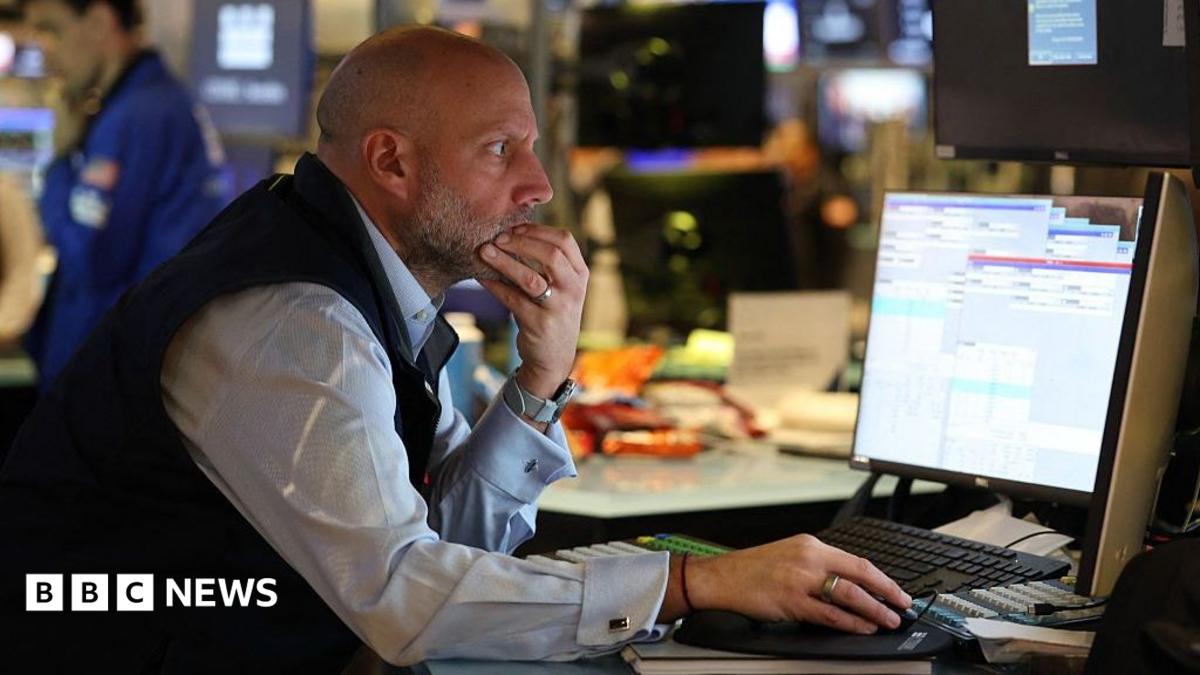
On November 5, the tech-heavy Nasdaq lost $2.5 trillion in market value as investors rushed to sell technology stocks, CNN reported. Fears that the election results could slow the AI buildout were a central driver.
By November 6, the selling had spread overseas. Euronews described the worst US chip selloff since 2020 and reported that Asian technology shares were falling as investors assessed the prospect of tougher rules.
South Korea's benchmark index fell more than eight per cent, with trading temporarily suspended, according to n-tv. European shares also fell, while investors sought the safety of bonds, Global News reported.
US stocks then recovered some ground on November 6. The Nasdaq and S&P 500 rose as chip shares bounced back, but major indexes still finished the week lower, according to Investopedia. The Financial Times described the recovery as tepid compared with historic rebounds after severe selloffs.
By November 8, Asian investors were preparing for further volatility. Bloomberg Technology reported that hedge funds were cutting exposure while uncertainty persisted over US data centre policy.
Where it stands
On November 9, Asian markets and US equity futures made a steadier start, according to CNA. Taiwanese shares rallied after authorities announced measures intended to restore investor confidence following the longest selling streak since 2022, Bloomberg Technology reported.
Technology shares were recovering some of the previous week's losses on Monday, Euronews reported. That is a partial recovery, not a reversal of the damage: the Financial Times reported that last week's declines had pushed many Asian indexes into bear market territory.
What to watch
The central unresolved issue is whether US policy will actually curb data centre expansion enough to change AI spending plans. Company executives are offering a more optimistic view: CNBC reported that executives from OpenAI, Arm and Qualcomm largely projected continued growth despite the selloff.
Upcoming economic data and earnings are also in focus, according to CNBC. Traders are watching a probe into Nvidia boss Jensen Huang, Euronews reported, though the supplied coverage gives no details about its scope.
More in Business
All →
Karnataka Ethanol Claims Trigger Wider Petrol Checks as Centre Rejects Findings
Fuel sampling has spread beyond Karnataka as the state alleges excessive ethanol in E20 petrol, while the Union oil ministry reports compliant results from its own tests.
16 sources · over 5 days
Qantas to cut 850 Australian jobs as work shifts to India
An outsourcing agreement with Accenture will move most affected roles to India as Qantas modernises its systems and expands its use of artificial intelligence.
8 sources · today
China's Trade Surplus Passes $1 Trillion in First Ten Months
An AI infrastructure boom is lifting Chinese exports, pushing the trade surplus past $1 trillion at record speed and raising the prospect of greater friction with trading partners.
9 sources · today