
Trump pairs Iran talks with limited strikes as Republicans lose Congress
Trump's stated preference for an Iran deal has been followed by fresh strikes, while Democratic gains in Congress create the prospect of greater scrutiny of the war.
By Hushread Stories, from 9 outlets · First published 4 Nov 2026
In brief
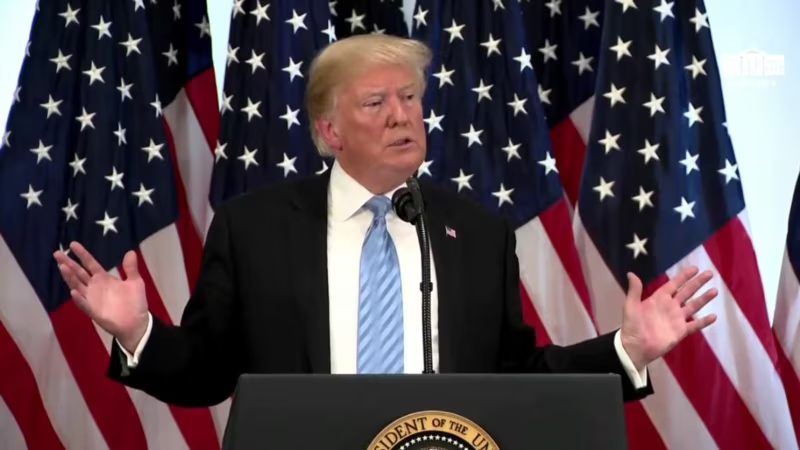
- Trump said he wanted negotiations with Iran and did not want a prolonged conflict resembling Vietnam.
- Trump called overnight attacks on Iranian military positions limited but warned that further strikes remained possible.
- Trump and JD Vance expressed optimism about negotiations, and Vance said Tehran had not been given a deadline.
- Democrats won control of both chambers of Congress, creating the prospect of greater oversight of the Iran war.
- Trump said the war and a temporary increase in gasoline prices hurt Republicans in the midterms, but he would make the same decision again.
Timeline · 9 moments
Reports say renewed U.S. attacks on Iran remain possible
Tabnak ↗Trump says Iran war hurt Republicans, but he would repeat it
VOA Persian ↗Treasury imposes fresh Iran sanctions, Tabnak reports
Tabnak ↗Trump accepts Republican defeat and offers Democratic cooperation
VOA Persian ↗Democrats win Congress, opening scope for war oversight
Iran International (Persian) ↗Trump confirms an attack on Iran's Qeshm
Radio Farda ↗Trump calls overnight attacks limited, warns of more
VOA Persian ↗Vance voices optimism as Qatari delegation visits Tehran
BBC Persian ↗Trump says he wants talks, not prolonged war
Deutsche Welle - Persian ↗Update 5 Nov 2026, 10:35 am UTC
The new coverage says the possibility of renewed U.S. attacks on Iran remains after the midterm elections. A Lebanese newspaper described Trump's election defeat as a political shock, but the coverage does not establish that the published headline is wrong or that the story has moved to a different subject.
Update 5 Nov 2026, 4:28 am UTC
Trump acknowledged that the Iran war and a temporary rise in gasoline prices hurt Republicans in the midterm elections, but said he would make the same decision again, according to VOA Persian. Iranian officials and media also linked the Republican defeat to the war, while reactions in Iranian social media ranged across supporters and critics of the government, according to BBC Persian and BBC Persian.
How it started
President Trump began the week saying he wanted an agreement with Iran, not a drawn-out war. On November 2, Deutsche Welle - Persian reported that he said he did not want the conflict to become prolonged like the Vietnam War and that both sides wanted negotiations.
That preference came with continued pressure. According to Iran International (Persian), Trump said he was in no hurry to resume war and intended to use economic pressure to push Tehran toward an agreement. He also said he would not allow Iran to acquire nuclear weapons.
How it unfolded
On November 2, Trump said an agreement to end the war was possible and claimed Iran wanted one, Radio Farda reported. The same report said JD Vance had stated that no deadline had been set for Tehran.
Diplomatic activity accompanied those statements. BBC Persian reported on November 2 that a senior Qatari delegation was visiting Tehran as Vance expressed optimism that he and Trump could reach an agreement through negotiations.
By November 3, military action had followed the talk of restraint. According to VOA Persian, Trump described overnight attacks on Iranian military positions as a limited operation rather than the start of a broad war, and warned that more attacks could follow if necessary.
Trump also confirmed an attack on Qeshm, Radio Farda reported on November 3. Separately, Iran International (Persian) reported that he said the United States was ready to act if needed, when asked about signals from Benjamin Netanyahu, Israel's prime minister, concerning a possible attack later that week.
On November 4, the political setting changed. Iran International (Persian) reported that Democrats had won both chambers of Congress, creating scope for greater oversight of Trump's war with Iran. VOA Persian reported that Trump accepted the Republican defeat, congratulated the winners and said he was willing to work with Democrats.
Where it stands
The coverage describes negotiations and military operations proceeding alongside each other, not a completed agreement or a settled end to fighting. Trump's description of the strikes as limited sits beside his warning that further attacks remain possible, according to VOA Persian.
Economic pressure also continues, though the November 4 reports differ on the measures involved. Tasnim described an extension of sanctions, while Tabnak reported new sanctions imposed by the US Treasury. The supplied reports do not establish whether they concern the same action.
The war has become part of the argument over the election result. ISNA News Agency reported that Trump attributed the Republican defeat to the Iran war. BBC Persian described intensified debate over the war's electoral role and divisions among Trump's supporters.
What to watch
The immediate question is whether the diplomatic contacts produce an agreement while the threat of further strikes remains. Radio Farda reported no deadline for Tehran, and the supplied coverage gives no date for an agreement or another negotiating round.
Democratic control of Congress creates a potential check on the war, but the coverage does not identify specific oversight measures yet. Iran International (Persian) described the election result as opening the way to greater scrutiny, rather than establishing what Congress will do.
More in Politics
All →
Agniveers Get Two-Year Extension and Path to Regular Service
The Cabinet-approved change creates a route to eventual absorption for willing Agniveers, subject to merit and selection criteria.
12 sources · over 2 days
Israeli Opposition Pursues Government Without Netanyahu as Arab Coalition Offers Support
An inconclusive election has left Arab lawmakers central to Israel's coalition talks, but opposition divisions over working with them could obstruct efforts to replace Benjamin Netanyahu.
39 sources · over 5 days
Hegseth faces impeachment push after Republican midterm losses as Trump backs him
A Republican plans to force an impeachment vote against Defense Secretary Pete Hegseth, while President Donald Trump publicly supports him amid questions about his future.
22 sources · today