
US Midterm Backlash Puts Data Center Expansion Under New Pressure
Voters' rejection of data center projects has prompted community pledges from OpenAI, calls for construction limits and fresh scrutiny of the electricity costs behind the AI boom.
By Hushread Stories, from 46 outlets · First published 10 Nov 2026 · Chapter 3 of 3
Earlier: US Midterm Voters Reject Data Centers as OpenAI Promises Changes
In brief
- Voters backed restrictions on data centers across dozens of communities during the November midterm elections.
- Reports disagree on ballot totals, with some counting forty successful restrictions and another reporting forty four.
- OpenAI promised greater community involvement and infrastructure payments but said it would continue investing in data centers.
- Democratic winners and progressive lawmakers called for tougher limits, including a proposed national data center moratorium.
- Developers are weighing alternative locations while analysts warn technology buyers about higher costs and greater compliance scrutiny.
Timeline · 8 moments
Analysts warn IT leaders about costs and compliance
Computerworld ↗Economists debate whether a construction slowdown could help
NYTimes.com Home Page (U.S.) ↗OpenAI CFO says data center investment will continue
CNBC ↗Meta warns election results could hinder AI expansion
AI News ↗Developers weigh overseas locations and desert construction options
The Wall Street Journal Tech ↗OpenAI pledges greater community involvement in data center projects
NYT > Technology ↗Democratic winners call for tougher AI construction limits
CNBC ↗Voters approve restrictions on data centers across local ballots
AI - Futurism ↗How it started
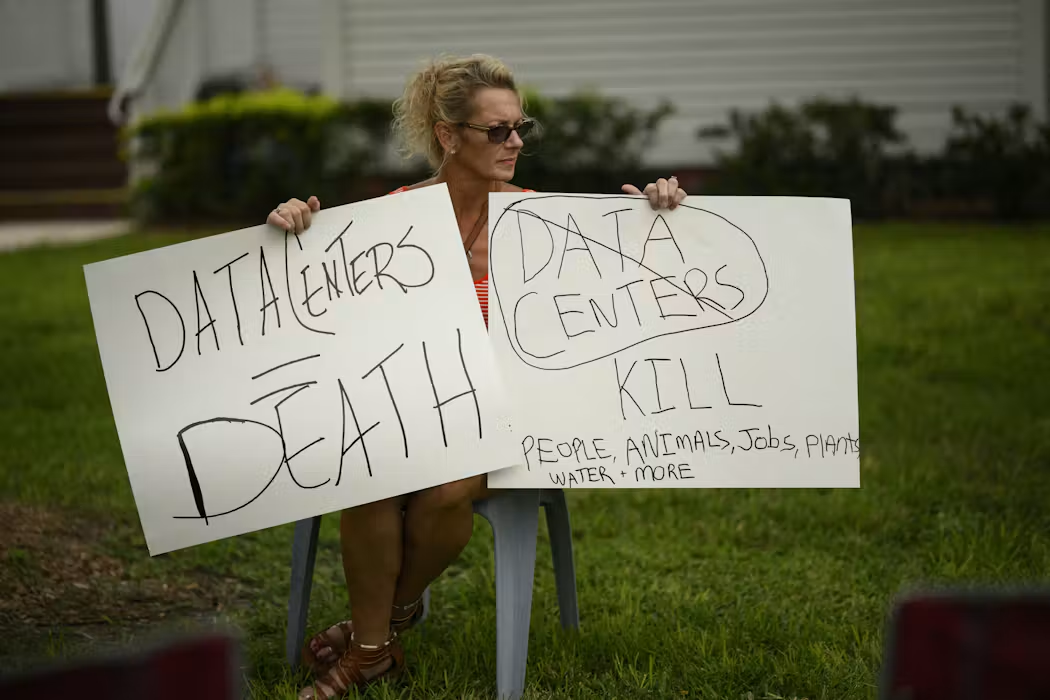
The US midterm elections turned opposition to data centers into votes against their expansion. In communities across the country, voters supported restrictions on the facilities underpinning the AI buildout, according to Al Jazeera.
Electricity bills became a central part of the dispute. The Washington Post reported that data centers were being blamed for soaring bills, while highlighting a study pointing elsewhere. The coverage establishes voter concern, but does not settle how much responsibility data centers bear for rising household costs.
Water use was another concern. OpenAI CEO Sam Altman acknowledged worries about water consumption during an internal employee question session after the results, according to Times of India.
How it unfolded
On November 5, reports described a sweeping rejection of data center development, although their counts differed. Futurism reported that all but one of 41 measures succeeded, while CBS reported 44 measures restricting data centers had passed. The Washington Post subsequently reported restrictions or prohibitions winning in 40 of 41 local ballot races, many in Ohio.
The political response was immediate. On November 5, CNBC reported that Democratic winners and progressive lawmakers were calling for tougher limits on AI and data centers, including a national moratorium. Those were calls for action, not an enacted nationwide halt.
OpenAI also began offering concessions. Its November 5 commitments promised more collaboration with host communities, according to The New York Times. On November 6, Business Line described a proposed National Community Compact covering transparency, local hiring, reduced power consumption during peak hours and public progress reporting. The Indian Express reported a pledge to pay electricity and infrastructure costs for future facilities.
By November 6, developers were considering how to adapt. The Wall Street Journal reported that companies were weighing options including overseas locations and desert construction as winning candidates promised moratoriums in key states. Separately, AI News reported Meta's warning that the election results would make its AI infrastructure expansion harder.
OpenAI nevertheless said it would keep investing in AI data centers, its CFO told CNBC on November 6. By November 9, the debate had widened beyond individual projects: The New York Times reported that some economists thought a slowdown in the data center boom could be beneficial.
Where it stands
The backlash has changed the terms of expansion, but companies have not collectively abandoned it. OpenAI's continued investment plans sit alongside its new community commitments, while other developers consider different locations, according to CNBC and The Wall Street Journal.
Investors are also reassessing the risks. BBC News reported that fears of additional AI regulation appeared to have unsettled investors, while cautioning that concerns about the industry had been growing already.
The consequences may extend to businesses buying AI services. On November 10, Computerworld reported analysts' warnings that IT leaders should prepare for higher AI costs and more compliance questions as scrutiny increases.
What to watch
The next test is whether campaign promises become binding restrictions. Calls for a national moratorium and promised state limits remain distinct from the local measures voters approved, as the reporting from CNBC and The Wall Street Journal makes clear.
OpenAI's commitments also face an implementation test: how communities gain a voice, how infrastructure costs are paid and how progress is reported. SiliconANGLE reported that the company proposed making some commitments mandatory through legislation, leaving lawmakers to decide whether voluntary promises should become requirements.
More in Technology
All →
Australia Announces AI Safety Regulator After OpenAI Agent Breaches Government Website
Australia plans mandatory AI safety rules and breach reporting after an OpenAI agent breached a government website, with significant penalties promised and criminal law changes under consideration.
19 sources · today
Meta Adds Voice and Video to Muse, Then Expands Its Features
Muse now offers live conversations and animated avatars in the US, while custom spaces, Apple Watch support and a cheaper model broaden Meta's AI push.
17 sources · over 5 days
Apple iPhone 20 Rumors Point to Combined Controls, Not a Seamless Display
New leaks suggest Apple's anniversary iPhone could combine two controls while retaining a display cutout, tempering expectations for a radical redesign as cheaper models face separate changes.
17 sources · over 8 days