
Warsh Warns of Bumpy AI Transition as October Rate Hold Bets Strengthen
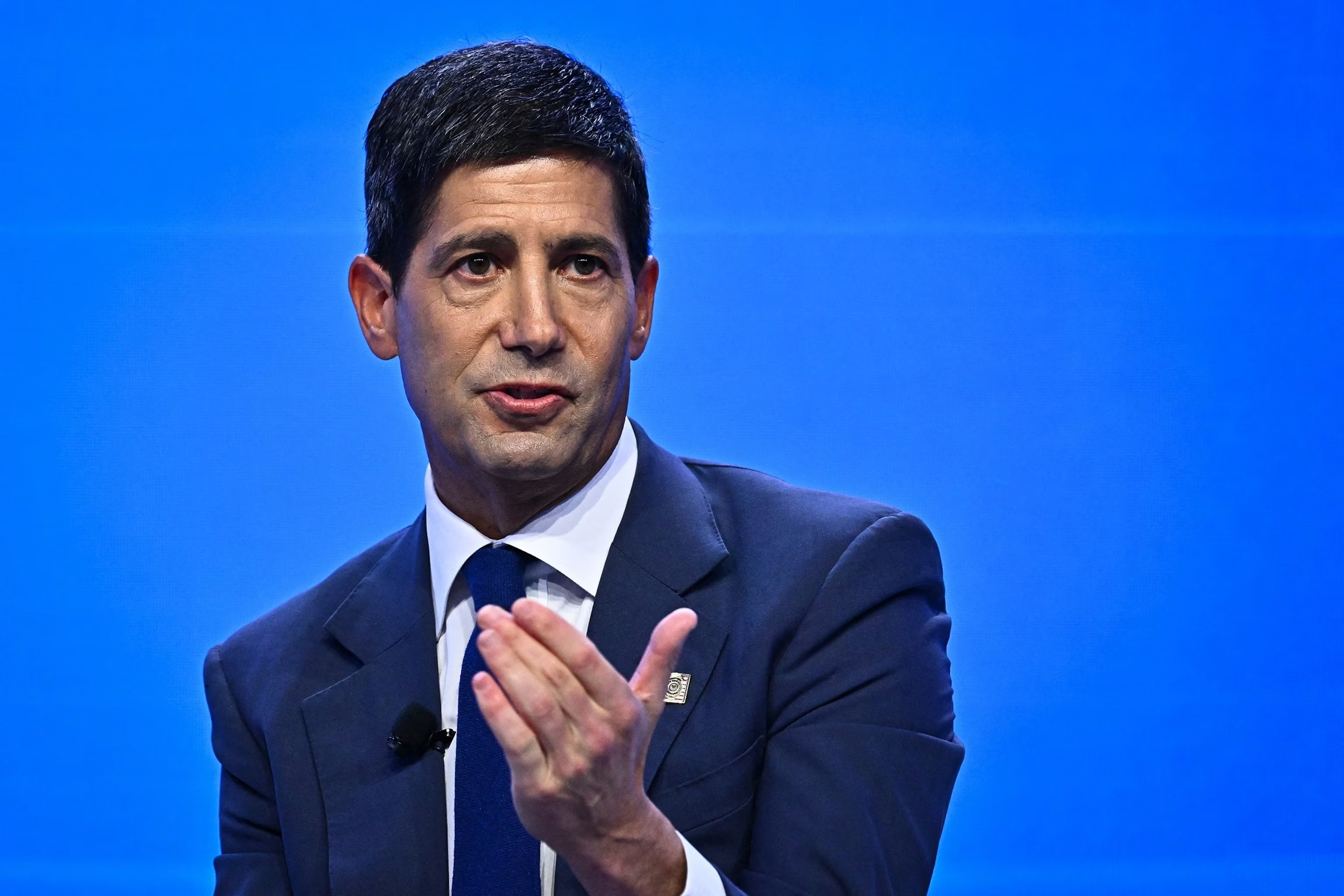
Federal Reserve Chairman Kevin Warsh paired optimism about artificial intelligence with a pledge on price stability, while leaving investors without a firm signal before October's interest rate decision.
By Hushread Stories, written with AI from 15 outlets · First published 16 Oct 2026
In brief
- Federal Reserve Chairman Kevin Warsh discussed artificial intelligence and the economy in Bangkok on Friday, October 16.
- Warsh said AI could make economies more productive and wealthier, but warned the transition would be very bumpy.
- He said the economy had largely performed as expected since September's rate increase, despite continuing inflation concerns.
- Market expectations for an October rate hold strengthened, although Warsh declined to predict the central bank's next decision.
- The Fed will reassess economic conditions in October and December before deciding its next steps on interest rates.
Timeline · 5 moments
Bets on October rate hold strengthen after remarks
FT Economics ↗Warsh declines to predict next interest rate decision
The Hill ↗Warsh pledges price stability amid technological change
The New York Times ↗Warsh predicts AI wealth gains through bumpy transition
CNBC International ↗Bangkok speech draws attention ahead of October decision
NBC News ↗How it started
Federal Reserve Chairman Kevin Warsh's Bangkok speech arrived with investors looking for clues about the next interest rate decision. On October 15, NBC News previewed the address, scheduled for Friday morning in Thailand, after 11 p.m. Thursday in New York.
The backdrop was September's rate increase and continued concern about inflation. According to FT Economics, Warsh would say the economy had "broadly conformed with our expectations" since that increase, a message that helped strengthen expectations of an October hold.
How it unfolded
Speaking in Bangkok on October 16, Warsh described a global economy that had proved surprisingly resilient. He called AI the most consequential change of his lifetime, Euronews reported.
His long-term assessment was optimistic. Economies that use AI well could become more productive and wealthier, but the road would be "very bumpy," according to CNBC International. Breaking News on Seeking Alpha Business & Economy reported that he described AI as a positive supply shock.
That optimism did not displace the Fed's inflation concerns. The New York Times reported that Warsh pledged price stability while describing technological change as a complication for central banks already grappling with persistent inflation risks.
On monetary policy, Warsh declined to predict officials' next move, less than two weeks before their meeting, The Hill reported. According to Axios, his assessment that the economy had largely performed as expected since September suggested little change in the Fed's outlook despite an inflation jump.
Markets took the remarks as support for waiting rather than raising rates again immediately. FT Economics reported stronger bets on an October hold. Bloomberg reported that the S&P 500 was little changed on Friday as those expectations encouraged investors.
Where it stands
The speech left a distinction between Warsh's confidence in AI's eventual benefits and his caution about near-term policy. His promise to contain inflation remained central, even as he described the potential for greater wealth, according to ABCNews.com.
An October hold is a market expectation, not an announced decision. The coverage also differs in emphasis: The Independent framed the outlook around further rate increases, while FT Economics highlighted stronger hold bets. Warsh himself declined to prejudge the upcoming meetings.
What to watch
The next policy checkpoints are October and December. InfoMoney reported that Warsh said the Fed would reassess economic conditions at those meetings before deciding its next steps.
The open question is how AI's potential productivity gains will affect an outlook still shaped by inflation risks. Warsh offered optimism about the destination, but no firm rate signal for the next meeting, according to Euronews.
More in Business
All →
ECB Clears UniCredit to Increase Commerzbank Stake and Take Control
The approval removes a regulatory hurdle for the Italian lender to take control of its German rival, though reports differ on the permitted stake and timing.
14 sources · over 3 days
CoreWeave shares and bonds slide as AI debt concerns deepen
Rising bond yields and default protection costs are testing confidence in CoreWeave's debt-funded expansion, even as its CEO and Nvidia defend the data centre operator.
15 sources · over 3 days
Sunil Mittal Claims Approval Lead Over Starlink as Reliance Responds
Mittal says his group applied five years ago, while Reliance says its own satellite services also await clearances, leaving competing operators dependent on Indian regulatory decisions.
12 sources · over 3 days