
Anthropic mathematician says Claude helped him prove the Riemann Hypothesis, and Lean groups certify it
A 167-year-old problem may have fallen to an AI-assisted proof that no human can read in full, leaving mathematicians to work out what it means and whether it holds.
By Hushread Stories, from 68 outlets · First published 25 Nov 2026 · Chapter 3 of 3
Earlier: Anthropic mathematician says 250,000-page proof figure was a joke
In brief
- Anthropic mathematician Levent Alpöge announced on 20 November that he and Claude had proved the Riemann Hypothesis, formulated in 1859.
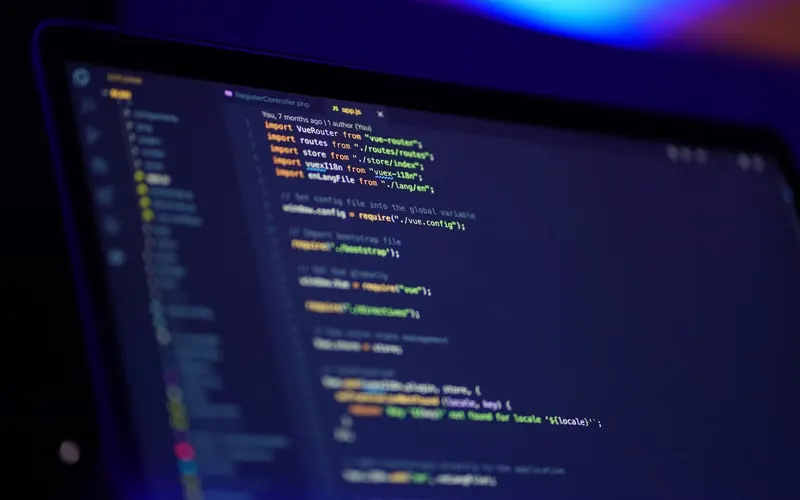
- The proof was released as roughly 17 million lines of Lean code, a format computers can check mechanically.
- The Lean FRO and the Mathlib Initiative said in a joint statement that they had certified the proof as correct.
- A condensed human-readable PDF of under 300 pages, prepared by an Arizona State University professor, appeared on 25 November.
- Anthropic's stock fell below its IPO price within days, and human mathematicians say full understanding could take months or years.
Timeline · 8 moments
Condensed human-readable PDF under 300 pages appears
r/artificial ↗Alpöge says 250,000-page figure was a joke
The Next Web ↗Anthropic stock slips below its IPO price
AI - Futurism ↗Anthropic posts separate VP vs VNP proof
All Articles ↗Experts warn full verification by humans could take years
France24 ↗Independent mathematicians call proof almost certainly correct
Times now ↗Lean FRO and Mathlib Initiative certify the proof
The Next Web ↗Alpöge announces Claude-assisted Riemann Hypothesis proof
The Guardian ↗How it started
On Friday 20 November 2026, Levent Alpöge, a mathematician at Anthropic, announced that he and the company's Claude model had proved the Riemann Hypothesis. The Guardian and The Next Web reported that he made the claim in a note on his own website, and El Colombiano described it as a four-page text.
The Riemann Hypothesis is a problem about the distribution of prime numbers, first posed by Bernhard Riemann in 1859. It is a Millennium Prize Problem, and The Age noted a $US1 million prize is on offer for a solution.
Alpöge said it took six weeks working with the AI tool, according to the coverage in Top Stories. The proof itself came as about 17 million lines of Lean, a language in which a computer can check every logical step.
How it unfolded
The first oddity was the format. France24 described a proof in 17 million lines of code that no human could read, and The Conversation called it a proof no human can read. Wired quoted the view that it will take mathematicians months to understand the "alien" solution.
On Saturday 21 November, the Lean FRO and the Mathlib Initiative issued a joint statement. The Next Web reported that they certified Alpöge's proof as correct, and The Defiant added that a separate audit covers a generalized result for Dirichlet L-functions. CNET described the two groups as having independently verified it.
Outside opinion moved quickly. Times Now reported that independent mathematicians now believe the proof is almost certainly correct. France24 took a more cautious line, with a headline noting that it can take years and that the matter is far from settled.
The size of the written proof became a small controversy of its own. The Register ran a piece describing a 250,000-page written proof as slop. On 24 November, The Next Web reported that Alpöge said the 250,000-page figure was a joke, which he made in a post on X.
On 24 November, Futurism reported that Anthropic's stock had slumped below its IPO price after the claim. Techmeme, summarizing a Wall Street Journal profile, said Alpöge held off releasing the proof until after Anthropic's IPO.
The same day brought a second claim. All Articles reported that Anthropic had published a 70-page proof resolving VP vs VNP, an algebraic counterpart of P vs NP open since 1979, with Claude as sole author and no human having checked it. A post on r/accelerate said it does not settle P vs NP itself.
On 25 November, a post on r/artificial said an Arizona State University mathematics professor had condensed the Riemann proof into a human-readable PDF of under 300 pages.
Where it stands
The machine-checking side looks settled, at least by the Lean and Mathlib groups' account. What remains open is human comprehension. Ars Technica noted that the Lean version lets computers quickly confirm validity, but that mathematicians still have to work out what the argument actually does.
The wider mathematical world is reacting as much to the method as to the result. Nature ran a piece asking where the field goes next, quoting the phrase "the end of mathematics as we know it". The Guardian carried an essay by Ken Ono arguing that human judgment remains essential.
What to watch
The main question is whether the new human-readable PDF holds up to scrutiny, and whether independent mathematicians can reproduce the key ideas rather than only trusting the machine check. Coverage suggests that process could take months.
The VP vs VNP claim is the other open item. All Articles reported that no human has checked it yet, so its status is far less settled than the Riemann proof.
More in Science
All →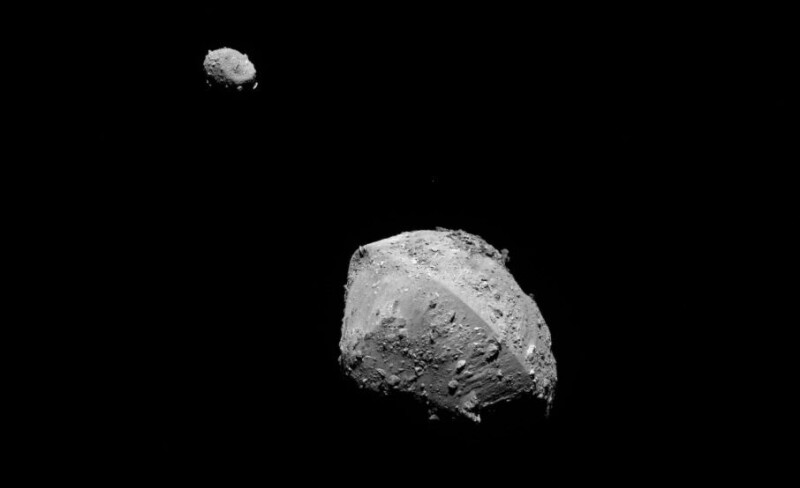
Hera spacecraft reveals stadium-sized crater left by NASA's DART asteroid impact
Four years after NASA rammed a probe into Dimorphos, Europe's Hera spacecraft has sent back the first close-up images of the damage, data that could shape future planetary defence designs.
27 sources · today
China launches Shenzhou-24 with Pakistan's Zeeshan Ali, first foreign astronaut at Tiangong
A Pakistani payload specialist is now in orbit aboard a Chinese spacecraft, the first time a foreign astronaut has flown to China's Tiangong station, marking a new step in China's human spaceflight programme.
39 sources · over 3 days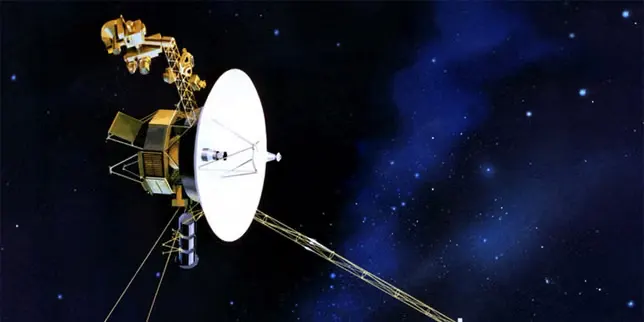
Voyager 1 Reaches One Light-Day From Earth, a First for Any Human-Made Object
Nearly 49 years after launch, the 1977 probe is now so far away that a radio signal takes a full day to reach it, a distance no spacecraft has matched.
59 sources · over 7 days