
Voyager 1 Reaches One Light-Day From Earth, a First for Any Human-Made Object
Nearly 49 years after launch, the 1977 probe is now so far away that a radio signal takes a full day to reach it, a distance no spacecraft has matched.
By Hushread Stories, from 56 outlets · First published 18 Nov 2026
In brief
- Voyager 1 reached one light-day from Earth on November 18, 2026, the first human-made object to get that far.
- One light-day is about 25.9 billion kilometers, so a radio signal needs roughly 24 hours each way.
- NASA launched the probe in 1977, and it entered interstellar space in 2012 after leaving the Sun's magnetic bubble.
- Controllers saw it stop sending science and engineering data on November 14, but its carrier signal is still received.
- Voyager 2 is not expected to reach a light-day until around 2035, and NASA has asked the public to flash Morse code at the sky.
Timeline · 12 moments
Voyager 1 stopped sending science data November 14, carrier signal continues
The Register ↗Voyager 1 phones home from one light-day, AP confirms milestone
Associated Press ↗ABC News confirms Voyager 1 now a light-day away, over 16 billion miles
ABC News ↗Euronews reports probe still active nearly 50 years after leaving
Euronews ↗Voyager 1 reaches one light-day from Earth
CBS Top Stories ↗Voyager 2 not expected to match mark until 2035
Space.com Space ↗Nature reports faltering power and shut-off instruments
Nature ↗Explainers define what a light-day means
Space.com Space ↗NASA asks public to flash Morse code
NPR News ↗Reports say Voyager 1 nears light-day record
News ↗Update 19 Nov 2026, 6:54 pm UTC
Coverage from November 19 confirms the milestone was reached on November 18, 2026, at about 5:16 a.m. Eastern, with Associated Press reporting the probe phoned home from one light-day away. The Register adds that controllers saw Voyager 1 stop sending science and engineering data on November 14, though a Canberra antenna still picks up its carrier signal. The headline facts still hold, so the piece needs only a refreshed key points list.
Update 19 Nov 2026, 0:47 pm UTC
Coverage from November 19 confirms the milestone reported on November 18, with KCRA describing the probe as more than 16 billion miles from Earth and Al Jazeera calling it a record one light-day distance reached 50 years after launch. The core facts in the published piece still hold, so the headline and key points are unchanged, though the 50-year framing now appears in coverage alongside the 49-year figure first given.
Update 19 Nov 2026, 6:08 am UTC
The milestone itself is now confirmed by several outlets: Al Jazeera reported Voyager 1 hit the one light-day record on November 18, and ABC News published a video piece on November 19 noting it is now more than 16 billion miles out. The published piece's core facts still hold, so the headline and dek stand as written, but the key points have been tightened to reflect the confirmed status.
Update 19 Nov 2026, 0:07 am UTC
The new coverage from November 18, 2026 confirms the milestone the published piece describes, so the headline's core claim still holds. Al Jazeera and Jalopnik Cars both put the probe at more than 16 billion miles, which matches the figures already in the piece. Live Science adds that the probe, launched in 1977, became the first spacecraft to reach one light-day. No number, name or outcome in the headline is now wrong, so the existing title and dek stand as written.
Update 18 Nov 2026, 5:58 pm UTC
Coverage from November 18 confirms the published piece's core facts: Voyager 1 passed one light-day from Earth just after 5 am ET that Wednesday, per Tom's Hardware, and Phys.org and Euronews both put the distance near 25.9 billion km. Newer pieces add that the signal delay is now about 24 hours, that the probe is still active after nearly 50 years, and that The Conversation notes Voyager 1 and Voyager 2 will each mark another milestone in summer 2027. Nothing in the headline is wrong, so the existing title stands.
How it started
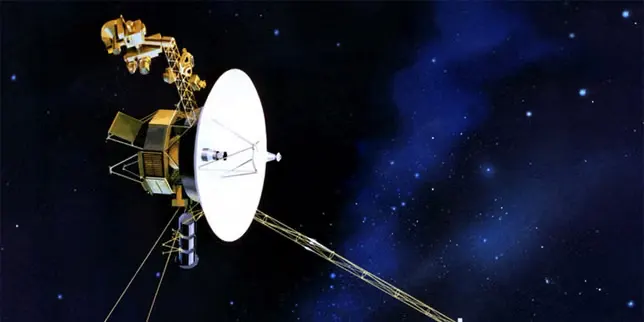
NASA launched Voyager 1 in 1977 as a robotic probe built to explore the farthest reaches of the solar system, as ABC News put it. It went up from Cape Canaveral, and its mission has now run for almost half a century.
The probe was meant to study the outer planets. It kept going well past them, and Live Science describes it as already the farthest human-made object in space before this latest record.
In 2012 it escaped the Sun's magnetic bubble, according to Renascença. That put it in interstellar space, though Le Monde notes it would take around thirty thousand years to leave the solar system for good.
How it unfolded
Coverage began building on November 14, when Al Jazeera and AP, shared on Reddit reported the probe was closing in on a light-day, a new distance record.
Over the next few days the explanations arrived. Space.com walked readers through what a light-day actually means, and Nature reported on November 17 that the probe's power supply is faltering and most of its instruments are off, though it is still gathering data.
On the same day, Space.com looked at why Voyager 1, which launched second, beat Voyager 2 to the mark. Voyager 2 is not expected to hit a light-day until about 2035.
Outlets gave slightly different clock times, depending on time zone. NPR put the crossing at 5:16 a.m. ET on Wednesday, while Microsiervos and El Pais gave 11:16:07 in mainland Spain, which is the same moment.
NASA also asked the public to take part. NPR reported the agency wanted people to flash V-G-R in Morse code with flashlights on Tuesday night.
Where it stands
By November 18, CBS reported that the probe had set the distance record, and The New York Times called it a mind-blowing one light-day from Earth after 49 years. ANSA gave the distance as 25.9 billion kilometers.
The probe itself notices nothing. As El Pais put it, it simply keeps moving away. CBS said Voyager 1 and its sister ship are still sending back data from interstellar space.
One caution on wording. bdnews24 described the milestone as one NASA believes the probe has reached, based on advance computations, a reminder that the figure is calculated from known trajectory rather than measured in the moment.
What to watch
The Voyager mission reaches its 50th anniversary late next year, as Scientific American noted. The open question is how long the aging probe can keep its remaining instruments and its radio link running as power declines.
Voyager 2 is the next marker. Per Space.com, it should cross the same light-day line around 2035, if it is still operating.
More in Science
All →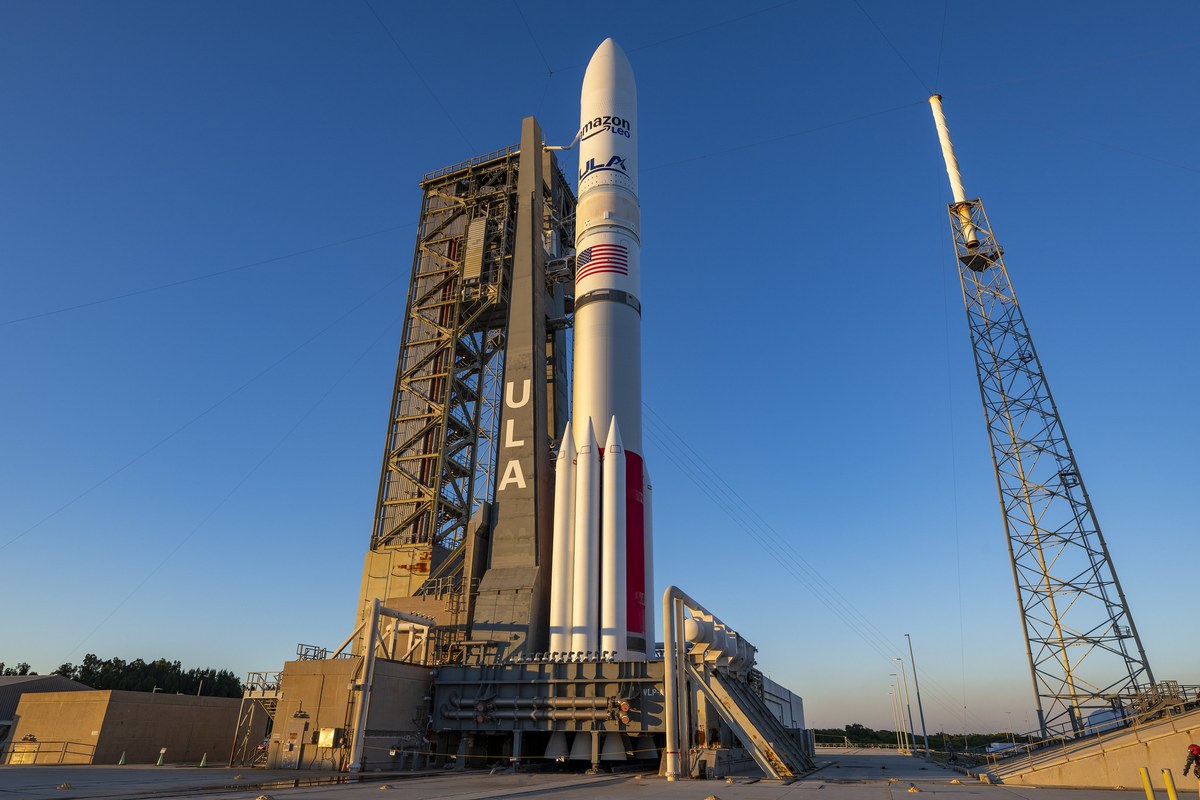
Vulcan Rocket Fails Ten Minutes After Launch, Destroying 40 Amazon Leo Satellites
ULA says inadequate fuel supply to the engines caused the failure that cost 40 Amazon Leo satellites.
38 sources · over 6 days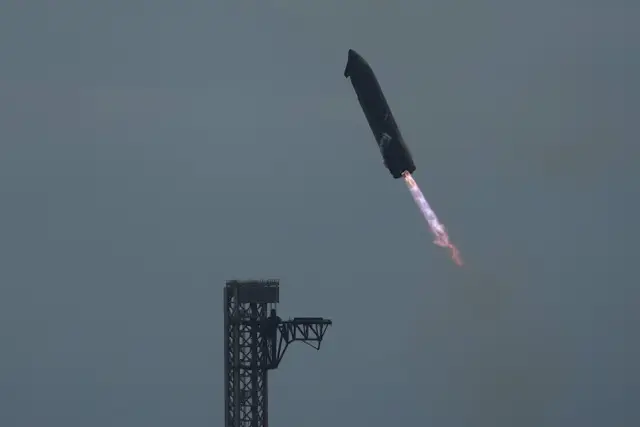
SpaceX Catches Starship Upper Stage at Texas Tower, But Booster Is Lost
The ship returned to the launch tower after 14 orbits in a first for the program, while the Super Heavy booster was not recovered.
73 sources · over 5 days
Siberian Tomb Reveals Earliest Direct Evidence of Cannabis Intoxication
Chemical traces in ancient hair and seeds from a Siberian burial site link cannabis use to a sacrificial setting, offering new evidence about rituals roughly 2,800 years ago.
17 sources · over 4 days