
SpaceX Catches Starship Upper Stage at Texas Tower, But Booster Is Lost
The ship returned to the launch tower after 14 orbits in a first for the program, while the Super Heavy booster was not recovered.
By Hushread Stories, from 73 outlets · First published 16 Nov 2026 · Chapter 2 of 2
Earlier: SpaceX Catches Starship Upper Stage at Starbase After 26-Satellite Deployment
In brief
- SpaceX caught the Starship upper stage with the launch tower's mechanical arms at Starbase, Texas, on 14 November, a first for the program.
- The ship flew about 22 hours and 14 orbits, deployed 26 satellites, and returned to the launch site before being caught.
- The Super Heavy booster catch was aborted, and the booster was directed into the sea rather than recovered.
- Flight 15 was SpaceX's first attempt to catch both the booster and the ship on the same mission.
- Elon Musk said the ship flown on this mission could fly again after a few modifications, and SpaceX released aerial footage of the return.
Timeline · 11 moments
Gizmodo says the ship catch is a milestone with a long road ahead
Gizmodo ↗SpaceX releases aerial footage of Starship's return and catch
RT en Español - Noticias ↗Only half of Flight 15 succeeded, but the half that worked was key
Xataka ↗Starship upper stage caught by launch tower arms on first attempt
The Register ↗Musk says ship 42 could fly again soon
RT en Español - Noticias ↗Washington reacts with praise for the milestone
The Hill ↗Isaacman calls the catch "almost magic"
New York Post ↗Starship caught by tower arms at Starbase
Hereford Times ↗Ship completes 14 orbits and deploys 26 satellites
Times of India Top Stories ↗Booster catch aborted, Super Heavy sent to sea
Le Monde ↗Update 17 Nov 2026, 11:18 pm UTC
New coverage confirms the ship catch was a real milestone, and RT en Español published aerial footage of the Starship's return that SpaceX shared on 16 November. Gizmodo framed the catch as the product of more than a decade of work while noting the road ahead is still long. Nothing in the new reporting changes the core facts of the published headline, so the existing headline and key points stand with light revision.
Update 16 Nov 2026, 10:00 pm UTC
Coverage since publication has added the flight 14 and 15 context and a notable detail: Xataka reported that flight 14 was the first to reach orbit and deposit a payload, and that only the second half of flight 15 succeeded. Ars Technica framed the ship's return as a step toward crewed flights, and Inc.com Startups emphasized that the return to the tower mattered as much as the catch itself. The booster catch was aborted and the booster ended in the sea, which the published piece already covers but should now state more firmly as the program's main open problem. MarketWatch noted the result's effect on SpaceX's position in the space race.
Update 16 Nov 2026, 3:55 pm UTC
Coverage from Saturday, 15 November, confirms the ship catch was carried out at the Starbase launch tower and is now described by AP as the grand finale of a 22-hour flight. The Register and The Next Web both stress that the catch came on the first attempt and was the first time a ship had returned from orbit and been caught. The booster recovery was aborted, so the booster ended in an explosion rather than a catch, which makes this a partial success rather than a full one. The published headline still reads correctly on the ship catch, so no headline change is needed.
How it started
SpaceX launched Starship on its 15th test flight from Starbase in South Texas, with an ambitious goal: to catch both halves of the rocket on the way back. Until now, the company had not tried to recover the upper stage this way, and a double catch had never been attempted.
The idea behind it is reusability. As Gulf News framed it, an aircraft that could fly only once before being thrown away would make every journey ruinously expensive. SpaceX wants Starship to work more like an airliner, and ARD Tagesschau described the aim as a rocket that can be used like a civilian plane.
How it unfolded
The launch came on Saturday 14 November. The first catch attempt did not go to plan. Le Monde reported that the return of the Super Heavy first stage was aborted for unknown reasons, and the booster was diverted to an offshore splashdown, according to The Defiant. The Guardian-style summary carried by Top Stories noted that the booster exploded.
The ship carried on. According to the Times of India, it completed 14 orbits and deployed 26 satellites. Xataka said the mission met nearly every stated objective, with the booster the only failure.
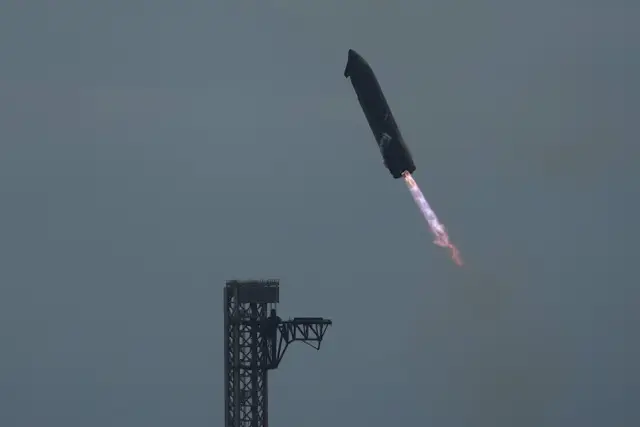
The ship then came back to Texas. Ars Technica described it falling out of the cloud deck near the very end of its flight, flying horizontally until the last moment, when three Raptor engines fired to bring it upright. Hereford Times reported that the mechanical arms caught it in mid-air where its journey began 22 hours earlier.
Reaction was quick. NASA Administrator Jared Isaacman called it "almost magic" in a post on X, according to the New York Post. The Hill reported that the catch drew praise in Washington.
Where it stands
The ship catch is being treated as a genuine milestone, but a partial success overall. HVG noted that SpaceX itself described the result as partial because the booster was not recovered. Coverage varies on small details, such as whether the flight lasted about 22 or nearly 24 hours, but all outlets agree on the catch itself.
On Sunday, RT en Español reported that Musk said the ship flown on this mission, number 42, could fly again after a few modifications.
What to watch
The main open question is why the booster return was aborted. Le Monde reported that the cause is not yet known, and SpaceX has not yet been quoted explaining it in the coverage available here.
The other thing to watch is whether Musk's timeline for reflying ship 42 holds, and whether SpaceX tries again to catch both stages on a single flight.
More in Science
All →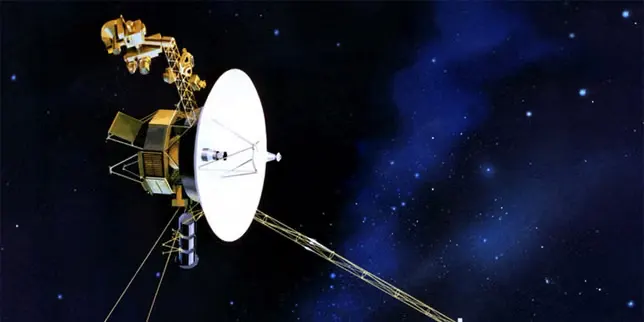
Voyager 1 Reaches One Light-Day From Earth, a First for Any Human-Made Object
Nearly 49 years after launch, the 1977 probe is now so far away that a radio signal takes a full day to reach it, a distance no spacecraft has matched.
56 sources · over 5 days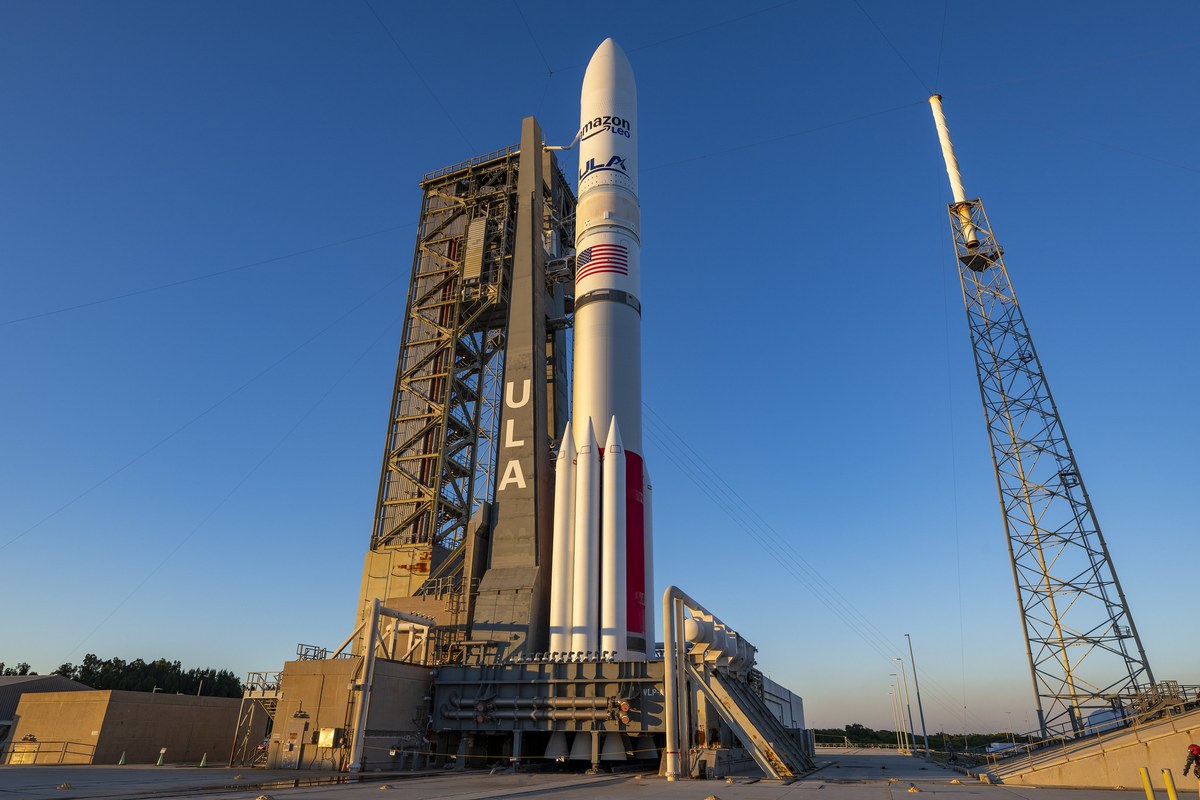
Vulcan Rocket Fails Ten Minutes After Launch, Destroying 40 Amazon Leo Satellites
ULA says inadequate fuel supply to the engines caused the failure that cost 40 Amazon Leo satellites.
38 sources · over 6 days
Siberian Tomb Reveals Earliest Direct Evidence of Cannabis Intoxication
Chemical traces in ancient hair and seeds from a Siberian burial site link cannabis use to a sacrificial setting, offering new evidence about rituals roughly 2,800 years ago.
17 sources · over 4 days