
SpaceX Catches Starship Upper Stage at Starbase After 26-Satellite Deployment
The spacecraft returned after nearly a day in orbit and was caught by the launch tower arms, though the booster catch failed.
By Hushread Stories, from 70 outlets · First published 13 Nov 2026 · Chapter 1 of 2
In brief
- SpaceX launched Starship Flight 15 from Starbase in Texas on Friday, 13 November 2026.
- The upper stage reached orbit and deployed all 26 Starlink V3 satellites about 40 minutes into the flight.
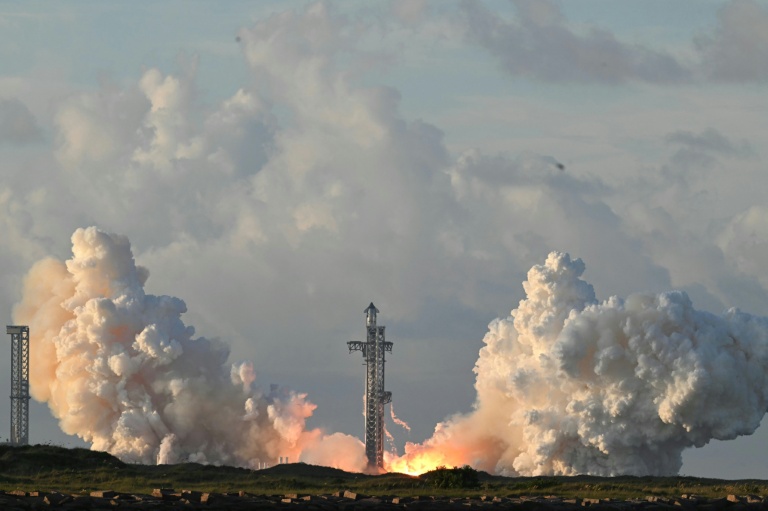
- SpaceX aborted the planned tower catch of the Super Heavy booster after a technical issue appeared early in flight.
- The booster came down in the Gulf of Mexico and was lost, so the double-catch goal was not achieved.
- The spacecraft returned after about 22 hours and 14 orbits and was caught midair by the launch tower arms at Starbase.
Timeline · 12 moments
Musk shares onboard footage of Starship after the catch
Mashable ↗Booster catch failed; SpaceX calls upper stage recovery partial success
HVG ↗Starship upper stage caught midair by Starbase launch tower arms
Sydney Morning Herald ↗Booster diverted to offshore splashdown as ship recovery succeeds
The Defiant ↗Starship upper stage caught at Starbase after nearly a day in orbit
News ↗Spacecraft reported healthy in orbit, return set for Saturday
Phys.org ↗Booster explodes in Gulf after aborted tower catch attempt
CNN Brasil ↗Starship reaches orbit but booster catch is aborted and lost
Deutsche Welle ↗Plan: booster caught first, ship after roughly 22 hours
Mashable Tech ↗Reuters reports first planned spacecraft recovery on land
Reuters ↗Update 16 Nov 2026, 0:06 am UTC
Newer coverage confirms the core outcome: the upper stage was caught by the launch tower arms at Starbase, as Bloomberg and Infobae both report. The published piece described the catch as still pending, so the key points and timeline now reflect a completed capture. The booster catch remains unachieved, since the booster was lost in the Gulf of Mexico. The headline and dek are still accurate and need no change.
Update 15 Nov 2026, 5:49 pm UTC
New coverage confirms the catch was not just of the upper stage but a full recovery sequence: the spacecraft was captured midair by the launch tower arms at Starbase after about 22 hours in orbit, as Yahoo! UK News reported, and Al Jazeera described the moment as almost magic. The booster loss in the Gulf of Mexico stands. The published piece treats the catch as still pending, so the key points and timeline need updating to reflect a completed flight and a successful upper stage recovery. The headline is still accurate in substance, so no new title is required.
Update 15 Nov 2026, 11:46 am UTC
The coverage now shows the upper stage was caught by the launch tower arms at Starbase, which the published piece did not yet report. Multiple outlets, including Sydney Morning Herald and Euronews, describe the spacecraft being caught midair after its roughly 22-hour flight and about 14 orbits. The booster catch was not achieved, as HVG notes, so the headline's core claim about the upper stage now stands while the double-catch goal remains unmet. The published headline and key points are updated to reflect the capture and the failed booster recovery.
Update 15 Nov 2026, 5:38 am UTC
The coverage has moved past the pre-launch state. Starship Flight 15 flew on Friday 13 November 2026 and deployed all 26 Starlink V3 satellites, and NBC and BBC both reported that the upper stage was caught by the launch tower arms at Starbase after nearly a full day in orbit. The Super Heavy booster was not caught, as The Defiant and Le Monde note it was diverted to an offshore splashdown in the Gulf of Mexico. The published piece should now reflect a successful upper stage recovery with the booster catch abandoned.
Update 14 Nov 2026, 9:54 pm UTC
The published piece was written before Flight 15 had flown, so its account of the launch is now out of date. Coverage from Saturday confirms the spacecraft did reach orbit and deployed the 26 Starlink V3 satellites, but the booster catch was aborted and the stage was lost in the Gulf of Mexico. News reported that SpaceX then caught the upper stage at Starbase after nearly a day in orbit, which the headline and key points should now reflect. Gizmodo and Mashable covered the live attempts as they unfolded.
Update 14 Nov 2026, 1:45 pm UTC
The published piece said the flight was scheduled for Friday with the outcome unknown. Coverage now confirms Starship Flight 15 launched on 13 November 2026, the upper stage reached orbit and deployed all 26 Starlink V3 satellites, and the booster catch was aborted with the booster lost in the Gulf of Mexico. NPR also reported that SpaceX is preparing to retire NASA's main ride to the International Space Station, a wider storyline the piece should now acknowledge.
Update 14 Nov 2026, 7:44 am UTC
The launch has now happened. Starship Flight 15 lifted off from Starbase on 13 November, and the upper stage reached orbit and deployed its Starlink V3 satellites, but SpaceX aborted the planned booster catch and the Super Heavy came down in the Gulf of Mexico, where it exploded. CBS News and Deutsche Welle both reported the booster loss, while Ars Technica noted the spacecraft was still set to attempt its own return catch. The headline's promise of a double catch is no longer what happened, so the story has been reframed around the aborted booster recovery.
How it started
Starship is SpaceX's giant two-stage rocket, billed as the world's biggest and most powerful. The company has long said its future depends on making it fully reusable, an old ambition in rocketry that no one has fully achieved at this scale.
So far, the ocean has been the usual fate of the upper stage, which has been discarded rather than saved. CBC noted that this flight would be the first attempt to catch the spacecraft at the Texas launch site instead.
The push has moved quickly. ABC wrote that barely a month and a half had passed since Starship reached Earth orbit for the first time, and SpaceX was already preparing another test.
How it unfolded
Coverage on 13 November converged on one plan. Reuters reported that SpaceX would attempt its first Starship spacecraft recovery on land in the rocket's 15th flight. AFP and Phys.org described the company as poised to carry out the test on Friday, with a groundbreaking catch of the spaceship after a day in orbit.
The sequence is unusual because it asks for two catches in one launch. Mashable explained that SpaceX would grab the booster minutes after liftoff and the ship nearly a full day later, and said no one has pulled off such a feat. CNET called it a first-ever double catch.
Both recoveries rely on the launch tower. Tech described the plan to retrieve the first and second stages using the tower's mechanical arms, with the orbital flight expected to last around 22 hours. Xataka put the scheduled liftoff at 22:45 GMT on 13 November, which is 23:45 in mainland Spain.
Outlets stressed the stakes. MarketWatch quoted an analyst saying it is hard to overstate the significance of the launch, and called the attempt the holy grail of rocketry. The New York Times described the maneuver as a key step toward the company's goal of fully reusable rockets.
Where it stands
As of the latest coverage, the launch was scheduled for Friday and SpaceX was preparing for the attempt. Nothing in the reports says whether the flight has flown or how either catch went.
NPR added a wider angle, reporting that as SpaceX races to develop its massive rocket, it is also preparing to retire NASA's main ride to the International Space Station.
What to watch
The first question is whether the booster catch works minutes after liftoff, since the ship's return comes nearly a day later and depends on the flight going well in between.
The second is the spacecraft catch itself, which coverage describes as unprecedented. If both attempts succeed, outlets say it would mark a major step toward fully reusable rockets. If either fails, the company would be back to the discard-and-rebuild approach it wants to leave behind.
More in Science
All →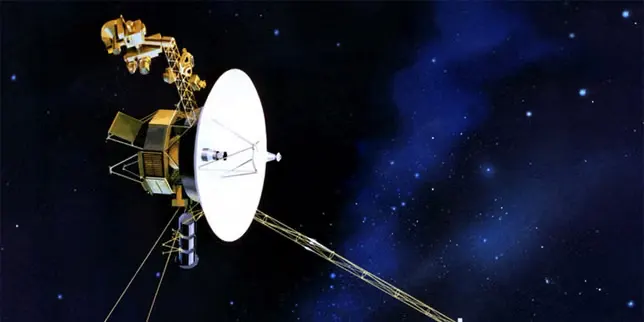
Voyager 1 Reaches One Light-Day From Earth, a First for Any Human-Made Object
Nearly 49 years after launch, the 1977 probe is now so far away that a radio signal takes a full day to reach it, a distance no spacecraft has matched.
56 sources · over 5 days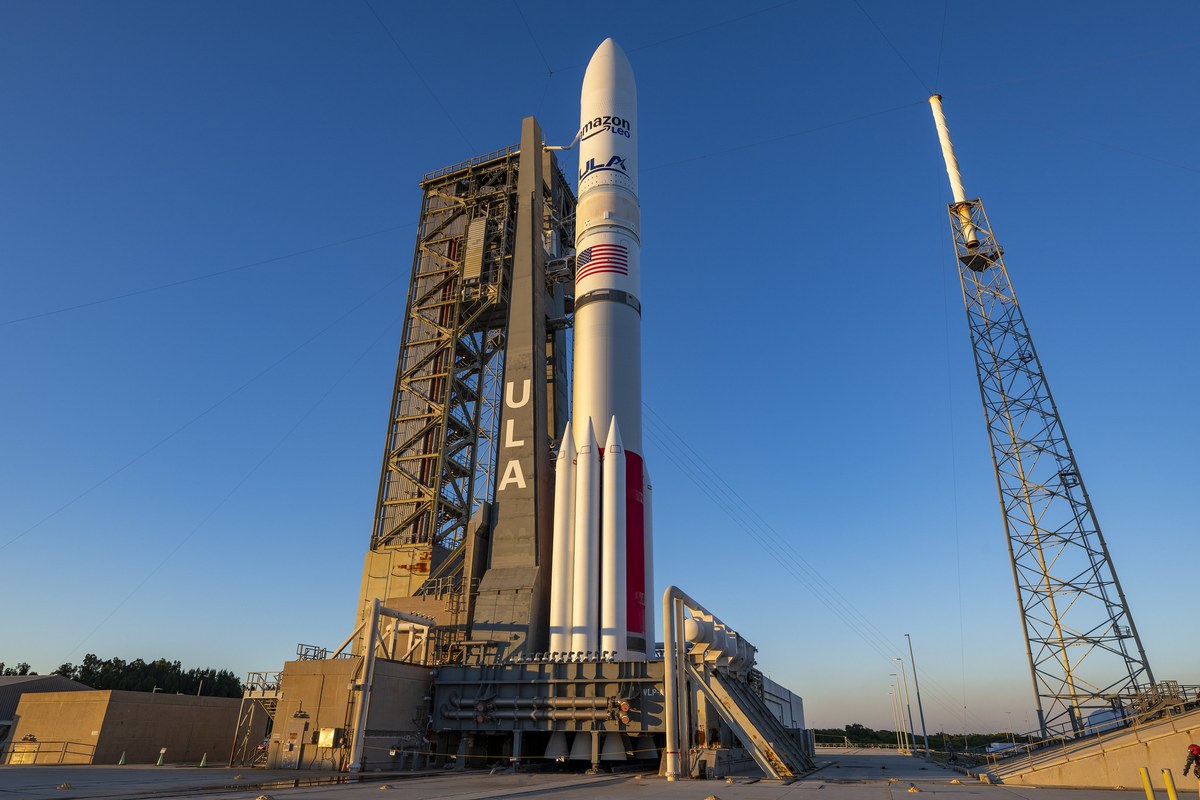
Vulcan Rocket Fails Ten Minutes After Launch, Destroying 40 Amazon Leo Satellites
ULA says inadequate fuel supply to the engines caused the failure that cost 40 Amazon Leo satellites.
38 sources · over 6 days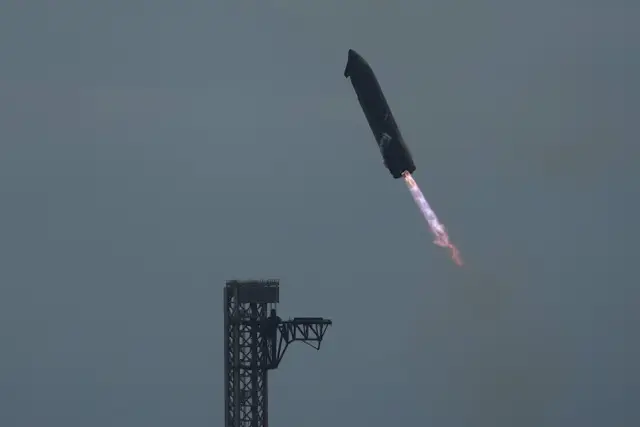
SpaceX Catches Starship Upper Stage at Texas Tower, But Booster Is Lost
The ship returned to the launch tower after 14 orbits in a first for the program, while the Super Heavy booster was not recovered.
73 sources · over 5 days