
Delhi Begins Winter Vehicle Entry Ban as Wider Pollution Curbs Approach
Delhi's restrictions on older vehicles registered outside the capital begin November 1, with construction stoppages and reduced office attendance following as the region prepares for Diwali pollution.
By Hushread Stories, from 10 outlets · First published 1 Nov 2026
In brief
- Delhi bars petrol and diesel vehicles registered outside the capital that fail to meet BS6 emission standards.
- The vehicle entry restrictions begin November 1, 2026, and remain in force until January 31, 2027.
- Earlier transport department estimates put the number of potentially affected vehicles across five neighbouring cities above 10 lakh.
- Construction restrictions and a requirement for half of office employees to work from home follow from November 5.
- Traders warn of business disruption, while the Delhi High Court Bar Association has sought an exemption.
Timeline · 7 moments
Vehicle restrictions begin with electronic penalties for violations
NDTV India ↗Delhi High Court Bar Association seeks vehicle exemption
The Hindu ↗Offices directed to put half their staff at home
Scroll.in ↗Construction and demolition ban reported across Delhi NCR
Hindustan Times ↗Traffic police advise commuters to check vehicle eligibility
NDTV Top Stories ↗Traders warn entry ban could disrupt regional businesses
Business Line - Home ↗Estimates identify over ten lakh potentially affected vehicles
NDTV India ↗How it started
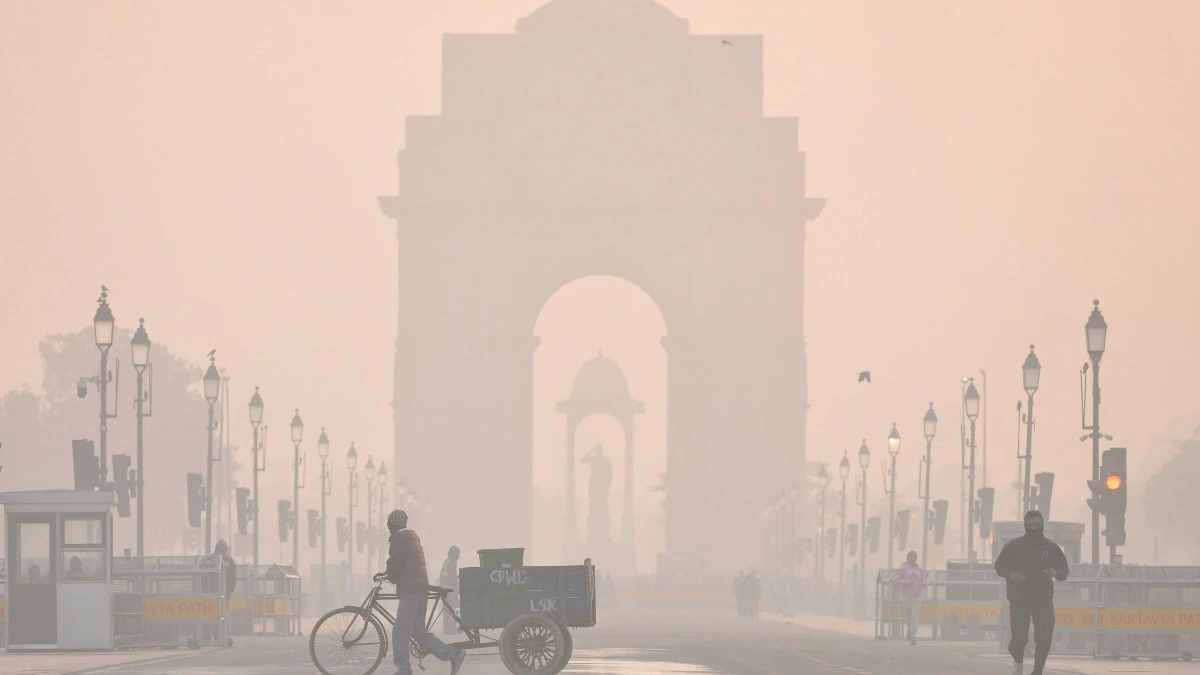
Delhi's winter pollution plan targets vehicles entering the capital, alongside construction activity and office attendance across the surrounding region. The vehicle restrictions begin on November 1, ahead of further measures scheduled around Diwali.
The entry ban covers petrol and diesel vehicles registered outside Delhi that do not meet Bharat Stage-VI, or BS-VI, emission standards, according to NDTV India. It is scheduled to last until January 31, 2027. This is not a blanket ban on every older vehicle in Delhi: registration outside the capital is part of the stated scope.
The potential disruption extends across daily commuting routes. On October 26, NDTV India reported transport department estimates showing more than 10 lakh vehicles below BS-VI standards in Gurugram, Faridabad, Noida, Greater Noida and Ghaziabad.
How it unfolded
By October 27, traders were warning that the entry restrictions could disrupt commuters and businesses across the National Capital Region, according to Business Line. The three-month duration makes the measure more than a short holiday restriction.
On October 30, NDTV Top Stories reported that traffic police had advised commuters to check their vehicles' eligibility before travelling and follow official traffic advisories.
The response then widened beyond traffic. On October 31, Hindustan Times reported a construction and demolition ban across Delhi-NCR ahead of the peak smog period. Business Line reported that government and private offices would be capped at 50% capacity from November 5 to 20.
The office measure requires 50% of employees to work from home. Scroll.in reported on October 31 that the Commission for Air Quality Management had directed state government and private offices in Delhi and five adjoining regions, including Gurugram and Noida, to implement it.
Requests for relief also emerged. On October 31, The Hindu reported that the Delhi High Court Bar Association had sought an exemption from the vehicle restrictions, with commuters and transporters also raising concerns.
Where it stands
The vehicle entry restrictions take effect on November 1. The government said e-challans would be generated against non-compliant vehicles, according to NDTV India. The supplied coverage does not establish that the bar association's exemption request has been granted.
The measures have different deadlines. The vehicle ban runs until January 31, while the construction stoppage and reduced office attendance are scheduled for November 5 to 20, according to NDTV India, News and Business Line.
The reported vehicle counts differ. The earlier transport department estimate cited by NDTV India exceeded 10 lakh across five cities; an October 31 headline from Indian Express put non-BS-VI vehicles in neighbouring NCR districts at 48 lakh. The supplied coverage does not explain the difference, so the figures cannot be treated as directly comparable.
What to watch
The next major change comes on November 5, when construction restrictions and the office attendance cap are scheduled to begin. Their overlap with the vehicle ban will determine how much commuting and business activity is disrupted during the November 5 to 20 period.
Enforcement and exemption decisions remain important open issues. Commuters have been told to verify eligibility before travelling, while the bar association's request tests whether any relief will be offered to groups affected by the entry restrictions.
More in Environment
All →
Bhutan Glacial Lake Outburst Damages Roads, Washes Away Bridge
A glacial lake outburst in Bhutan damaged roads and washed away a bridge, while a new downstream lake raised fears of secondary hazards.
12 sources · over 2 days
Cyclone Arnab Makes Landfall on Andhra Pradesh Coast
Cyclone Arnab made landfall with winds gusting up to 150 kmph, prompting evacuations and disruption across the region.
24 sources · over 8 days
Storm Austen and Storm Boelo leave deaths, outages and disruption
Two people have died and widespread power cuts persist after successive storms hit the UK, while Ireland has also faced outages, road closures and severe weather warnings.
15 sources · over 8 days