
Eisenkot moves against Netanyahu in parliament as coalition talks hit trouble
Israel's new parliament is already challenging Benjamin Netanyahu, but Gadi Eisenkot still needs to turn opposition strength into a government after canceling talks with Likud.
By Hushread Stories, from 42 outlets · First published 11 Nov 2026 · Chapter 2 of 3
Earlier: Gadi Eisenkot Gets Six Weeks to Build Israel's Next Government
In brief
- President Isaac Herzog gave Gadi Eisenkot the mandate to try to form Israel's next government on Sunday.
- The new parliament was sworn in on Tuesday without a government agreed after the deadlocked election.
- Netanyahu remains prime minister, while his opponents have parliamentary strength but no agreed governing coalition.
- Eisenkot's Yashar party canceled a planned meeting with Likud after Netanyahu's speech at the parliamentary opening.
- The opposition has nominated Matan Kahana as parliamentary speaker, while Eisenkot seeks an official October 7 inquiry.
Timeline · 6 moments
Eisenkot pursues October 7 inquiry without coalition secured
Deutsche Welle ↗Eisenkot cancels Likud meeting after Netanyahu's parliamentary speech
Agencia EFE - www.efe.com - English edition ↗Eisenkot promises to form national emergency government quickly
La Nacion ↗New parliament sworn in without an agreed government
dawn.com ↗Netanyahu urges unity government under his own leadership
Business Line - Home ↗Herzog announces Eisenkot will get government formation mandate
Scroll.in ↗How it started
Gadi Eisenkot has the mandate to try to form Israel's next government, but not yet the coalition to replace Benjamin Netanyahu. President Isaac Herzog announced the opportunity on Sunday, November 8, according to Scroll.in.
The election left Netanyahu without his parliamentary majority, but did not give his main rivals a clear route to government either, Dawn reported. That distinction explains the struggle now unfolding: Netanyahu's opponents can challenge him in parliament without necessarily agreeing on a government together.
How it unfolded
By November 9, the difficulty of assembling a coalition was already clear. Foreign Policy described four possible paths to power for Eisenkot, none straightforward. ARD Tagesschau subsequently reported that he also considered a minority government possible.
On November 10, Netanyahu pressed for a broad unity government under his own leadership, bringing together opposition and ultra-Orthodox parties, according to Business Line. His proposal kept him in contention even though Eisenkot held the mandate to form the next government.
The new parliament held its first session that day without a government in place. Herzog called for compromise amid the unresolved contest between the two camps, Franceinfo reported. Eisenkot promised to form a national emergency government as quickly as possible, according to La Nacion.
The opening also exposed a distinction between parliamentary power and coalition power. NYT World News reported that the opposition led by Eisenkot had a majority in the new Knesset and was expected to start using its powers. That did not mean its parties had settled on a governing coalition.
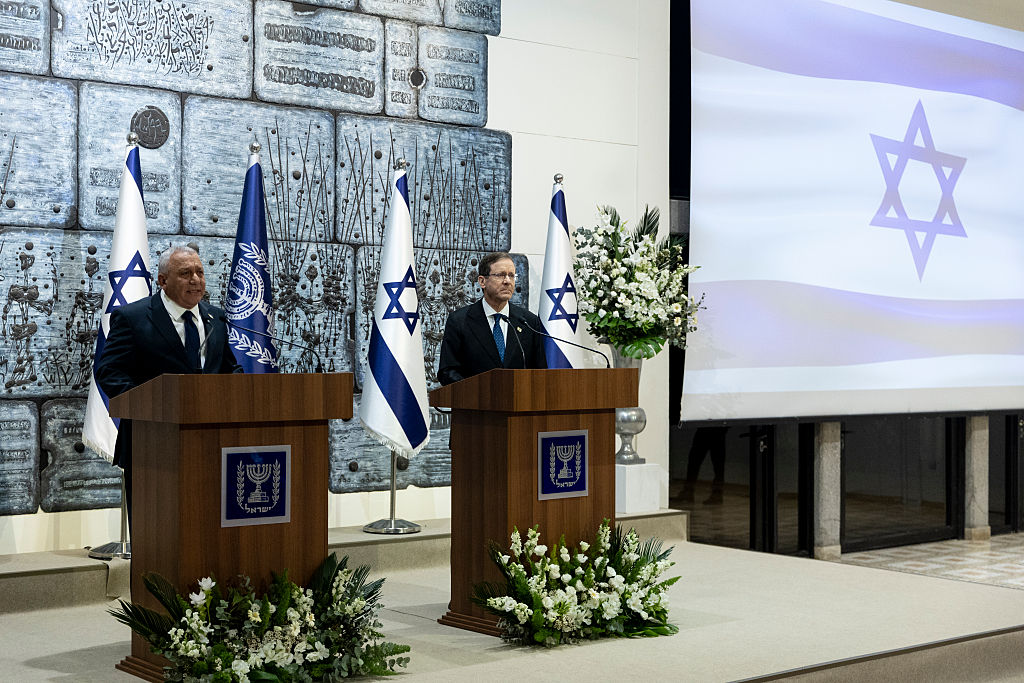
Talks with Netanyahu's party then suffered a setback. Eisenkot's Yashar party canceled a meeting with Likud on November 10, citing Netanyahu's speech during the parliamentary opening, Agencia EFE reported. Adnkronos said the meeting had been scheduled for Wednesday.
Where it stands
Netanyahu remains prime minister. Eisenkot has yet to assemble the coalition needed to replace him, despite a new Knesset dominated by Netanyahu's critics, Deutsche Welle reported on November 11.
The opposition is nevertheless moving to take control of parliamentary business. It agreed to nominate Matan Kahana, a former minister and Yashar leader, as the next Knesset speaker, according to Infobae. The position is currently held by Amir Ohana of Netanyahu's Likud party, Le Monde reported.
Eisenkot is also pursuing an official inquiry into the October 7 attacks, according to Deutsche Welle. His broad bloc, spanning left to right, has begun setting the parliamentary agenda even while the question of who can form a government remains unresolved, Japan Times reported.
What to watch
The speaker contest is an immediate test of whether Netanyahu's opponents can turn their parliamentary strength into control of a key institution. Kahana's nomination is an agreement within the opposition, not a completed change in the speakership, according to Infobae.
The larger test is whether Eisenkot can convert that cooperation into a governing arrangement. A minority government remains among the possibilities reported by ARD Tagesschau, while the cancellation of the Likud meeting leaves that channel of talks interrupted.
More in Politics
All →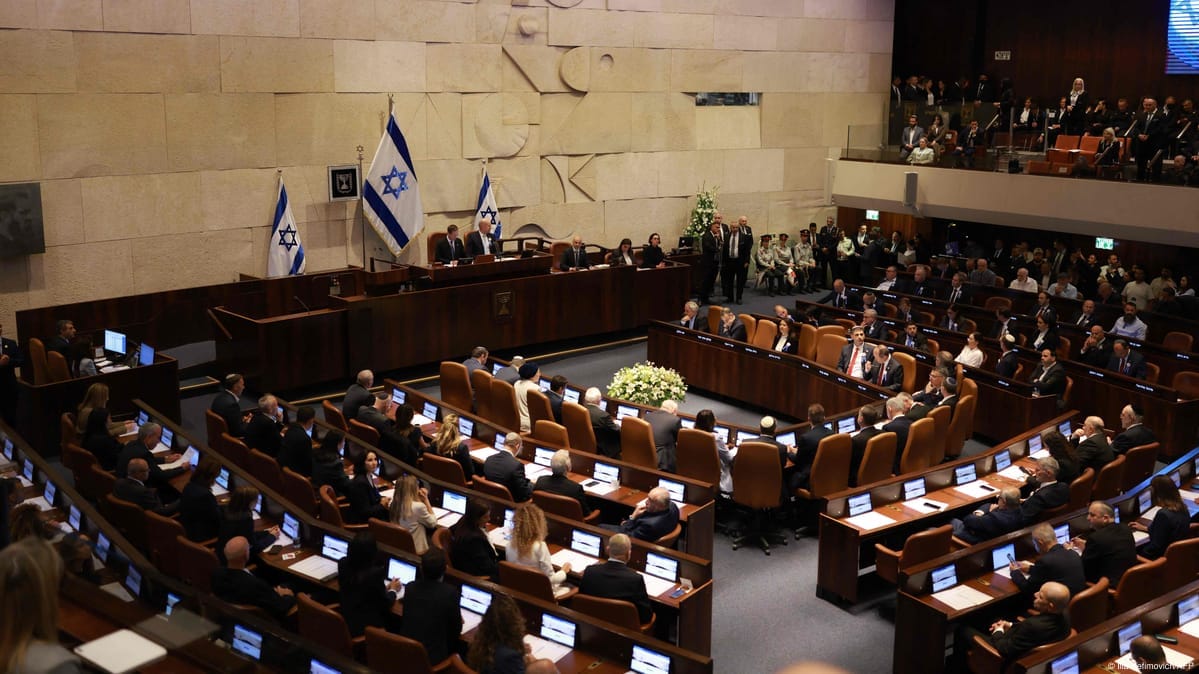
Eisenkot cancels Likud talks as Israel's new parliament challenges Netanyahu
Gadi Eisenkot has the mandate to form Israel's next government, but a rupture in unity talks leaves him seeking a coalition while Netanyahu's opponents assert parliamentary control.
43 sources · over 4 days
House Republicans Choose Jim Jordan as Leader After Midterm Defeat
Jordan defeated Steve Scalise to lead the incoming House Republican minority, replacing Mike Johnson as the party confronts sweeping election losses and prepares for the next Congress.
35 sources · over 2 days
California voters reject billionaire wealth tax after costly, divisive campaign
The proposed levy would have taxed most billionaire wealth at 5%, but its defeat exposes divisions among Democrats and could slow similar efforts elsewhere.
32 sources · over 9 days