
Elon Musk Says He Felt 'Foolish' Over Midterm Spending and Is 'Not MAGA'
After Republican losses in the 2026 midterms, Musk said he regrets pouring hundreds of millions into the race and distanced himself from the movement he backed, drawing a warning from Trump.
By Hushread Stories, from 51 outlets · First published 20 Nov 2026 · Chapter 2 of 2
Earlier: Musk Says He Feels 'Pretty Foolish' After Nearly $500 Million Midterm Spending
In brief
- Elon Musk said he felt "pretty foolish" about spending hundreds of millions of dollars backing Republican candidates in the 2026 midterms.
- Outlets put his spending at between roughly $445 million and $500 million, with some citing $474 million.
- Musk made the remarks at the New York Times DealBook Summit, appearing virtually, and said he is "not MAGA".
- President Trump called Musk a friend with good intentions but warned that people who veer from MAGA "don't do very well".
- Coverage describes a public break and a bid for a moderate image, but no formal political change beyond Musk's comments.
Timeline · 6 moments
Trump warns those who leave MAGA 'don't do very well'
TheWrap ↗Trump calls Musk a friend, brushes off distancing
The Hill ↗Le Monde reports $220 million went to Paxton
Le Monde ↗Reports detail spending of up to $500 million
Fortune ↗Musk says he is 'not MAGA'
KYTV | KY3 | The Place to Be | First Alert Weather | Springfield, Mo | Arkansas | Missouri ↗Musk tells DealBook Summit he feels 'pretty foolish'
CBS Top Stories ↗How it started
Elon Musk spent heavily to help Republicans in the 2026 midterm elections. The Financial Times described the money as a bid to support Donald Trump's party, and NDTV noted that much of it went to keep Texas red, a state that is home to Tesla and SpaceX.
The spending did not deliver. According to the Financial Express, the results led to Democratic victories in Congress, and RT en Español reported that Republicans lost control of both chambers.
Musk's political identity had been closely tied to Trump's. The Verge recalled him onstage at the Conservative Political Action Conference less than two years earlier in a black MAGA hat, holding a chainsaw. The AP noted he sat in the front row at Trump's second inauguration.
How it unfolded
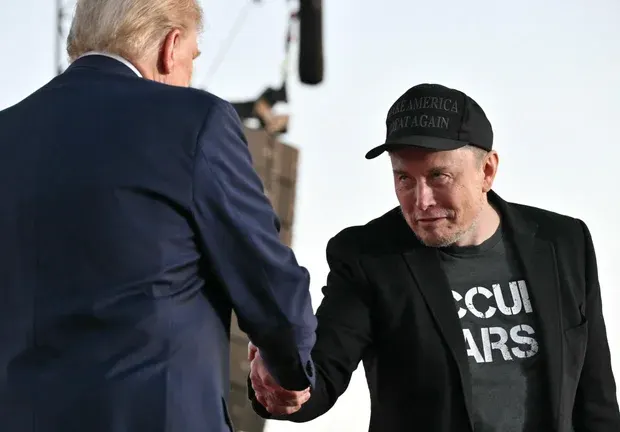
On Wednesday, November 18, Musk joined the New York Times DealBook Summit. The Times of India reported that he took part virtually from China. CBS said he told the audience he felt "pretty foolish" about spending hundreds of millions of dollars in the race.
He also pushed back on the MAGA label. The AP quoted him saying he was not sure what MAGA means, and CBS reported he said flatly that he is "not MAGA". The Times of India said he described himself as moderate.
He offered a lesson from the episode. The Hindu quoted him saying it "certainly shows that American elections are not just about money". MarketWatch reported another line: "if I could rewind the clock, I would have spent less money."
The figures differ by outlet. Fortune wrote $445 million, The Daily Beast said $446 million, and The Times of India and InfoMoney reported about $474 million. Most headlines said nearly $500 million. Le Monde added that more than $220 million went to Texas Senator Ken Paxton, who was ultimately beaten.
Trump responded on Thursday. According to The Hill, he brushed off the distancing, called Musk "a friend of mine" with "very good intentions", and said MAGA means something specific that people stray from at their peril. TheWrap reported his warning that people who leave the movement "don't do very well". The Independent quoted him saying Musk "was with me...he traveled with me".
Where it stands
Coverage splits on how to read Trump's reply. Axios reported that the president still considers Musk an ally, while TheWrap and Der Spiegel stressed the warning. Both can be true, since Trump offered friendly words and a caution in the same exchange.
Commentary on Musk's turn is sharp. CNN called it a craven political turn that history suggests could be short-lived, while The Daily Beast reported criticism from Republicans. MarketWatch framed it as a peace offering to Democrats after the midterms. Beyond Musk's statements, the coverage describes no formal change in his political activity.
What to watch
The open question is whether the shift is lasting. CNN suggested it may not be, and nothing in the coverage shows Musk committing to a new political course or to different spending.
The other thing to watch is Trump. His friendly tone alongside a pointed warning leaves the relationship unsettled, and Musk's companies, which operate in Texas and are tied to government, give both men reasons to manage it carefully.
More in Politics
All →
UK and EU hold Brussels summit as Burnham pushes Brexit reset
Prime Minister Andy Burnham has reopened the question of Britain's place in Europe, and Friday's Brussels summit tests how far the EU will go before he decides where he stands.
18 sources · over 3 days
UK and Australia sanction Israeli settlement builders and settler figures over West Bank expansion
Britain targeted eight Israeli construction firms and a group blocking Gaza aid, and Australia followed with sanctions on settlers and organisations, in a coordinated push over West Bank settlement growth.
19 sources · over 3 days
Senate Passes Bipartisan Permitting Bill 62-33, Sending Data Center Power Costs Provision to House
The Senate has approved a sweeping permitting overhaul that would speed energy and infrastructure projects and make data centers pay more for power, but its path through the House is uncertain.
8 sources · over 4 days