
Iran Keeps Conditional Hormuz Reopening Plan on Table as Shipping Attacks Rise
Iran says shipping could resume on the sixth day of a proposed agreement, while tanker fires and competing claims over safe passage leave the waterway's status disputed.
By Hushread Stories, written with AI from 47 outlets · First published 18 Oct 2026 · Chapter 2 of 2
Earlier: Iran Reports Hormuz Tanker Mine Strikes and Offers Conditional Reopening Plan
In brief
- Iran says the Strait of Hormuz could reopen on day six if the United States meets its conditions.
- Negotiations could resume on day seven under the proposal outlined by Iran's foreign minister on Sunday.
- Iran's Revolutionary Guard Corps says two tankers carrying about two million barrels each caught fire after striking mines.
- A British maritime monitoring agency reported at least ten vessels attacked in or near Hormuz since last Sunday.
- The United States says most shipping continues safely, disputing Iran's account of its control over the waterway.
Timeline · 8 moments
Iran warns of prepared response to renewed attacks
CNBC ↗Araghchi outlines conditional sixth day reopening for Hormuz
ISNA (English) ↗US military says Hormuz remains open despite attacks
Middle East Eye ↗Attacks reported on two ships off Saudi coast
ARD Tagesschau ↗IRGC reports second supertanker explosion after mine collision
IRNA English ↗Weekly attacks on shipping reach wartime high
CBS News ↗Iranian Navy reports burning tanker in eastern Hormuz
IRNA English ↗Iran reiterates restrictions on uncoordinated passage through Hormuz
Tehran Times ↗How it started
The dispute centres on Iran's demand that ships coordinate passage through the Strait of Hormuz. On October 16, Tehran Times reported that Iranian military officials considered the strait closed to uncoordinated traffic and linked any easing of restrictions to respect for Iran's rights.
The disruption extends beyond that waterway. CNN reported on October 17 that the United States and Iran's war had severely disrupted oil flows through both Hormuz and, in recent weeks, the Bab al-Mandeb Strait.
How it unfolded
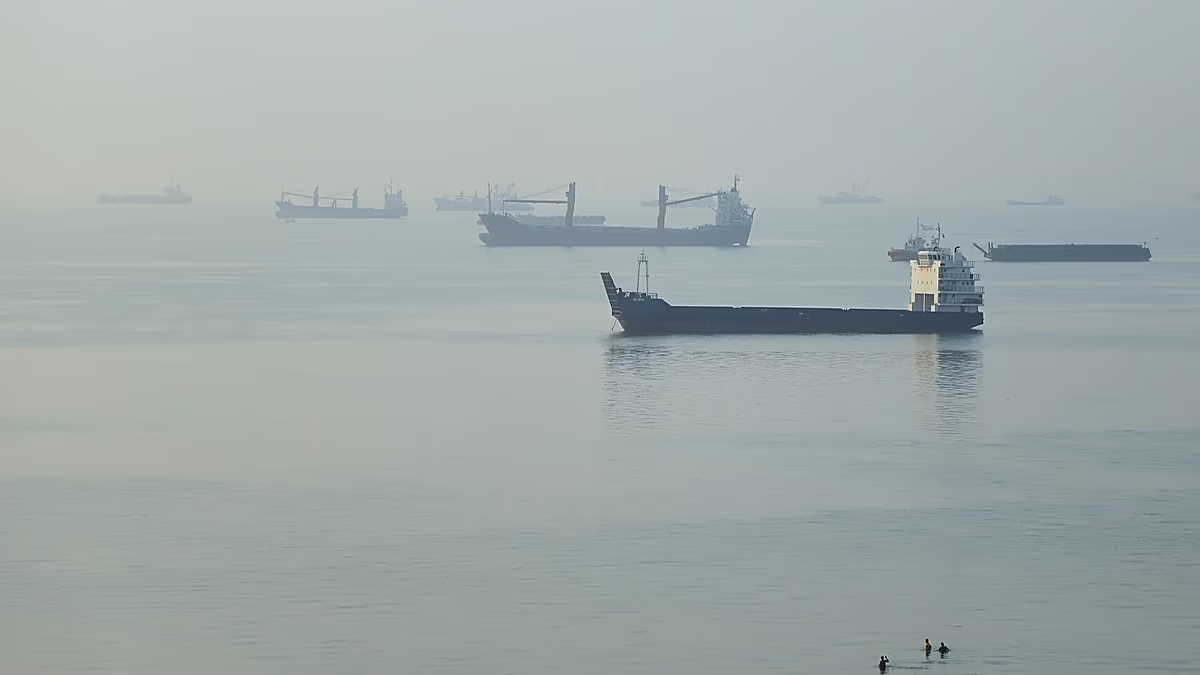
On October 16, IRNA English reported that Iranian Navy surveillance teams had spotted a burning oil tanker in the eastern Strait of Hormuz. The report described the vessel as non-compliant and said it had attempted to pass through a prohibited area.
On October 17, CBS News reported that the U.K. Maritime Trade Operations monitoring agency had recorded attacks on at least ten vessels in or near the strait since the previous Sunday. That was the highest weekly total since the war began, according to the report.
Iran's Revolutionary Guard Corps Navy also reported a second supertanker explosion after a collision with a naval mine on October 17, according to IRNA English. By October 18, Al Jazeera reported the IRGC's claim that two tankers, each carrying about two million barrels of crude, had caught fire after using an unauthorised route. Those accounts attribute the mine strikes and route violations to Iranian officials, rather than establishing them independently.
Reports of attacks also extended beyond Hormuz. ARD Tagesschau reported on October 17 that two ships had been attacked off the Saudi coast, far from the strait.
The United States challenged Iran's account of the disruption. On October 17, Middle East Eye reported that the US military said the vast majority of attempted Iranian attacks had failed and that the waterway remained open.
On October 18, Iranian Foreign Minister Seyyed Abbas Araghchi said the strait would reopen on the sixth day if the United States complied with Iran's conditions, with negotiations potentially resuming on the seventh day, according to ISNA.
Where it stands
Iran's reopening proposal remains on the table, but the coverage does not establish an agreement. Times of India reported on October 18 that Tehran was analysing the US response to its conditions for ending the conflict.
The two sides continue to give sharply different accounts of passage through Hormuz. Iran describes restrictions on uncoordinated traffic, while Washington says shipping continues. Business Line reported on October 18 that the United States said 97% of ships were transiting safely, crediting naval protection.
Military warnings accompany the diplomatic offer. CNBC reported that Mohsen Rezaei, secretary of Iran's Supreme National Security Council, said Iran's military had prepared a response to any renewed attacks.
What to watch
The immediate issue is whether Washington accepts Iran's conditions and whether the proposed timetable begins. The sixth-day reopening and seventh-day talks described by ISNA are conditional steps, not announced calendar dates.
Further shipping reports will also matter. The attack figures reported by CBS News and the safe-transit claim reported by Business Line measure different things: continued passage does not by itself resolve the danger facing vessels.
More in World
All →
Cornell Fraternity Party Ban Fails to Quell Anger Over Assault Allegations
Cornell faces faculty criticism and protests despite suspending fraternity parties, while an independent review and online attempts to identify the accuser widen the crisis.
36 sources · over 6 days
French Protests Leave Widespread Damage, With More Than 1,800 Arrested
After nationwide demonstrations over living costs, reports describe looting, fires and damage to public buildings across France.
70 sources · over 10 days
Kolkata Durga Puja Stampede Kills at Least 19, Seven Arrested
Police cite confusing announcements and mismanagement in the Chorbagan pandal stampede, where at least 19 people died.
25 sources · over 2 days