
New Zealand election leaves government undecided as parties delay coalition talks
A narrow provisional advantage for Christopher Luxon's coalition could shift when special votes are counted, leaving New Zealand waiting until later this month for clarity.
By Hushread Stories, from 34 outlets · First published 9 Nov 2026 · Chapter 2 of 2
Earlier: New Zealand election count ends with no clear winner
In brief
- New Zealand's November 7 election left National and Labour nearly level, with neither party able to govern alone.
- Prime Minister Christopher Luxon's coalition has a provisional path back to power, but has not secured victory.
- Provisional results could expand Parliament by up to eleven overhang seats, without matching party vote shares accurately.
- Qiulae Wong of the centrist Opportunity Party could become pivotal in determining the next government.
- Parties have delayed coalition talks, with final results including special votes expected on November 27.
Timeline · 10 moments
New Zealand dollar posts biggest daily gain since April
Bloomberg ↗Provisional overhang seats raise questions about vote representation
The Conversation ↗Wong argues for pragmatic politics as uncertainty continues
World News CNA ↗Parties put off coalition talks after tight election
BBC ↗Luxon to lead caretaker government during negotiations
NPR : National Public Radio ↗Qiulae Wong emerges as a potential coalition kingmaker
World News Headlines, Latest International News, World Breaking News - Times of India News ↗Overhang seats expand preliminary parliament to 131 members
The Conversation ↗Rightwing bloc projected to have enough seats to govern
Financial Times ↗Count passes 95 percent with main parties nearly tied
Deutsche Welle ↗More than half of voters cast early ballots
Al Jazeera ↗Update 9 Nov 2026, 11:51 pm UTC
The election remains unresolved, but the provisional overhang seats have drawn fresh attention as a source of possible mismatch between Parliament's size and the share of party votes. The New Zealand dollar also recorded its biggest one-day gain since April after the incumbent centre-right government emerged from the election with a path back to power, Bloomberg reported.
How it started
The November 7 election followed a campaign dominated by household costs. Christopher Luxon was trying to hold on as high energy prices and the cost of living weighed on consumers, according to the Financial Times.
New Zealand's voting system also made the contest about more than which major party finished first. Voters cast both a party vote and a vote for a local electorate candidate, Euronews explained. Those results together shape parliament and the possibilities for forming a government.
More than half of voters had already cast early ballots before the final day of voting, Al Jazeera reported.
How it unfolded
On November 7, early counting put the governing National Party narrowly ahead, but a close contest with Labour was already emerging, according to DIE ZEIT. With more than 95% of votes counted, fewer than 4,000 votes separated the two main parties, Deutsche Welle reported.
The provisional seat arithmetic offered Luxon a possible route back. The Financial Times reported that the rightwing bloc was projected to win enough seats to form a government. But that projection was not a settled outcome: Sky News described the conservative coalition as being on the brink of a slim majority, with no definitive result.
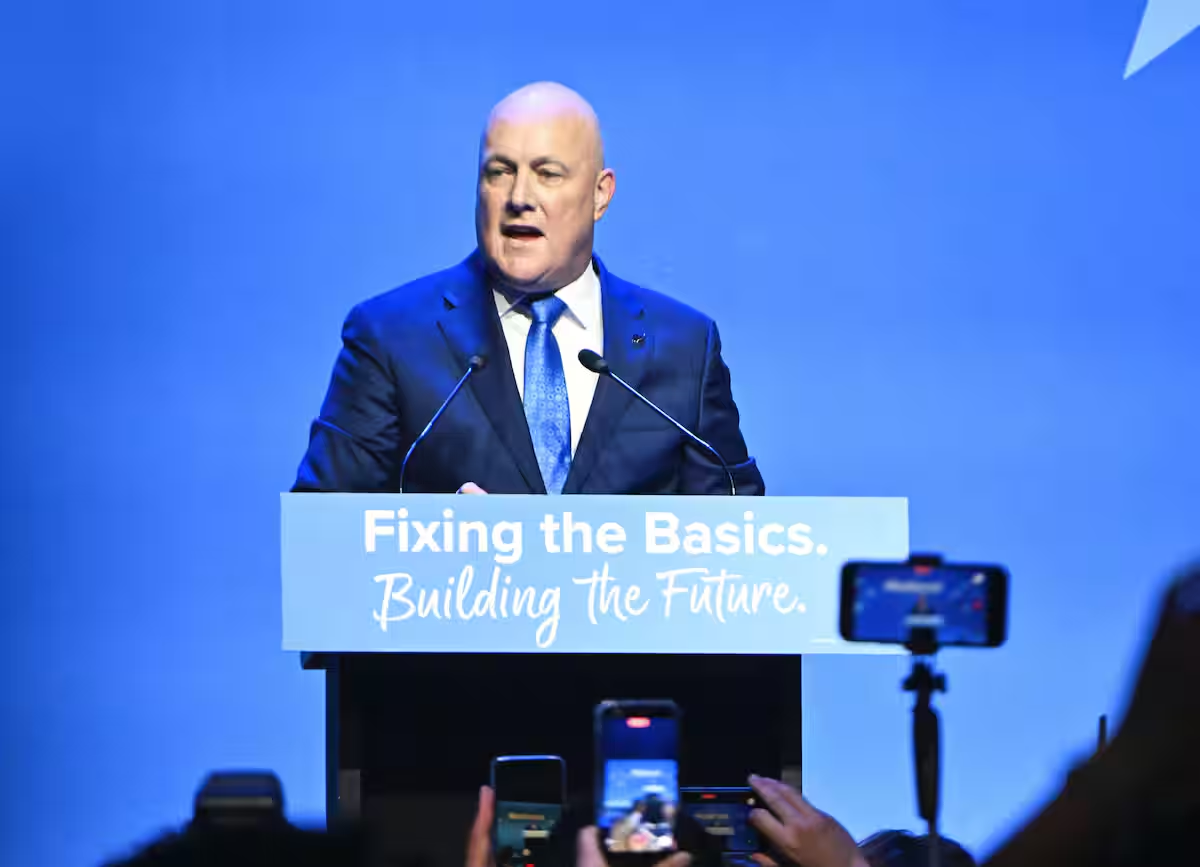
Neither Prime Minister Christopher Luxon nor opposition leader Chris Hipkins claimed victory in their election speeches, the Japan Times reported. Neither National nor Labour had enough seats to govern without minor parties, according to CNA.
On November 8, The Conversation reported that preliminary results produced eleven overhang seats, expanding parliament from its nominal 120 seats to 131. These arise when electorate wins exceed what a party's share of the party vote would otherwise deliver, making the final seat totals particularly important.
Attention also turned to Qiulae Wong and her centrist Opportunity Party. The Times of India reported on November 8 that Wong, 38, had entered politics less than a year earlier and could become a kingmaker.
By November 9, parties had put off coalition talks, according to the BBC. Wong was making a case for pragmatic politics, telling journalists that populism was failing voters worldwide, CNA reported.
Where it stands
Luxon's coalition has an advantage, not a confirmed victory. Preliminary Electoral Commission results suggested his centre-right coalition could govern with a majority of just two seats, according to NDTV. That narrow margin explains why reports of a possible return to power coexist with assessments that the election remains too close to call.
The next government's shape will not become clear until November 27, when special votes can change the picture, The Guardian reported. Those include overseas special votes, according to Sankei News.
Luxon will lead a caretaker government while negotiations take place, NPR reported. The immediate uncertainty is therefore about who can assemble the next governing majority, rather than who runs the caretaker administration.
What to watch
The first test is whether the governing coalition's provisional majority survives the final count. The November 27 results will establish the seat arithmetic on which negotiations depend, according to The Guardian.
Then comes the question of which smaller parties can help form a government. Wong's potential influence remains conditional on those numbers, as the Times of India reported, while the BBC says coalition talks have been postponed.
More in Politics
All →
Teddy Riner announces candidacy for France's 2027 presidential election
The Olympic judo champion has entered the presidential race, saying he wants to unite the French while continuing his sporting career, with policy and campaign details still unclear.
20 sources · today
Gadi Eisenkot Gets Six Weeks to Build Israel's Next Government
Gadi Eisenkot has a mandate to form a coalition, but a seat shortfall and disputes over military conscription leave Benjamin Netanyahu with room to influence the outcome.
24 sources · over 2 days
Hegseth Defies Impeachment Threat as Trump Backs Him After Midterm Losses
A Republican lawmaker plans to force an impeachment vote as soon as next week, testing support for Defense Secretary Pete Hegseth after election losses blamed on the Iran war.
77 sources · over 6 days