
Settler arson attacks hit West Bank villages as Eisenkot blames far-right ministers
A night of torched cars and vandalised homes in Palestinian villages has pushed settler violence into Israel's election-season politics, with the opposition leader calling it "Jewish terrorism" and police opening an investigation.
By Hushread Stories, from 15 outlets · First published 22 Nov 2026
In brief
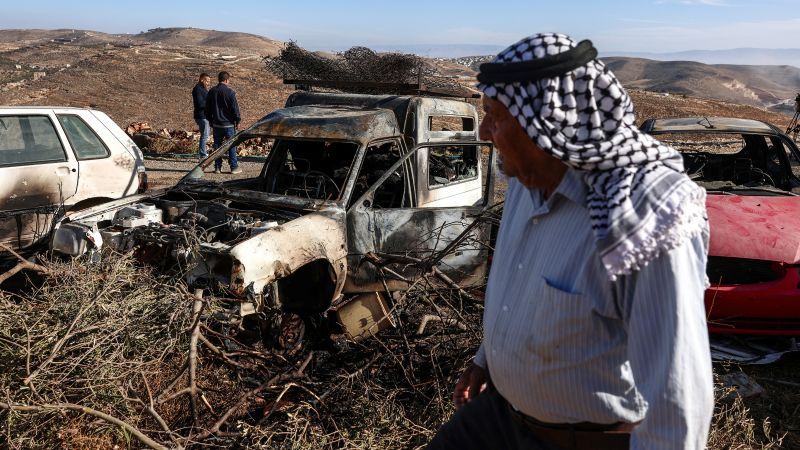
- Settlers attacked several Palestinian villages in the occupied West Bank overnight, burning vehicles and vandalising homes, according to multiple outlets.
- Tasnim counted 12 vehicles and an agricultural room torched, while CNN said at least a dozen cars were burned.
- Opposition leader Gadi Eisenkot called the attacks "Jewish terrorism" and blamed ministers Itamar Ben-Gvir and Bezalel Smotrich for fuelling them.
- Israeli police and authorities said they opened an investigation, and no arrests were mentioned in the coverage.
- Supporters of Netanyahu answered by accusing Eisenkot of courting Arab parties to form a government, turning the violence into a political fight.
Timeline · 5 moments
Eisenkot blames Ben-Gvir and Smotrich for anarchy
NDTV Top Stories ↗Eisenkot condemns attacks as "Jewish terrorism"
CNN - Middle East ↗Twelve vehicles and an agricultural room reported burned
Tasnim News (English) ↗Cars torched and graffiti daubed in West Bank villages
World News ↗Dozens of settlers raid villages on Saturday night
Top Stories ↗How it started
In the early hours of Sunday 22 November 2026, groups of Israeli settlers moved into Palestinian villages in the occupied West Bank. They set fire to cars, damaged homes and left graffiti on walls.
Reuters reported that the graffiti included slogans such as "Revenge", and that cars were torched. Euronews described burnt-out cars, damaged trucks and anti-Arab graffiti in four villages, with local activists blaming settlers.
Middle East Eye placed the attacks within a sharp rise in settler violence during the olive harvest, and described settlers tightening their grip on villages near Ramallah through arson and land seizures.
How it unfolded
Accounts differ on the scale. Tasnim, an Iranian outlet, said coordinated attacks across several villages set fire to 12 Palestinian-owned vehicles and an agricultural room. CNN reported at least a dozen cars torched and several homes vandalised overnight.
The Guardian wrote that dozens of militant settlers raided communities on Saturday night, setting fire to vehicles and several homes. Al Jazeera said settlers attacked several Palestinian towns and villages on Sunday and framed the events as part of a surge in pogroms.
The political reaction came the same day. Gadi Eisenkot, described by CNN as the main rival of Prime Minister Benjamin Netanyahu, condemned the attacks as "Jewish terrorism". NDTV reported that he said the policies of Ben-Gvir and Smotrich, ultra-nationalist ministers in Netanyahu's cabinet, had "brought the area to the brink of anarchy", and that the authorities had yet to address the crisis.
Reuters also quoted Arab lawmaker Jabareen, who said the violence reflects occupation policies. The Washington Post reported that Netanyahu backers hit back, accusing Eisenkot of courting Arab parties in order to form a government.
On the official side, Arab News and the South China Morning Post reported that Israeli authorities said they had opened an investigation into the fires. France 24 cited Israeli police saying the same.
Where it stands
The investigation is open, but the coverage reports no arrests or charges. The affected villages are left with burnt vehicles and damaged property, and local activists continue to attribute the attacks to settlers.
Politically, the episode has become a fault line between Eisenkot and the government camp. The dispute is less about what happened than about who is responsible for it.
What to watch
The first question is whether the police investigation produces arrests or indictments, something none of the coverage reports so far.
The second is whether the attacks continue through the olive harvest, as Middle East Eye suggests they may, and whether the row between Eisenkot and Netanyahu's allies hardens into a wider argument over how the state handles settler violence.
More in World
All →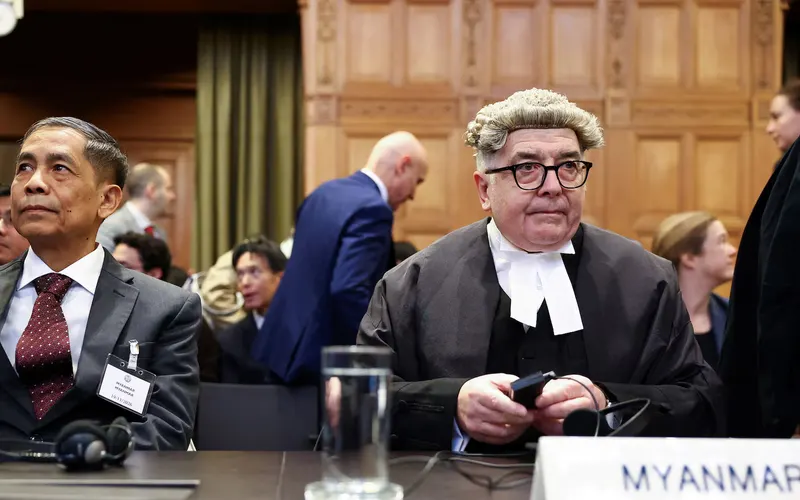
World Court Rules Myanmar Committed Genocide Against Rohingya in Landmark Gambia Case
For the first time in its history, the International Court of Justice has found a state responsible for genocide, with consequences for Rohingya refugees and for other cases before the court.
62 sources · over 5 days
Houthis Strike Riyadh's PIF Tower as Saudi-Led Coalition Hits Yemen
A missile attack on the Saudi wealth fund's headquarters has pushed a long cross-border conflict into open escalation, with both sides now threatening ports, airspace and power infrastructure.
39 sources · over 7 days
Ministry of Justice investigates Russell Brand's 'not guilty' message shared from prison by his wife
Downing Street has called the jailed comedian's message appalling, and an urgent inquiry will decide whether he broke prison rules by getting his denial published through his wife.
34 sources · over 7 days