
Supreme Court Questions SIR Procedures, Seeks Action on Bulk Voter Deletions
The court has questioned how excluded voters can regain registration and sought corrective steps over bulk deletion applications, while the Election Commission defends its revision orders.
By Hushread Stories, from 12 outlets · First published 30 Oct 2026 · Chapter 4 of 4
Earlier: Supreme Court Questions Form 6 Requirement as Election Commission Defends SIR
In brief
- The Election Commission says all three disputed SIR orders were approved unanimously and denies changing Form 6.
- Petitioners have challenged the commission's account and asked the Supreme Court to preserve complete revision records.
- The court questioned why previously enrolled Delhi voters excluded from draft rolls must submit Form 6.
- On October 30, the court sought corrective steps against bulk Form 7 applications to delete Uttar Pradesh voters.
- Petitioners received ten days to answer the commission's affidavit, with the next hearing scheduled for November 17.
Timeline · 7 moments
Court seeks action over bulk Uttar Pradesh deletion applications
Scroll.in ↗Legality of logical discrepancy checks remains undecided
Times of India India ↗Court questions Form 6 requirement for deleted Delhi voters
Scroll.in ↗Court to examine request for complete SIR records
The Hindu ↗Court gives petitioners ten days to answer affidavit
Times now ↗Dola Sen challenges commission's defence of Form 6
Legal News India | Supreme Court of India, High Court, Law Firm, Law School News, Latest Legal Updates ↗Commission says all three SIR orders were unanimous
Mint ↗How it started
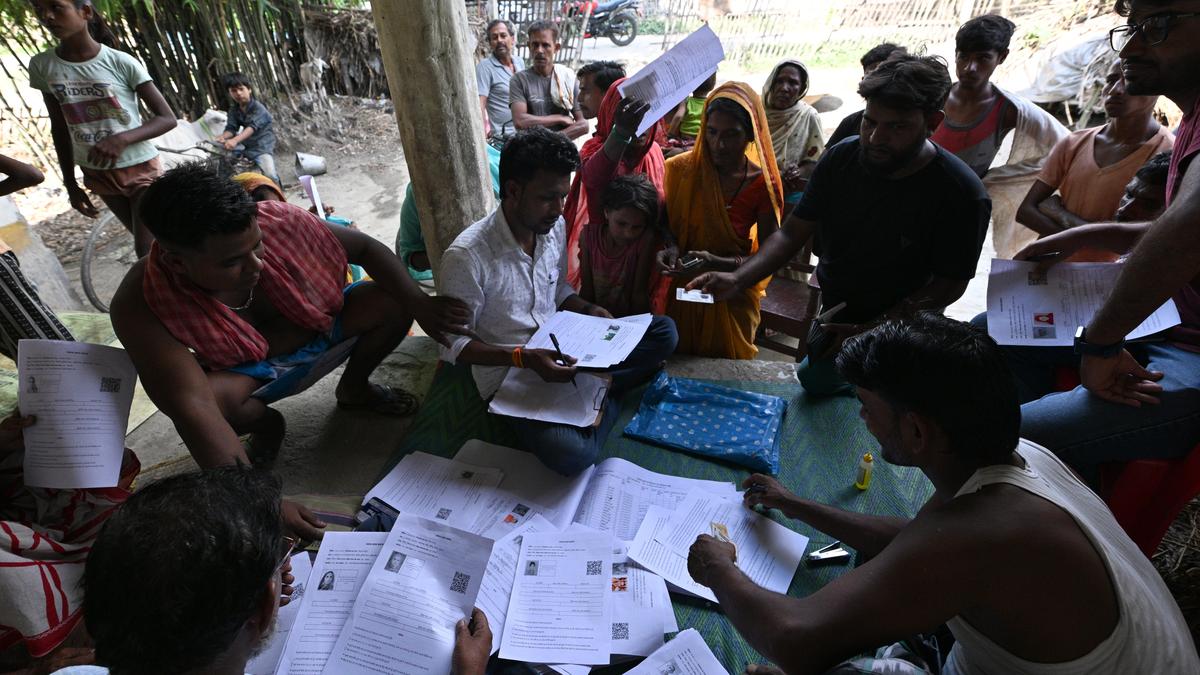
The dispute concerns the Election Commission of India's Special Intensive Revision, or SIR, of electoral rolls. Petitioners alleged that decisions, including changes to Form 6 used to enrol voters, were taken without the approval of the two Election Commissioners, according to India News.
The commission disputes that account. Its affidavit says the SIR orders dated June 24, 2025, October 27, 2025, and May 14, 2026, were approved unanimously by all three members, Mint reported.
The challenge also concerns Chief Election Commissioner Gyanesh Kumar's functioning. A common affidavit for the commission, Kumar and Election Commissioners Sandhu and Joshi argues that restraining the CEC's functioning would be contrary to the 2023 Act, according to The Hindu. That is the commission's legal position, not a ruling by the court.
How it unfolded
On October 26, the commission defended its decision-making and denied amending Form 6. It said members' approval was obtained electronically in urgent matters, Legal News India reported. The commission also said only the central government could change the form's format, according to NDTV Top Stories.
The commission said the online SIR form and declaration had been separated from October 21, India Today reported. That did not settle the disagreement: on October 27, Senior Advocate Menaka Guruswamy, appearing for TMC MP Dola Sen, argued that the commission was now justifying tampering with Form 6, according to Legal News India.
Also on October 27, the Supreme Court gave petitioners ten days to respond to the affidavit and scheduled the next hearing for November 17, Times now reported. The court said it would examine their request to preserve or file complete SIR records, according to The Hindu.
On October 28, the focus turned to Delhi voters who had been enrolled before the revision but were missing from the draft rolls. The court verbally questioned why they were being told to fill Form 6, Scroll.in reported.
That day, the court also clarified that the legality of the commission's "logical discrepancy" checks remained undecided. Its earlier permission to use the category in West Bengal had been an interim measure, according to Times of India India.
On October 30, the court asked the commission to take corrective steps against bulk Form 7 applications seeking to delete voters' names during the Uttar Pradesh revision, Scroll.in reported.
Where it stands
The commission's claim of unanimous approval remains contested, and the court has not resolved the wider legal challenge. The request to preserve complete SIR records is also still under examination, according to The Hindu.
The latest intervention concerns applications to remove voters in Uttar Pradesh. It follows the court's questions about how previously enrolled Delhi voters should seek inclusion after being left out of draft rolls. These are distinct procedural issues, involving Form 7 deletion applications and Form 6 enrolment applications, as reported by Scroll.in and Scroll.in.
What to watch
The next scheduled hearing in the challenge to the commission's affidavit is November 17, according to Times now. Petitioners' replies and the court's handling of the records-preservation request will determine how the competing accounts of the SIR decisions are examined.
The immediate practical question is what corrective steps the commission takes over bulk deletion applications in Uttar Pradesh, following the court's October 30 intervention reported by Scroll.in. The legality of the "logical discrepancy" checks also remains open, according to Times of India India.
More in Politics
All →
Canada and EU Keep Associate Membership Proposal Amid Summit Objections
At the Montreal summit, Ursula von der Leyen and Mark Carney maintained the proposal despite objections from Germany and other EU member states.
26 sources · over 3 days
Trump and Obama Clash Over Cheesecake Factory Joke Before Midterms
A joke about White House renovations has become a campaign argument about elitism and economic priorities, drawing in Trump administration officials days before the midterm elections.
19 sources · over 5 days
China expels 33 officials as Xi tightens Communist Party discipline
The expulsions and a military general's promotion mark a renewed drive for party discipline before next year's congress, when Xi Jinping is expected to secure a fourth term.
15 sources · over 5 days