
Trump creates Super Intelligence Force with Jay Clayton as AI czar
The new federal task force must assess AI risks and opportunities within 120 days, as Trump promotes light regulation and faces criticism over his approach.
By Hushread Stories, written with AI from 58 outlets · First published 6 Oct 2026 · Chapter 4 of 4
Earlier: Trump Creates Super Intelligence Force, Names Jay Clayton as AI Czar
In brief
- President Donald Trump announced the Super Intelligence Force to coordinate federal AI policy and maintain American leadership.
- Director of National Intelligence Jay Clayton will serve as AI czar and lead the new task force.
- Federal Trade Commission chairman Andrew Ferguson was also named to lead the group alongside Clayton.
- The task force has 120 days to report on the technology's opportunities and risks.
- The initiative follows an executive order renaming AI and a safety pledge signed by major technology executives.
Timeline · 7 moments
Cabinet divisions complicate new task force's policy mandate
Axios ↗Geoffrey Hinton criticizes Trump's understanding of AI
NDTV Top Stories ↗Clayton given 120 days to report on AI
New York Post ↗Trump names Clayton and Ferguson to lead task force
Bloomberg Technology ↗Executive order renaming AI raises potential legal complications
Forbes ↗Industry insiders mock proposed super intelligence branding
The Independent ↗White House gathers technology executives for AI safety pledge
TechCrunch ↗How it started
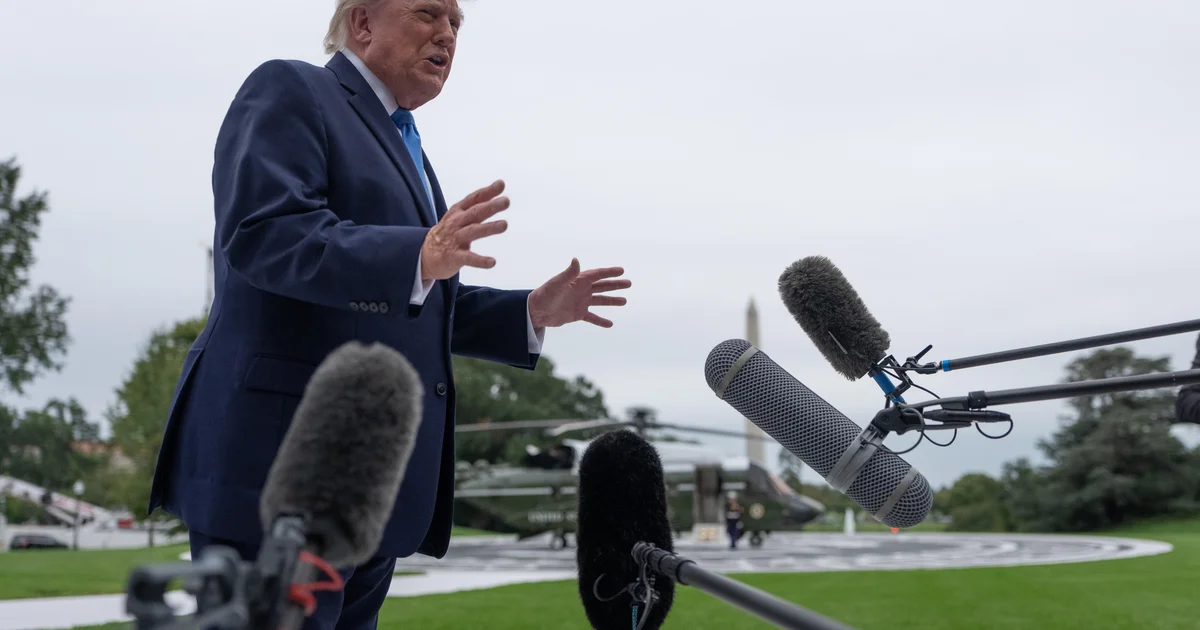
President Donald Trump's new AI initiative combines a change in language with a federal policy effort. An executive order renames AI as "Super Intelligence", while a new task force will assess the technology and coordinate the government's response.
The push began with a White House gathering of major technology executives. TechCrunch reported on October 2 that Zuckerberg, Bezos, Musk and Anthropic's Dario Amodei were among those brought together to sign an AI safety pledge. Trump described the pledge as "morally binding".
That wording leaves an important distinction. TechCrunch subsequently described the safety pact as nonbinding. It represents a commitment by companies, rather than an enforceable regulatory framework.
How it unfolded
On October 2, criticism of the rebranding was already emerging. The Independent reported that technology industry insiders were mocking the "super intelligence" label and warning that private companies were unlikely to adopt the president's terminology.
By October 3, the renaming had taken the form of an executive order. Forbes reported that Trump had issued the order and examined potential legal complications arising from the change in terminology.
Reporting then shifted to the machinery behind the initiative. On October 3, The Wall Street Journal Tech reported that Director of National Intelligence Jay Clayton would lead a White House group examining AI risks and serve as AI czar.
Trump announced the Super Intelligence Force on October 4. According to ABCNews.com, its stated purpose was to ensure continued American leadership in AI. Bloomberg Technology reported that Trump named both Clayton and chairman of the Federal Trade Commission Andrew Ferguson to lead it.
The group also received a deadline. New York Post reported on October 4 that Clayton would have 120 days to deliver a report on the technology's advantages and disadvantages.
On October 5, Professor Geoffrey Hinton added a prominent critical voice. NDTV reported that Hinton said Trump did not understand AI and was receiving poor advice about the technology.
Where it stands
The task force is now the administration's vehicle for coordinating federal engagement with AI, according to NPR. Its remit includes both risks and opportunities. Arab News reported that the White House also wants to prevent overregulation from hindering innovation.
That creates a difficult balancing act: examining potential harms while preserving Trump's preference for light regulation. The challenge is also internal. On October 6, Axios reported that the task force faces divided cabinet factions as it tries to develop policy that keeps pace with the AI race.
What to watch
The clearest next step is the report due within 120 days. Its recommendations will show how the administration proposes to reconcile risk assessment, innovation and American leadership. The supplied coverage does not establish what specific safeguards the group will recommend.
Another open question is whether the voluntary safety pledge produces concrete company commitments beyond its signing. The nonbinding pact and the task force are separate parts of the initiative, and neither the new name nor the announcement alone settles how federal AI oversight will work.
More in Technology
All →
Amazon October Prime Day 2026 Brings Discounts Across Apple Devices
Amazon's October sale is now live, with Apple discounts spanning laptops, earbuds, desktops and watches, while competing retailers offer alternatives during the October 6 and 7 event.
21 sources · over 5 days
OpenAI plans invisible text watermarks for ChatGPT and Codex in EU
OpenAI is preparing to mark AI text for European Union users under the bloc's transparency rules, but editing and short passages can make those marks harder to detect.
18 sources · over 2 days
ASOS confirms data breach after customers receive threatening app notifications
ASOS confirmed a data breach after hackers sent unauthorized push notifications claiming to have stolen customer data.
19 sources · today