
Trump defends Iran war after acknowledging Republican losses in midterm elections
President Donald Trump has acknowledged the Iran war hurt Republicans at the polls, but his defense of military action leaves negotiations and possible further strikes unresolved.
By Hushread Stories, from 9 outlets · First published 5 Nov 2026 · Chapter 2 of 2
Earlier: Trump pairs Iran talks with limited strikes as Republicans lose Congress
In brief
- President Donald Trump acknowledged that the Iran war contributed to Republican losses in the congressional midterm elections.
- Before voting, Trump said he was not rushing to resume war and expressed optimism about negotiations.
- On November 3, Trump described overnight attacks on Iranian military positions as limited but threatened further action.
- Vice President JD Vance blamed the war for Republican losses, while Trump continued defending his decision.
- After the election, reports described additional sanctions and the continuing possibility of renewed American attacks on Iran.
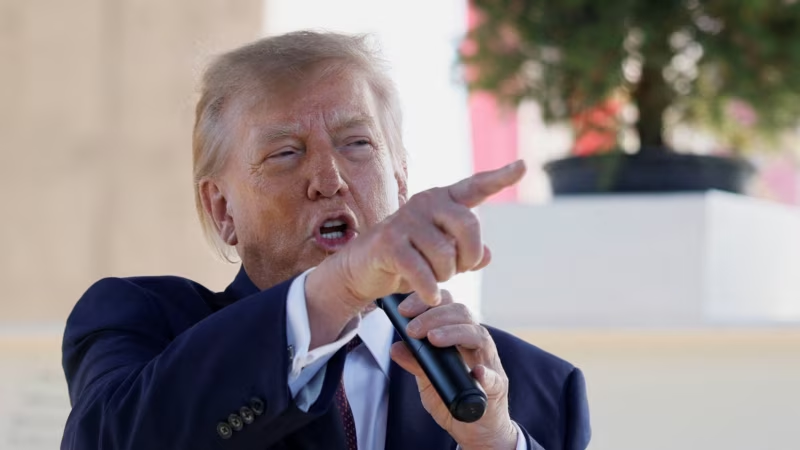
Timeline · 6 moments
Report says renewed American attacks on Iran remain possible
Tabnak ↗US Treasury imposes fresh sanctions after election defeat
Tabnak ↗Trump acknowledges war and gasoline prices hurt Republicans
VOA Persian ↗Trump calls overnight attacks limited and warns of more
VOA Persian ↗Qatari delegation visits Tehran as Vance voices negotiation optimism
BBC Persian ↗Trump favors economic pressure over rushing back to war
Iran International (Persian) ↗How it started
President Donald Trump entered the US midterm elections saying he wanted an agreement with Iran rather than a prolonged war. After Republican losses, he acknowledged the conflict had carried an electoral cost, without abandoning his defense of military action.
His position before voting combined an offer of negotiations with continued pressure. On November 2, Iran International (Persian) reported that Trump said he was in no hurry to resume war and intended to use economic pressure to secure an agreement. He also said he would not allow Tehran to obtain a nuclear weapon.
How it unfolded
On November 2, Trump said Iran wanted an agreement to end the war and that a deal could be reached, according to Radio Farda. The report also said JD Vance stated that no deadline had been set for Tehran.
Diplomatic activity continued alongside those statements. BBC Persian reported on November 2 that a senior Qatari delegation was visiting Tehran as Vance expressed optimism that he and Trump could reach an agreement through negotiations.
On November 3, the military threat became more immediate. Trump described the previous night's attacks on Iranian military positions as a limited operation, not the beginning of a wider war, according to VOA Persian. He warned that the United States could carry out more attacks if necessary.
By November 4, the focus had shifted to the election result. Iran International (Persian) reported that Trump largely accepted Vice President JD Vance's assessment that the Iran war had contributed to the Republican defeat, while defending his decision to fight.
Trump also acknowledged a domestic economic consequence. According to VOA Persian, he said the war and a temporary increase in gasoline prices had played a role in Republican losses, but maintained that he would make the same decision again.
Where it stands
The election defeat has not produced a clear retreat from pressure on Tehran. Tabnak reported on November 4 that the US Treasury imposed fresh sanctions on Iran. On November 5, Tabnak, citing a report attributed to sources familiar with the matter, said renewed US attacks remained possible after the elections. That was a report of a possibility, not an announced decision to strike.
The political argument is also continuing. Iran International (Persian) reported on November 5 that an editorial criticized Vance for blaming the defeat on the war and publicly calling for it to end, arguing that this weakened American bargaining power. Trump's acknowledgment of electoral damage therefore sits alongside his continued defense of the conflict, rather than a declared change in policy.
What to watch
The immediate questions are whether negotiations produce an agreement and whether Trump authorizes further attacks. His stated willingness to negotiate and his warning of additional military action remain in place together. The November 2 report from Radio Farda said there was no deadline for Tehran, while the November 5 report from Tabnak left the possibility of renewed strikes open.
More in Politics
All →
US Midterm Elections 2026: Democrats Win Control of Both Chambers
Democrats flipped Republican-held seats to win the House and Senate in a sweeping rebuke to President Trump and his party.
106 sources · over 5 days
Gavin Newsom Commutes All 548 Death Sentences in California
The governor's decision replaces death sentences with life imprisonment without parole, affecting roughly a quarter of death sentences nationwide as he prepares to leave office.
8 sources · today
Israeli Opposition Backs Gadi Eisenkot as Arab Parties Endorse Him to Form Government
The Joint List and Ra'am have backed Eisenkot, giving him 67 recommendations on paper as an ultra-Orthodox party withdraws support for Netanyahu.
43 sources · over 5 days