
Anthropic mathematician Levent Alpöge claims Claude-assisted proof of the Riemann hypothesis
A claimed solution to mathematics' most famous open problem, posted with machine-checkable code, is now waiting on the slow work of verification, and a second claim has already appeared.
By Hushread Stories, from 36 outlets · First published 20 Nov 2026
In brief
- Levent Alpöge says he found a proof of the Riemann hypothesis while working with Claude.
- He says the same method extends to the Generalized Riemann Hypothesis and possibly related problems.
- The proof was posted in Lean, but independent verification has not been completed.
- The Riemann hypothesis, proposed in 1859, concerns the distribution of prime numbers and is a Millennium Prize problem.
- A separate human-authored solution claim appeared within hours, adding confusion to the story.

Timeline · 6 moments
New York Times reports Anthropic mathematician's claim, pending confirmation
NYT > Science ↗New Scientist reports claim as AI-assisted proof
New Scientist ↗Proof reported as posted in Lean
Techmeme ↗Proof PDF reaches top of Hacker News
Hacker News Best ↗Alpöge posts note claiming Claude-assisted Riemann proof
MLQ.ai | AI News, Analysis & Data ↗Anthropic goes public on the Nasdaq
The Verge - All Posts Tech ↗Update 21 Nov 2026, 4:48 am UTC
Coverage from 21 November adds that the claim is being treated as a claim, not a settled result. The New York Times framed it as something that would cement AI's reach into open problems if confirmed, while Deutschlandfunk and the Indian Express stressed that the proof is still being checked. Bloomberg tied the announcement to the same week as Anthropic's record IPO. Nothing in the new reporting shows the proof has been confirmed, so the published headline's framing still holds.
How it started
On 20 November 2026, a mathematician employed by Anthropic published a note on his website. Levent Alpöge wrote: "I believe I have, working with Claude, discovered a proof of the Riemann Hypothesis." The quotation was picked up by MLQ.ai, Simon Willison and several other outlets that day.
He added that the method "easily extends much further", resolving the Generalized Riemann Hypothesis, with more to come given time. The note linked to a PDF that quickly climbed Hacker News, where it gathered well over a thousand comments.
The Riemann hypothesis dates to 1859. The Hindu described it as concerning the distribution of prime numbers and as widely regarded as the most important open question in pure mathematics.
How it unfolded
The claim spread within hours. New Scientist reported that Alpöge says he has both discovered the proof and verified it with formalisation. Scientific American, via reporter Joseph Howlett, said he posted the proof in Lean, a language used to check mathematical arguments by computer.
The timing drew comment. Tom's Hardware and The Verge both noted that Anthropic went public on 19 November, the day before the claim. ZeroHedge reported that even Alpöge himself admitted the timing is "horrible".
Caution appeared in the coverage almost immediately. FAZ wrote that the computer check was still pending and the human check even more so, though it stressed that Alpöge is not just anyone. BigGo Finance likewise said the proof was released only as Lean code, pending verification.
Then a complication arrived. TechCrunch reported that a competing human solution had also been claimed, and a Reddit r/worldnews post described a second claim emerging mere hours after the first. Details of that second claim are thin in the coverage provided.
There was also a related item the same day. Scientific American reported that NYU professor Tristan Buckmaster and Anthropic employee Levent Alpöge had returned with a new AI-aided proof on the Navier-Stokes blowup problem, two months after being scooped by OpenAI.
Where it stands
The proof is public but unconfirmed. Coverage describes the claim as a claim, and none of the outlets here reports that independent mathematicians or a completed Lean check have settled the matter.
Live Science framed the episode as part of a wider shift, arguing that the field will have to rethink how it rewards expertise if AI is producing results of this size.
What to watch
The first question is verification. The Lean formalisation should be checkable by machine, and human experts will want to read the argument itself, including the claimed extension to the Generalized Riemann Hypothesis.
The second is the competing claim. How it relates to Alpöge's work, and whether it holds up, is not clear from the coverage so far.
More in Science
All →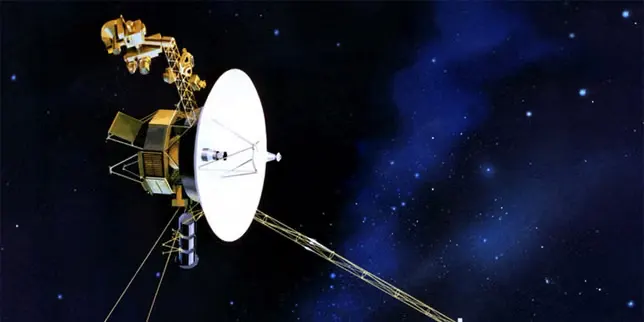
Voyager 1 Reaches One Light-Day From Earth, a First for Any Human-Made Object
Nearly 49 years after launch, the 1977 probe is now so far away that a radio signal takes a full day to reach it, a distance no spacecraft has matched.
59 sources · over 7 days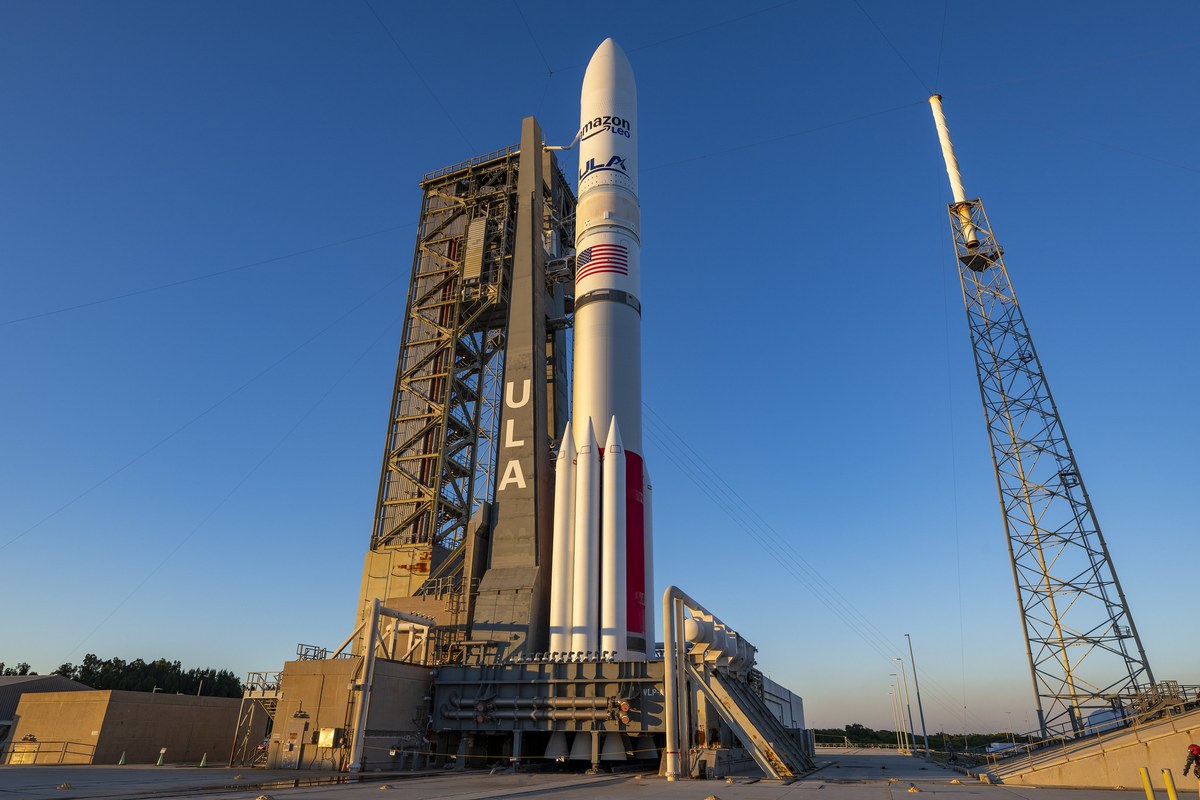
Vulcan Rocket Fails Ten Minutes After Launch, Destroying 40 Amazon Leo Satellites
ULA says inadequate fuel supply to the engines caused the failure that cost 40 Amazon Leo satellites.
40 sources · over 8 days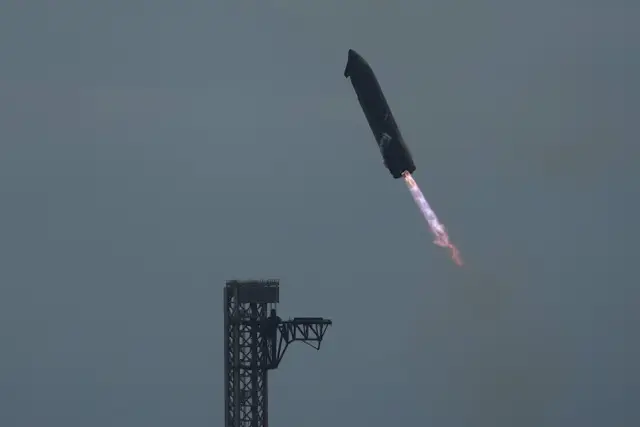
SpaceX Catches Starship Upper Stage at Texas Tower, But Booster Is Lost
The ship returned to the launch tower after 14 orbits in a first for the program, while the Super Heavy booster was not recovered.
73 sources · over 7 days