
Asian chip stocks rebound but AI debt fears prolong market turmoil
A Friday recovery in Asian shares has not erased heavy weekly losses, while renewed US technology selling shows investors remain worried about AI spending, debt and interest rates.
By Hushread Stories, written with AI from 25 outlets · First published 16 Oct 2026 · Chapter 2 of 2
Earlier: Asian Chip Stocks Rebound as Sell-Off Eases, South Korea Faces Biggest Weekly Fall Since 2008
In brief
- Asian chip shares sold off as investors questioned AI spending and growing competition from Chinese memory manufacturer CXMT.
- Hot US inflation added pressure by fueling expectations of higher interest rates and more expensive borrowing.
- Samsung Electronics and SK Hynix edged higher Friday, helping the MSCI Asia Pacific Index advance 0.6 percent.
- South Korean shares still faced their biggest weekly decline since 2008 despite Friday buying after sharp losses.
- Corporate earnings are becoming a focus as investors assess whether AI investment can justify its growing financial demands.
Timeline · 6 moments
Nasdaq falls roughly 2.5 percent as debt worries persist
cnn.com ↗Asian stocks rebound as Samsung and SK Hynix rise
Economic Times Business & Economy ↗Memory investors confront China competition and oversupply fears
CNBC ↗Asian technology selloff deepens after Wall Street decline
Financial Times ↗Hot inflation fuels bets on interest rate increases
cnn.com ↗Broadcom warning and CXMT progress hit chip stocks
AI - The Guardian ↗How it started
The selloff began with doubts about the economics of the AI boom, not evidence that demand had disappeared. On October 13, The Guardian reported that semiconductor shares fell after Broadcom boss Hock Tan compared many AI investors to casino gamblers. Samsung shares also tumbled after Chinese rival CXMT claimed strong progress.
Memory chips became a particular pressure point. According to the South China Morning Post, investors were questioning whether AI-driven profits could last even as soaring prices supported strong quarterly earnings. Strong current sales were no longer enough to reassure the market about future returns.
How it unfolded
On October 13, South Korea suffered a sharp market slide. Times now reported that the KOSPI was down 7.4 percent at 5,914.35 during trading, its lowest level since late July. The selling also reached US chipmakers as investors weighed CXMT's advances and concerns about AI spending, according to the Economic Times.
On October 14, inflation added another source of pressure. The New York Times reported that the S&P 500 fell 1.1 percent on Wednesday, its steepest decline in more than two months. CNN linked the technology-led selling to a hot inflation report that fueled bets on interest rate increases.
By October 15, those worries had spread back through Asian markets. The Financial Times reported that AI-related stocks in South Korea and Japan fell after Wall Street's inflation-driven decline. The Guardian reported sharp falls in Samsung and SoftBank as investors worried about potential rate increases and AI debt.
Competition was not the only concern for memory producers. CNBC identified both China and a possible oversupply in 2029 as major worries, with SK Hynix, Samsung and Micron among the hardest-hit stocks. That added a longer-term supply question to the immediate anxiety about borrowing costs.
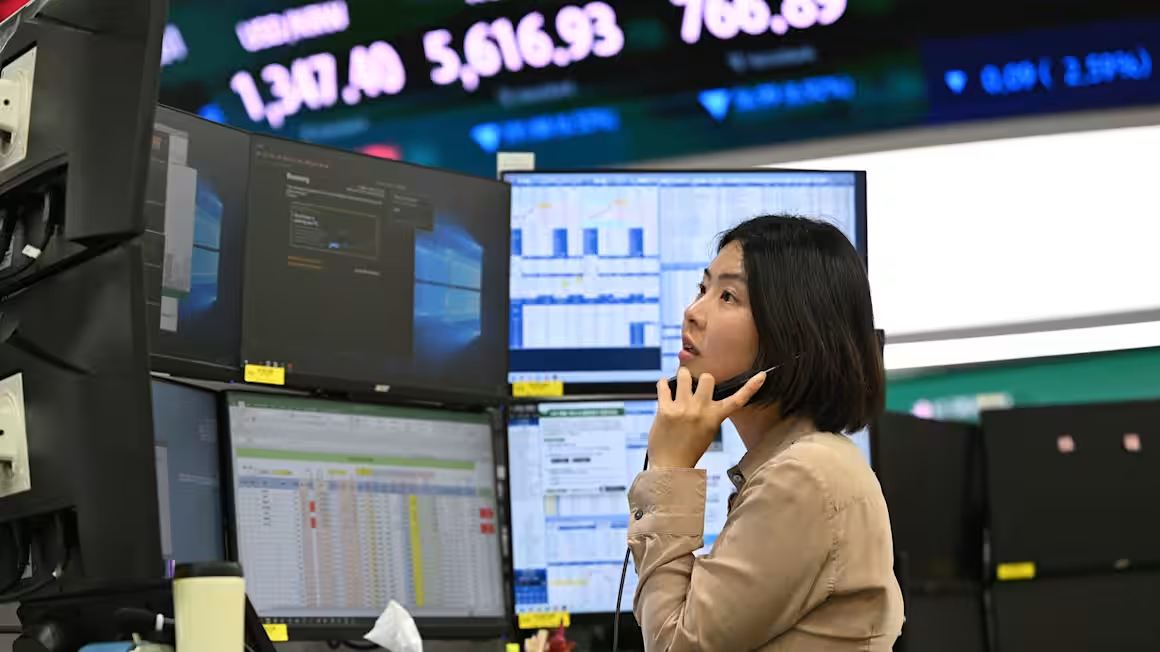
On October 16, Asian markets found some relief. The Economic Times reported that the MSCI Asia Pacific Index rose 0.6 percent, led by South Korean stocks, while Samsung Electronics and SK Hynix edged higher. The rebound followed a US session in which the S&P 500 erased losses and closed 0.3 percent higher.
Where it stands
Friday's Asian recovery did not undo the week's damage. Business Line reported that South Korean shares rebounded from a six-month low as investors bought after the falls, but were still facing their biggest weekly loss since 2008.
Later Friday, US technology stocks came under renewed pressure. CNN reported that the Nasdaq Composite fell roughly 2.5 percent as higher interest rates and mounting AI debt continued to weigh on sentiment. The Asian bounce and the renewed US decline show that the selling has eased at times, without producing a sustained recovery.
What to watch
Corporate results are the next test of investors' doubts. CNA reported on October 16 that attention was turning to earnings as the AI rally wobbled. The focus is whether companies' performance can support confidence in continued investment despite concerns about debt.
Borrowing costs and memory supply remain unresolved risks. MarketWatch reported that inflation and higher financing costs could slow AI development and investment, while CNBC highlighted the prospect of memory oversupply in 2029. Neither concern is settled by a single day's rebound.
More in Business
All →
CoreWeave shares and bonds slide as AI debt concerns deepen
Rising bond yields and default protection costs are testing confidence in CoreWeave's debt-funded expansion, even as its CEO and Nvidia defend the data centre operator.
16 sources · over 3 days
ECB Clears UniCredit to Increase Commerzbank Stake and Take Control
The approval removes a regulatory hurdle for the Italian lender to take control of its German rival, though reports differ on the permitted stake and timing.
14 sources · over 3 days
Warsh Warns of Bumpy AI Transition as October Rate Hold Bets Strengthen
Federal Reserve Chairman Kevin Warsh paired optimism about artificial intelligence with a pledge on price stability, while leaving investors without a firm signal before October's interest rate decision.
15 sources · over 2 days