
Cyclone Murasu Hits Andhra Pradesh, Leaving Flooded Roads and Damaged Crops
Two deaths were reported after Murasu struck Andhra Pradesh, while damaged crops, disrupted electricity and continuing rain warnings extend the storm's impact beyond its November 3 landfall.
By Hushread Stories, from 16 outlets · First published 5 Nov 2026 · Chapter 3 of 3
Earlier: Cyclone Murasu Begins Landfall on Andhra Coast as Evacuations Expand
In brief
- Cyclone Murasu made landfall near Ongole in Andhra Pradesh on November 3, bringing heavy rain and powerful winds.
- Two people died as the cyclone hit Andhra Pradesh, where educational centres were also shut.
- More than 30,000 hectares of crops were damaged, and 10,805 people were evacuated to cyclone shelters.
- The storm uprooted trees, disrupted electricity and flooded roads, with Vijayawada receiving 100 millimetres of rain.
- By November 5, the cyclone's remnants were still prompting heavy rainfall warnings across parts of southern India.

Timeline · 10 moments
Murasu remnants trigger fresh warnings for heavy rainfall
Mint ↗Extremely heavy rain lashes Bhadradri in Telangana
The Hindu ↗Crop damage exceeds 30,000 hectares across Andhra Pradesh
Business Line - Home ↗Two deaths reported as cyclone hits Andhra Pradesh
Indian Express ↗Murasu makes landfall near Ongole with heavy rain
Scroll.in ↗Nineteen flights cancelled as Andhra braces for landfall
India Today ↗Odisha evacuates 160,000 people ahead of approaching cyclone
Hindustan Times ↗Murasu intensifies into a severe cyclonic storm
Swarajya ↗School closures announced in Tamil Nadu and Andhra Pradesh
The Hindu ↗New Bay depression threatens Andhra after Cyclone Arnab
The Hindu ↗How it started
Murasu developed over the Bay of Bengal as eastern India was dealing with Cyclone Arnab's aftermath. On October 31, NDTV India reported three deaths amid floods and landslides in Odisha. Indian Express reported a higher rain-related death toll of four, with 12 people missing after a landslide in Ganjam.
The next storm was already taking shape. On October 31, The Hindu reported that the Bay of Bengal depression could strengthen into a severe cyclonic storm, with landfall expected between Narsapur and Nellore on November 3.
How it unfolded
By November 1, Murasu was moving northwest at around 25 kilometres per hour. At 5:30 pm, it was approximately 420 kilometres from Chennai and 490 kilometres from Nellore, according to Mint. School closures were being announced in Tamil Nadu and Andhra Pradesh, The Hindu reported.
On November 2, Murasu intensified into a severe cyclonic storm, according to Swarajya. Preparations expanded across the coast. Hindustan Times reported that Odisha had evacuated 160,000 people and planned to move another 140,000. India Today reported 19 flight cancellations as Andhra Pradesh braced for the storm.
Landfall began early on November 3. NDTV India, citing the Met department, put the start at around 1 am, with winds reaching 110 kilometres per hour and gusts up to 120. Scroll.in reported that the storm made landfall near Ongole.
As the storm crossed the coast, heavy rain, uprooted trees and power outages caused widespread disruption, according to Times of India. The Hindu reported 100 millimetres of rain in Vijayawada, inundated roads and continued school and college closures.
The human and agricultural toll emerged later on November 3. Indian Express reported two deaths. Business Line - Home reported damage to more than 30,000 hectares of crops, impacts across 132 mandals in 15 districts, and the evacuation of 10,805 people to cyclone shelters.
Where it stands
The rain threat continued after landfall. The Hindu reported extremely heavy rainfall in Bhadradri, Telangana, on November 4.
By November 5, Murasu's remnants were still triggering fresh warnings for heavy rain and thunderstorms, according to Mint. Its coverage flagged rainfall risks in Tamil Nadu, Odisha and Andhra Pradesh. The storm's passage across the coast had not ended the weather emergency.
What to watch
The immediate concern is further heavy rainfall in areas already affected by the storm. The November 5 warnings reported by Mint make conditions after landfall important, not just the winds at the coast.
The extent of crop losses and electricity restoration also remains important. Before landfall, Andhra Pradesh was mobilising extra manpower and machinery to restore electricity infrastructure, according to Business Line - Home. Subsequent reporting confirmed power outages and crop damage, but the supplied coverage gives no timetable for full recovery.
More in Environment
All →
Supreme Court Allows Limited Diwali Crackers After Haryana Announces NCR Ban
Haryana announced a complete firecracker ban in its NCR districts, but a subsequent Supreme Court ruling permits certified green crackers across Delhi-NCR during fixed hours on November 7 and 8.
11 sources · over 6 days
Delhi Turns Back 1,539 Vehicles on First Day of Entry Ban
Delhi imposed Rs 68 lakh in fines as it enforced the pollution curbs on November 1.
13 sources · over 8 days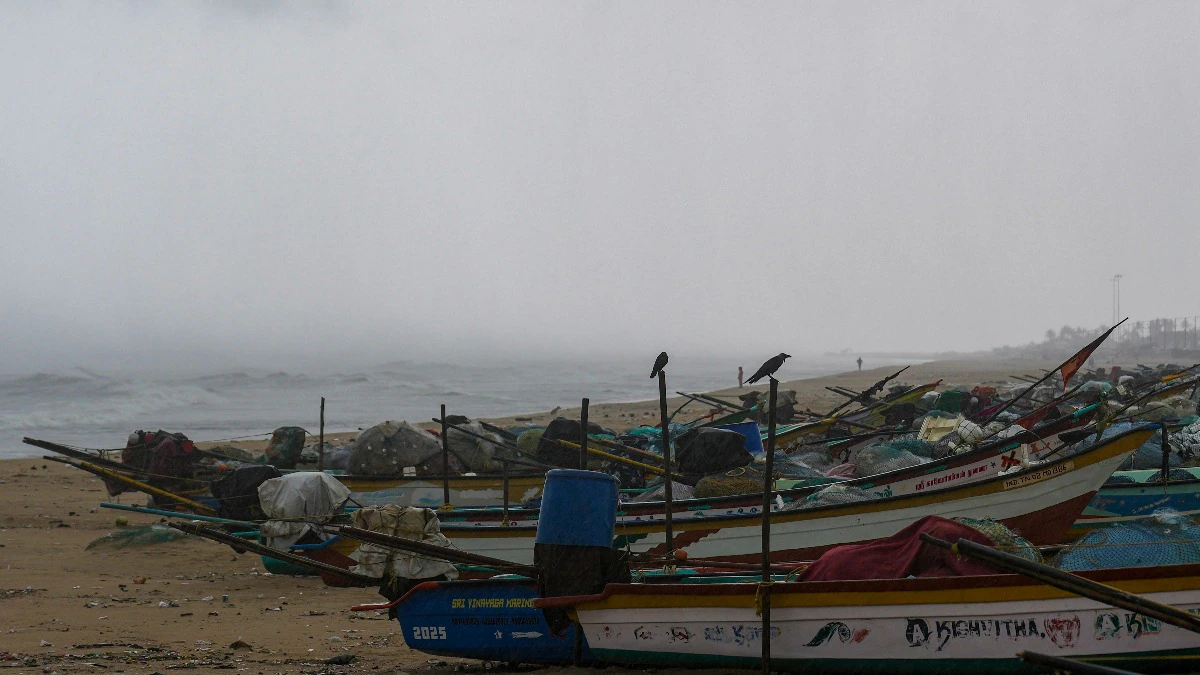
Cyclone Arnab Makes Landfall on Andhra Pradesh Coast
Cyclone Arnab made landfall with winds gusting up to 150 kmph, prompting evacuations and disruption across the region.
24 sources · over 8 days