
NASA Launches Nancy Grace Roman Telescope to Unravel Dark Universe
NASA successfully launched the $4.3 billion Nancy Grace Roman Space Telescope on August 30, 2026, with the goal of exploring dark energy, dark matter, and distant planets, promising major advances in cosmic research.
By Hushread Stories, from 80 outlets · First published 18 Aug 2026
In brief
- NASA launched the $4.3 billion Nancy Grace Roman Space Telescope on August 30, 2026, from Kennedy Space Center in Florida.
- The telescope will operate about one million miles from Earth, aiming to explore dark energy, dark matter, and exoplanets.
- Initial images and data from the telescope are expected in the coming months as it completes system checks and calibration.
- The mission is fully funded and on track, with no major issues reported since the launch.
- Over the next few years, the telescope aims to create the largest catalog of astronomical objects, identifying billions of galaxies.

Timeline · 5 moments
Roman Space Telescope to search for Earth-like planets
Forbes ↗Roman telescope begins journey to deep space orbit
Scientific American Content: Global Science ↗Roman Space Telescope launches to study universe's hidden secrets
Al Jazeera ↗NASA launches new telescope to study dark matter
nu.nl ↗Roman telescope successfully launches aboard SpaceX Falcon Heavy
Phys.org ↗How the Roman Telescope Project Began
NASA has long sought to answer some of the universe's biggest mysteries, such as the nature of dark energy and dark matter. The Nancy Grace Roman Space Telescope project was conceived as a successor to Hubble and a complement to the James Webb Space Telescope, aiming to provide a much wider view of the cosmos.
Named after NASA's first female executive and a key figure in the creation of the Hubble Space Telescope, the Roman Telescope was designed to take on questions that previous missions could not fully address. Planning for the mission began years ago, with funding and technical support secured through NASA and contributions from other agencies, including the donation of Hubble-class mirrors from the National Reconnaissance Office, according to CBS and Technology.
Launch Day and Mission Milestones
On August 30, 2026, NASA launched the Nancy Grace Roman Space Telescope from Kennedy Space Center in Florida aboard a SpaceX Falcon Heavy rocket, as reported by Phys.org and TABNAK. This launch took place nearly a year ahead of the original schedule, after concerns about weather delays were resolved, according to nu.nl and Universe Today.
The telescope, costing about $4.3 billion, features a mirror the same size as Hubble's but is capable of capturing images of the sky up to 100 times larger in a single shot, CNET and SW noted. Its advanced wide-angle imaging will help astronomers conduct enormous sky surveys far more quickly than before, with The Verge reporting a speed increase of up to 1,000 times compared to Hubble.
Initial coverage highlighted the telescope's key scientific goals: searching for exoplanets, investigating the forces behind the universe's expansion, and mapping cosmic structures on a grand scale. According to Deutsche Welle and Al Jazeera, the telescope will also study black holes, exploding stars, and potentially habitable worlds beyond our solar system.
Following separation from the rocket, the Roman Telescope began its journey to its final orbit about one million miles from Earth, where it will operate for at least five years, with some outlets such as Times of India mentioning a possible ten-year mission duration.
Current Status of the Mission
The Roman Space Telescope is now en route to its operational orbit at the Sun-Earth Lagrange point, about one million miles from Earth, as confirmed by Scientific American and Mashable Tech. NASA has made it possible for the public to track the telescope's journey online, with the first detailed images expected in the coming months.
The mission is fully funded and on track, with no major issues reported since launch. The telescope has begun system checks and calibration procedures as it travels toward its destination.
What's Next for the Roman Telescope
The next major milestone will be the telescope's arrival at its designated orbit, followed by the release of its first images and scientific data. Astronomers are especially eager to see how its wide-field capabilities will transform the search for exoplanets and the study of dark energy.
Over the coming years, the Roman Telescope is expected to create the largest-ever catalog of astronomical objects, potentially identifying billions of galaxies and thousands of new planets, according to vc.ru and CBS.
More in Science
All →
New Analysis Links Van Gogh's Starry Night to July 1889 Sky
Researchers say the painting matches the predawn sky around July 22, 1889, offering a specific astronomical reference that could revise assumptions about its creation.
8 sources · today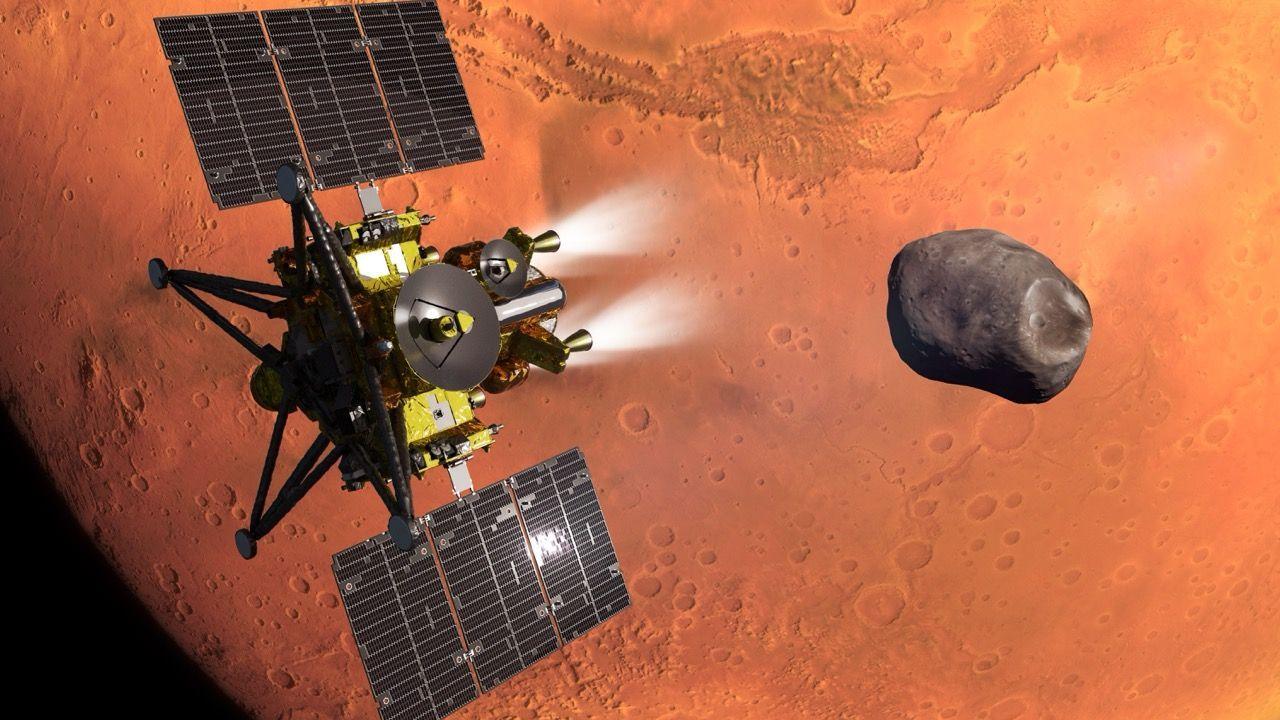
Japan launches first mission to return Martian moon samples
An H3 rocket carried the MMX probe from Tanegashima Space Center on a mission to explore Phobos and return samples by 2031.
48 sources · over 7 days
Amelia Earhart expedition ends after suspected plane wreckage proves to be trees
Researchers have left Nikumaroro without finding Amelia Earhart's plane, after investigating a satellite image anomaly that raised hopes of solving her 1937 disappearance.
19 sources · over 8 days