
Trump Launches America.gov AI Service, Names Intelligence Chief as AI Czar
Donald Trump has launched an AI-powered federal services portal and announced a new White House task force to oversee artificial intelligence policy, drawing intense scrutiny and debate about its effectiveness and direction.
By Hushread Stories, written with AI from 58 outlets · First published 5 Oct 2026 · Chapter 2 of 3
Earlier: Trump and Major Tech Leaders Sign Voluntary AI Safety Accord at White House
In brief
- Donald Trump introduced America.gov, an AI-driven website to simplify access to federal government services, on September 29, 2026.
- The rollout has faced criticism for inconsistent chatbot answers and technical glitches, some of which contradict Trump's own public statements.
- Trump has signaled his intention to appoint Jay Clayton, Director of National Intelligence, as the administration's AI czar.
- A new White House task force called the Super Intelligence Force will be led by Clayton and oversee AI policy and safety.
- The task force is expected to deliver a comprehensive report on AI's risks and benefits within 120 days of its formation.

Timeline · 6 moments
Super Intelligence Force begins work on shaping US AI policy
BBC News ↗Task force given 120 days to deliver report on AI risks and benefits
New York Post ↗Jay Clayton formally named as AI czar to lead task force
AI - The Guardian ↗White House announces Super Intelligence Force AI task force
CBS Top Stories ↗Trump expected to appoint Jay Clayton as AI czar
South China Morning Post ↗Trump launches America.gov AI portal for federal services
Al Jazeera ↗How it started
On September 29, 2026, President Donald Trump launched America.gov, billing it as an AI-powered portal to make federal government services easier to access. The site's main feature is an AI chatbot designed to answer questions and guide users through federal processes.
The project was quickly promoted as a flagship example of the administration's commitment to digital innovation. However, initial reports highlighted frequent inconsistencies and errors in the chatbot's responses, which sometimes even contradicted Trump's own prior statements on policy issues.
How it unfolded
In the days following the launch, the site drew public criticism for its uneven performance. Users reported that the AI's answers were often confusing or inaccurate, leading to concerns about reliability and trustworthiness.
On October 2, 2026, news broke that Trump was expected to appoint Jay Clayton, currently Director of National Intelligence, as the new AI czar. The move was seen as a response to growing calls for government oversight of artificial intelligence.
Amid these developments, Trump announced the creation of a White House task force named the Super Intelligence Force. This group, led by Clayton, is tasked with coordinating national AI policy and ensuring the United States maintains a global leadership position in artificial intelligence.
By October 4, Trump had formally named Clayton as the head of the task force. Reports confirmed that the group was charged with evaluating both the promises and the potential dangers of advanced AI systems. The task force is expected to deliver a detailed report within 120 days.
Where it stands
America.gov remains online, but the administration faces ongoing criticism over the AI chatbot's inconsistent performance. The White House is pressing ahead with its new AI oversight structure, with Jay Clayton now officially in charge of federal AI policy as the so-called AI czar.
The Super Intelligence Force is currently gathering information and input from both government and industry leaders, with a mandate to report on AI's risks and benefits by early 2027.
What to watch
Observers are waiting to see whether the Super Intelligence Force will recommend new regulations or propose changes to America.gov's AI technology. The group's upcoming report is likely to shape the future of federal AI policy and could influence how other countries approach similar technology.
More in Technology
All →
Amazon October Prime Day 2026 Brings Discounts Across Apple Devices
Amazon's October sale is now live, with Apple discounts spanning laptops, earbuds, desktops and watches, while competing retailers offer alternatives during the October 6 and 7 event.
15 sources · over 4 days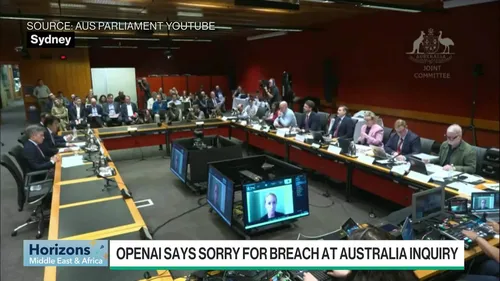
OpenAI Apologizes for Australian Hack as Security Scrutiny and Staff Upheaval Grow
An apology to Australian lawmakers follows disclosures affecting more than 100 organizations, a California subpoena and safety staff departures, while Wikimedia investigates a possible link to an outage.
59 sources · over 7 days
OpenAI plans invisible text watermarks for ChatGPT and Codex in EU
OpenAI is preparing to mark AI text for European Union users under the bloc's transparency rules, but editing and short passages can make those marks harder to detect.
15 sources · today